Why the Cardinals Traded OJ Anderson

O.J. Anderson burst onto the NFL scene with authority.

On September 2, 1979, the rookie running back from the University of Miami stormed through the Dallas Cowboys for 193 yards in his professional debut. His electrifying 76-yard touchdown run in the fourth quarter gave the Big Red a 21–19 lead over the defending NFC champions—and left even legendary Cowboys coach Tom Landry in awe.

“He’s gonna be a star,” Landry said afterward. “He’s gonna gain lots of yards this season. He can outrun all of us. He proved that today.”
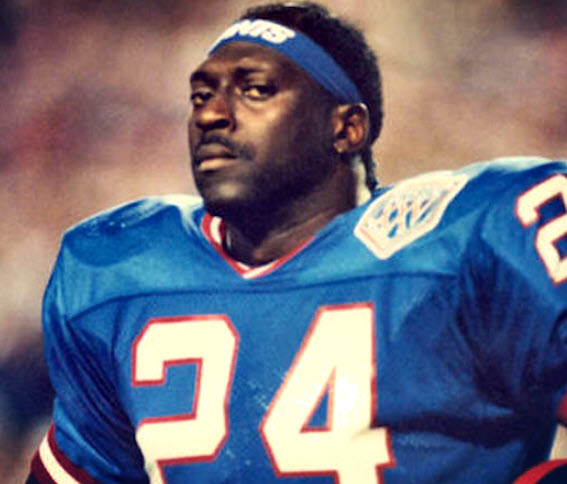
Though the Cardinals finished a disappointing 5–11, Anderson delivered one of the greatest rookie seasons in NFL history. He was the unanimous NFL Rookie of the Year, NFC Offensive Player of the Year, and a first-team All-Pro. He set or tied nine NFL marks and nine team records, finishing the year with 1,605 rushing yards—just five shy of Walter Payton’s league-leading total.

Anderson remained the Cardinals’ offensive centerpiece for years to come, surpassing 1,000 rushing yards in five of his first six seasons (the exception being the strike-shortened 1982 campaign, when he gained 587 yards in just eight games). In 1981, barely halfway through his third season, he became the franchise’s all-time leading rusher.

By 1985, injuries began to take their toll. Anderson battled through a nagging right leg injury and missed seven games that season.

Continue reading

How Al “Bubba” Baker Revitalized His Career with the Cardinals

On July 19, 1983, the St. Louis Cardinals upgraded their pass rush when they traded defensive tackle Mike Dawson to the Detroit Lions for veteran defensive end Al “Bubba” Baker.

Dawson was the Cardinals’ No. 1 draft pick in 1976 and started 84 of 88 games in St. Louis. He had 31.5 sacks in seven seasons with the Big Red.

Baker was the NFL Defensive Rookie of the Year for the Lions in 1978, after setting an unofficial NFL record with 23 sacks in a single season. In his five years in Detroit, the 6-foot-6, 260-pounder started 67 games and had 75.5 sacks.

The Jacksonville, FL native was the Lions’ second-round draft pick in 1978 out of Colorado State University. He earned All-Pro honors in his rookie year and Pro Bowls in his first three seasons in the league.

Baker was one of the Lions’ most popular and colorful players. Not only could he sack the opposing quarterbacks, but his cheering, hugging, and hand-slapping style quickly made him a fan favorite in Detroit.

But his open unhappiness about his contract and a falling out with head coach Monte Clark led to the trade.

“I’d get four sacks and he’d (Clark) look at me like that’s still not enough and say, ‘you could have done better,'” Baker said in a St. Louis Post Dispatch interview. “I decided this is a real screwed-up game. I hated football. I just wanted Monday to come because that was the day we got paid.”

“He was unhappy here, and it was time to move on,” Lions’ director of player personnel, Tim Rooney, told the Detroit Free Press. “He may be happier elsewhere.”

Continue reading

Why the Cardinals Traded Conrad Dobler

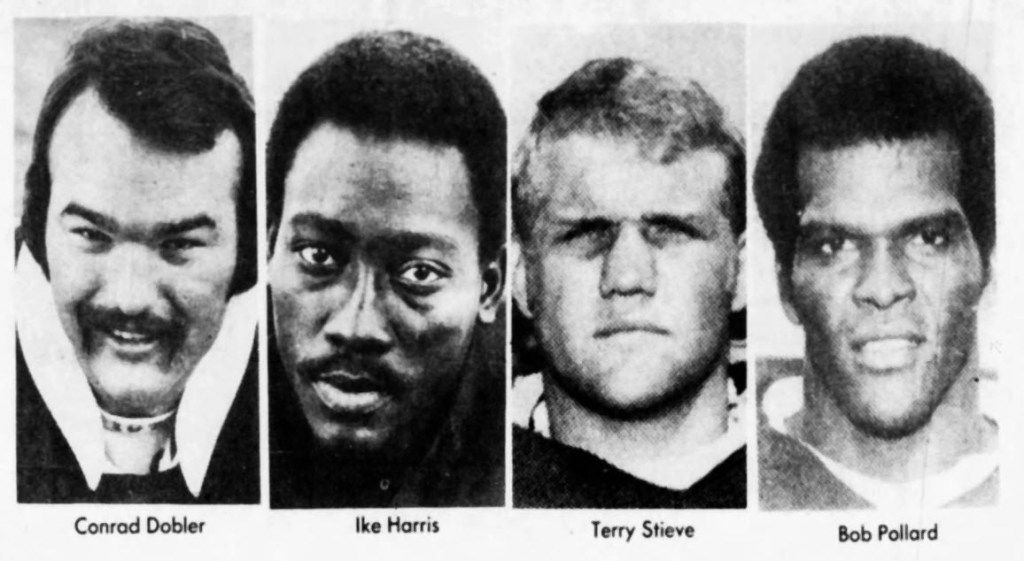
On January 30, 1978, the St. Louis Cardinals traded Pro Bowl guard Conrad Dobler and wide receiver Ike Harris to the New Orleans Saints for guard Terry Stieve and defensive end Bob Pollard.

According to the January 31 edition of the St. Louis Post-Dispatch, Dobler’s teammates and Big Red coaches were in shock when they learned of the news.

“You’re kidding,” offensive line coach Jim Hanifan said after learning of the trade. “Well I’ll be a son-of-a-gun. All I can say is that’s show business. Conrad, well, Conrad is special to me. Conrad and I go into a deep personal thing—it breaks my heart.”

“My gut feeling is that I don’t understand,” quarterback Jim Hart said. “It doesn’t make sense.”

“They’re two of our finest players,” fullback Jim Otis said, “and you hate to see them go. I’m not too familiar with those people we’re getting, so it’s difficult for me to comment. Let’s put it this way: there are 11 people on the offense and that offense has been described as the best in football. Now, two of those people are gone and maybe there will be more.”

Continue reading

Why the Cardinals Traded Ahmad Rashad

On January 26, 1974, the St. Louis Football Cardinals traded second-year wide receiver Ahmad Rashad to the Buffalo Bills for quarterback Dennis Shaw.

The trade raised more than a few eyebrows around the league.

Cardinals WIde Receiver Ahmad Rashad in 1973

Rashad was a number one draft pick just two years prior and was named to the NFL All-Rookie team after hauling in 29 passes for 500 yards and three touchdowns.

But the Tacoma, WA native fell out of favor with coaches and management in 1973 and Rashad didn’t think it had anything to do with his play on the field.

The summer before training camp, Rashad changed his name to conform to his new Islamic faith and the former Oregon Duck All-American felt that people suddenly regarded him differently.

“I don’t know what to think,” Rashad said in an Associated Press interview in October 1973, “but I went from a starter one day to the bench the next and the whole thing coincided with my name change. The people in St. Louis booed me when I was introduced as Ahmad Rashad.”

Continue reading

Why Terry Metcalf Left the Cardinals for the CFL

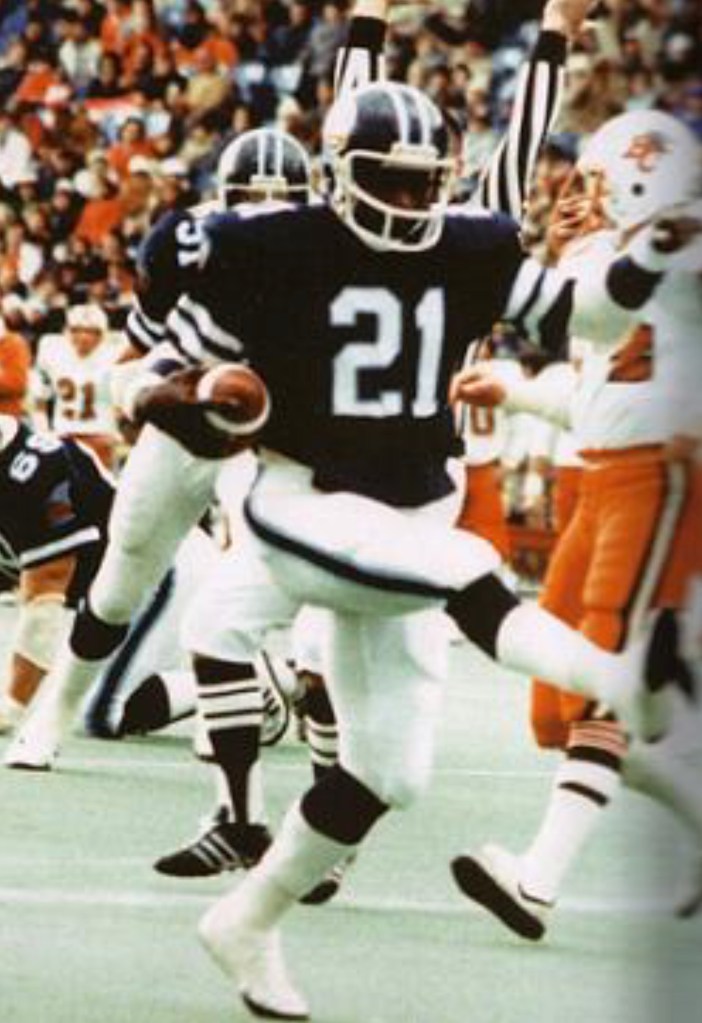
“Best of luck to him,” Cardinals director of operations Joe Sullivan told the St. Louis Post Dispatch after star running back Terry Metcalf announced he was taking his talents to the Canadian Football League in March of 1978. “Money is a great thing to have in life when you’re young.”

Metcalf signed a seven-year, $1.4 million contract with the Toronto Argonauts after turning down a 3-year, $240,000 offer from the Cardinals and curiously similar proposals from other NFL teams. Metcalf was looking for a reported $300,000 yearly contract.

“I wouldn’t have made as much in five years in St. Louis as I’ll make in one year in Toronto,” Metcalf told the St. Louis Post Dispatch after the deal was announced. “I laid in bed all Saturday night thinking about it. There were a lot of doubts in my mind, but I have to do what’s right for me.”

Metcalf added, “I thought I would still be in the NFL, but nobody seemed willing to want to talk. So I had to look elsewhere.”

The 26-year-old Metcalf was known as “The Franchise” in St. Louis and was the Cardinals’ third-round draft choice in 1973 out of Long Beach State. He quickly became one of the greatest all-purpose backs the game had ever seen.

In 1974, Metcalf became the first NFL player to average 30 yards per kick return and 10 yards per punt return in the same season. The following year he set an NFL record with 2462 combined yards and became one of only four players to account for touchdowns by rushing, receiving, kick return, punt return, and passing in a season.

“He did everything for us except drive the bus to the stadium,” Dan Dierdorf said of Metcalf in a 2018 interview on KFNS radio.

Continue reading

Big Red Flashback 1965: Why the Cards traded John David Crow

Posted by Bob Underwood

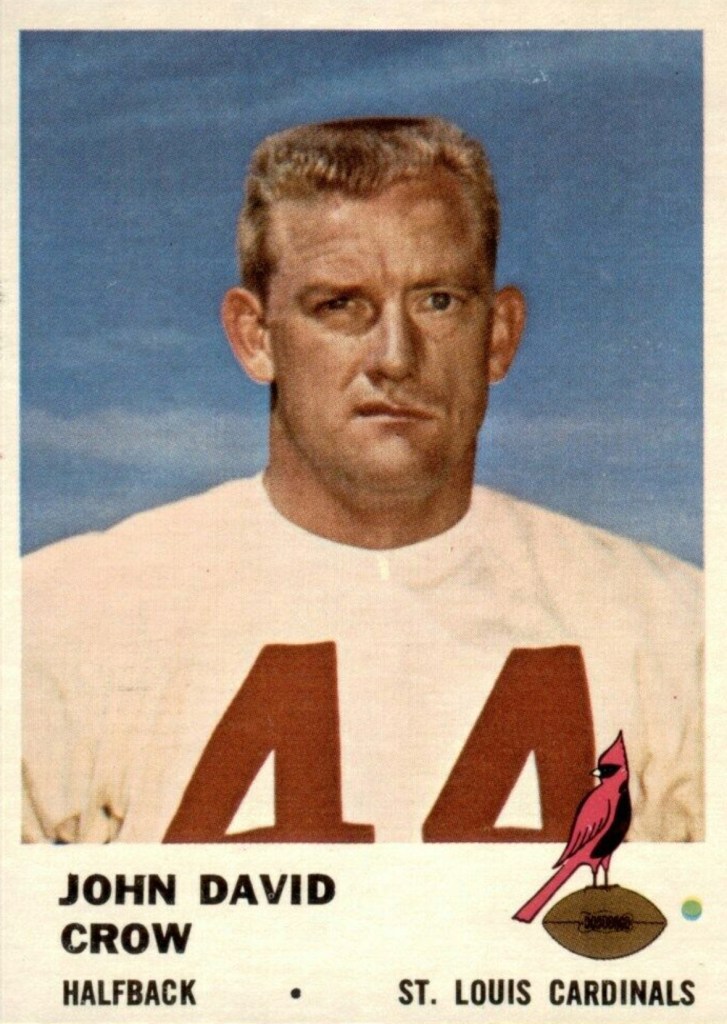
Frustrated about lack of playing time under head coach Wally Lemm, Big Red star running back John David Crow requested a trade after the 1964 season.

Crow won the Heisman trophy at Texas A&M in 1958 and was later the Chicago Cards first pick in the NFL draft. The team moved to St. Louis in 1960 where Crow became a star. His 1,533 total yards and 5.9 yards per carry were tops in the league in 1960 and he scored scored 17 touchdowns in 1962.

However, Crow struggled with injuries during his time in St. Louis. In 1961 he suffered a broken leg. In 1963 a knee operation limited him to just nine carries.

John David Crow was the Cardinals top pick in the 1958 NFL Draft.
Continue reading

Why Dave Butz Left The Cardinals

Desperate for a front-seven playmaker, the St. Louis Cardinals selected big Dave Butz with the fifth overall pick in the 1973 NFL Draft. The 6 foot 7, 290 pound Chicago area native was an All-American defensive tackle and Lombardi Finalist at Purdue University and would ultimately end up in the College Football Hall of Fame (2014).

Dave Butz was the Cards 1st round pick in 1973 out of Purdue where he was an All-American.

Big Red personnel director Abe Stuber told the St. Louis Post Dispatch in 1973 that Butz “was our highest rated defensive player. He has the greatest potential of any defensive lineman in the country.”

Continue reading