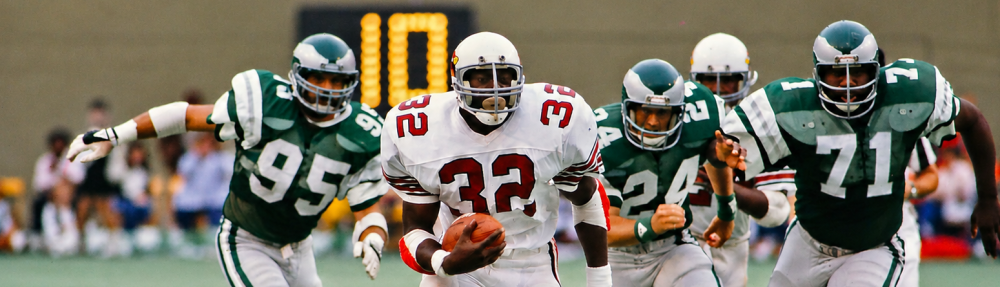
From Packers to Cardinals: Donny Anderson’s NFL Journey

Few players in professional football carried the nickname “The Golden Palomino” with as much flair as Donny Anderson. A versatile running back with blazing speed, a knack for catching passes, and a reputation for toughness, Anderson enjoyed a distinguished career in both college and professional football. Although he is often most closely associated with the Green Bay Packers, Anderson’s later years with the St. Louis Cardinals demonstrated his leadership and adaptability as a veteran player.
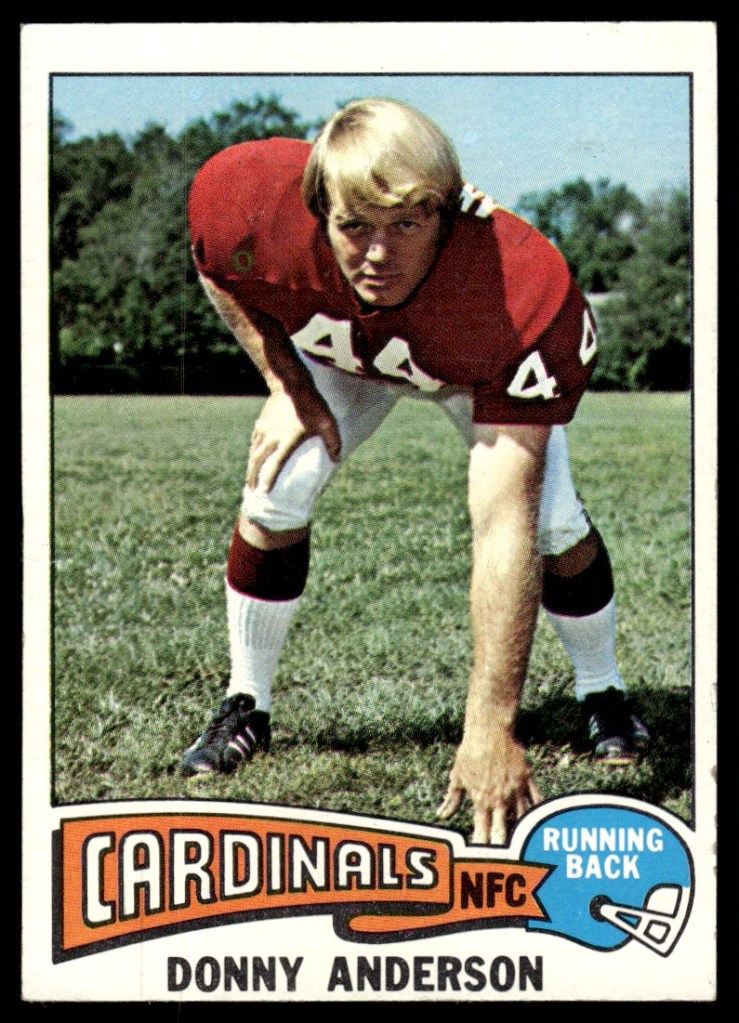
Born on May 16, 1943, in Borger, Texas, Anderson grew up in a football-rich environment and quickly became known for his athletic ability. He starred at Stinnett High School before attending Texas Tech University, where he became one of the most electrifying players in college football.

At Texas Tech, Anderson excelled as a runner, receiver, punter, and kick returner. His all-around ability made him one of the nation’s most dynamic offensive weapons during the early 1960s. He received All-American honors twice (1964 and 1965) and was a three-time all-Southwest Conference halfback (1963–65). Anderson held many of Texas Tech’s football records and finished fourth in the 1965 Heisman Trophy race. He is a member of the Texas Tech Hall of Fame.

Anderson entered professional football with enormous expectations. In 1965, he signed a historic contract with Green Bay after being selected in the first round of the NFL Draft. There were reports that he turned down almost $900,000 from the AFL Houston Oilers before signing with the Pack.

“I want to play the best and right now I think the best is in the National League,” Anderson said after signing a reported six-year, $650,000 contract. “This may not be true in five years or 10, but I’m going to play right now and I want to play the best. Money wasn’t the main factor.”

Continue reading
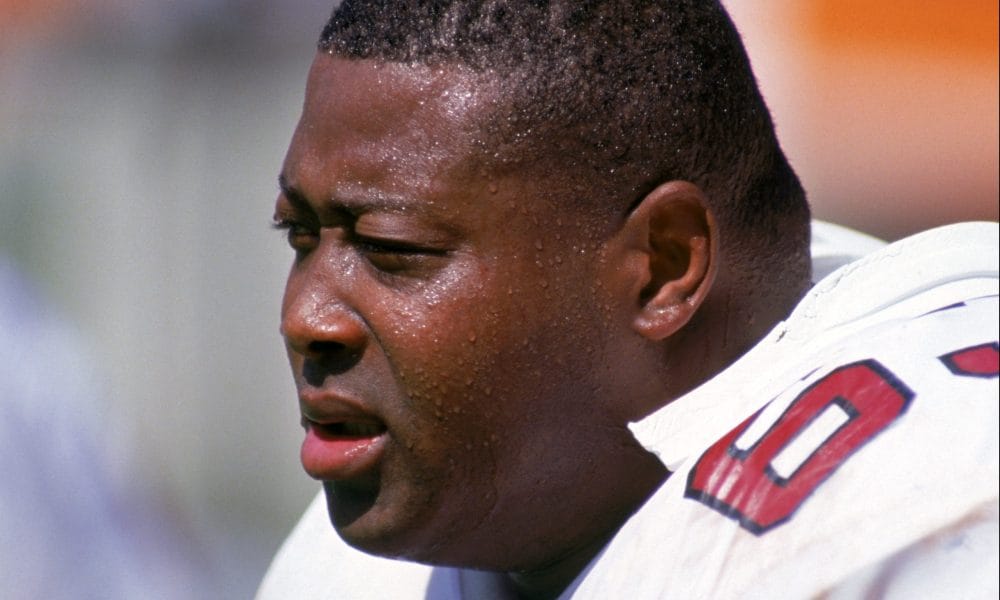
From Sharecropper to NFL Star: Tootie Robbins’ Journey

It didn’t take long for James Elbert “Tootie” Robbins to impress Jim Hanifan and the rest of the Big Red coaching staff during his first training camp in 1982.

The Cardinals selected the Windsor, North Carolina native in the fourth round of the NFL draft and had hoped he could provide depth on an aging offensive line. Robbins had other ideas.

“He has played like a first-rounder from Day 1,” Hanifan told the St. Louis Post Dispatch.

The 6-foot-5, 270-pound rookie impressed so much in training camp that the Cardinals shifted future Hall of Famer Dan Dierdorf to center, clearing the way for Robbins to step in as the starting right tackle.

“I knew I could play,” Robbins said. “I just never knew I could become a starter as a rookie.”

“Playing professional football is a dream come true for me. When I got drafted, I told my mom, ‘My dream is coming true.’

The Cardinals started the season with a pair of rookie offensive tackles. First-round pick Luis Sharpe was the other one.

Continue reading

Big Red Flashback Jan. 8, 1983: Super Bowl Tournament at Lambeau Field

The first sign that this was going to be an inauspicious weekend for the Big Red came when their Ozark Airlines charter touched down on the icy runway at Appleton International Airport—yes, that’s what they call it—less than 24 hours before their Super Bowl Tournament game against the Green Bay Packers.

The pilot tried the brakes, but they wouldn’t cooperate. The plane kept skidding down the runway. I gripped the seat handles tightly while behind me several Cardinals players screamed out in terror.

Jim Hanifan

Finally—miraculously—the plane came to a stop. When it made a left turn to head for the terminal, it was only about 15 yards from a chain link fence at the end of the runway.

Shaken but safe, the players and coaches departed the plane—thanking the pilot as they exited—and boarded buses that would take them to the Paper Valley Hotel (where most Packers opponents stayed) in Appleton.

Later coach Jim Hanifan held an impromptu press conference in his hotel suite. Slipping into my smartass mode, I asked Hanifan what effect the plane landing might have on the players’ performance the following day.

Continue reading