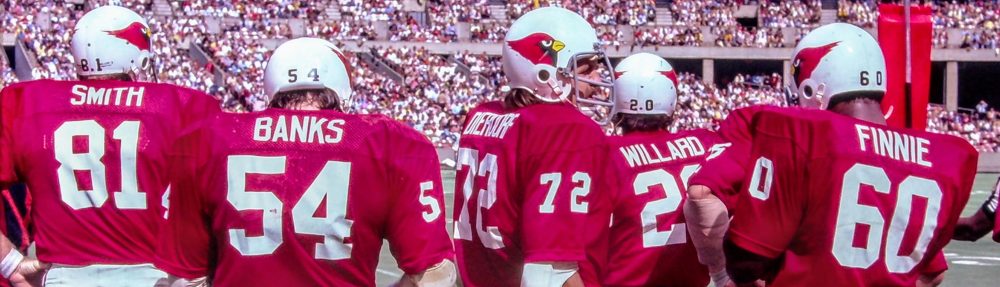
Why the Cardinals Traded OJ Anderson

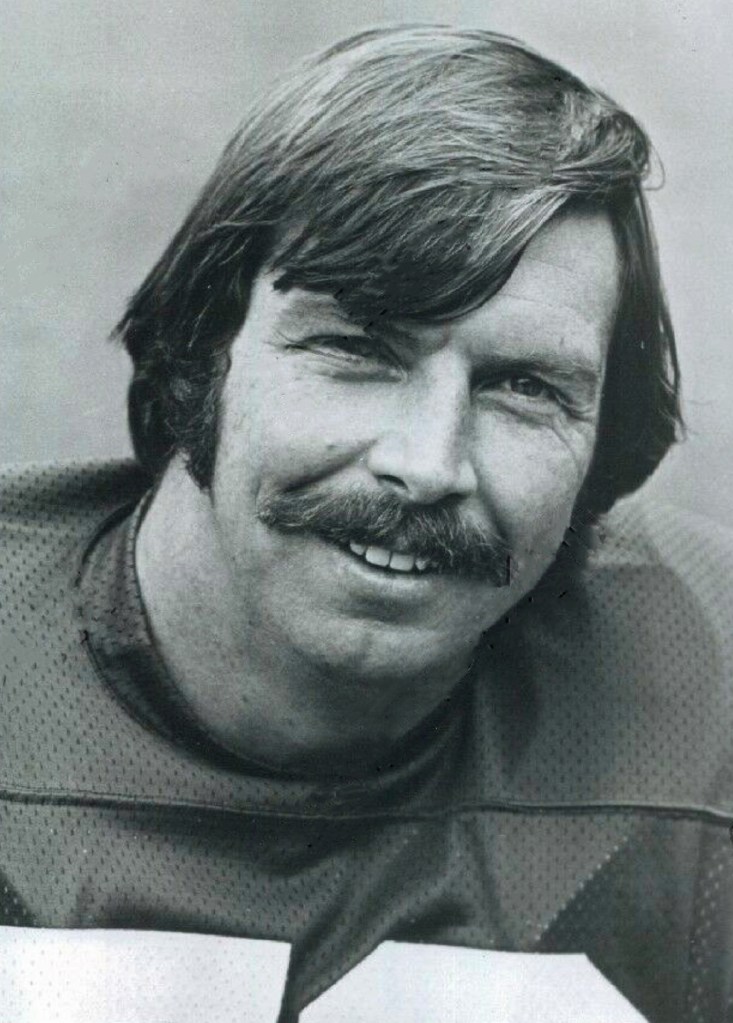
O.J. Anderson burst onto the NFL scene with authority.

On September 2, 1979, the rookie running back from the University of Miami stormed through the Dallas Cowboys for 193 yards in his professional debut. His electrifying 76-yard touchdown run in the fourth quarter gave the Big Red a 21–19 lead over the defending NFC champions—and left even legendary Cowboys coach Tom Landry in awe.

“He’s gonna be a star,” Landry said afterward. “He’s gonna gain lots of yards this season. He can outrun all of us. He proved that today.”
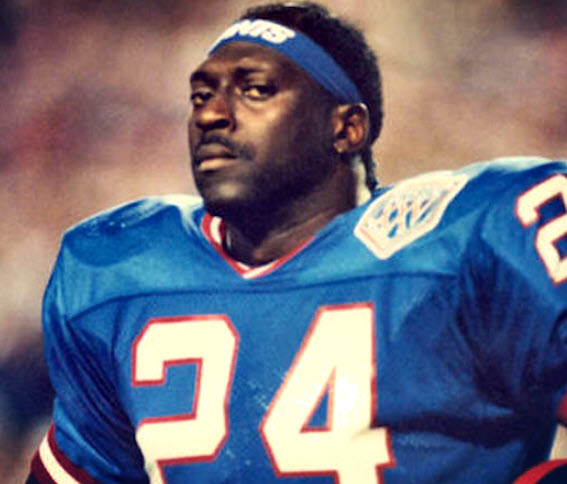
Though the Cardinals finished a disappointing 5–11, Anderson delivered one of the greatest rookie seasons in NFL history. He was the unanimous NFL Rookie of the Year, NFC Offensive Player of the Year, and a first-team All-Pro. He set or tied nine NFL marks and nine team records, finishing the year with 1,605 rushing yards—just five shy of Walter Payton’s league-leading total.

Anderson remained the Cardinals’ offensive centerpiece for years to come, surpassing 1,000 rushing yards in five of his first six seasons (the exception being the strike-shortened 1982 campaign, when he gained 587 yards in just eight games). In 1981, barely halfway through his third season, he became the franchise’s all-time leading rusher.

By 1985, injuries began to take their toll. Anderson battled through a nagging right leg injury and missed seven games that season.

Continue reading
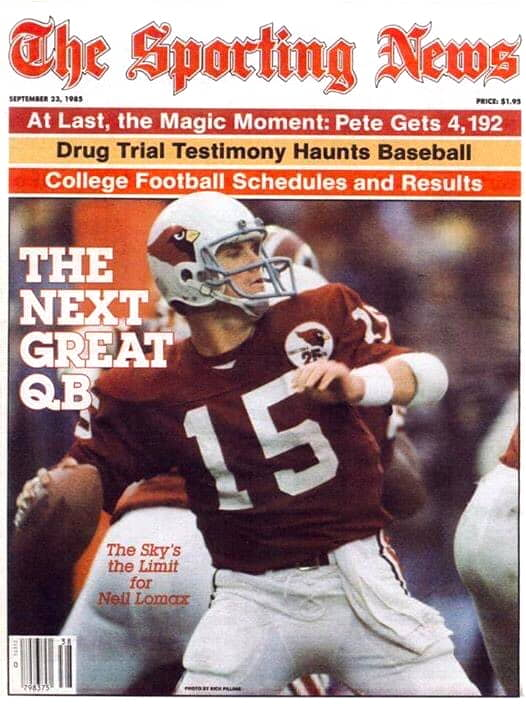
The Next Great Quarterback

Marino, Montana May Have To Make Room For Neil Lomax

(Editor’s Note: This is a reprint of a Dennis Dillon article from the September 23, 1985 edition of The Sporting News)

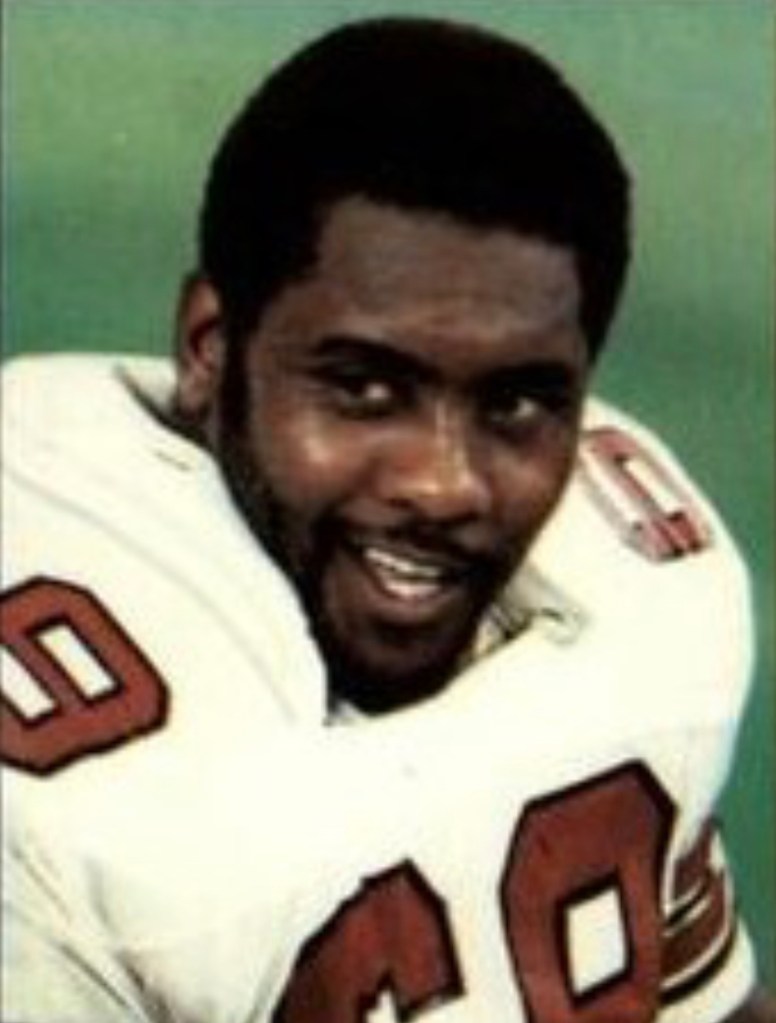
Over the years, quarterbacks have formed the Ursa Major in the National Football League’s galaxy of stars.

In the 1960s, Johnny Unitas and Bart Starr were the luminaries. Terry Bradshaw, Roger Staubach and Fran Tarkenton shown as brightly as anyone in the next decade. Thus far in the ‘90s, indelible prints have been left by Joe Montana and Dan Marino.

But a new star is rising. He began his ascent gradually, then shot into the constellation last year.

That star is the St. Louis Cardinals’ Neil Lomax, the latest in the NFL’s lineage of passing princes.

Lomax clearly exhibited credentials last season, throwing for 28 touchdowns and 4,614 yards and compiling the NFL’s fourth-best passer rating (92.5). He was fifth in completion percentage (.616) and sixth in yards per attempt (8.24).

Montana and Marino wound up as the leading men in Super Bowl XIX and, afterward, a Pepsi commercial. Lomax then adjourned to less-than-cosmopolitan West Linn, Oregon, where he spent a predominantly quiet off-season clutching golf clubs and fishing rods.

And there’s the disparity. Montana and Marino have become celebrities off the field. Lomax’s star? After the season, it sets rather inconspicuously in the Pacific Northwest.

Continue reading
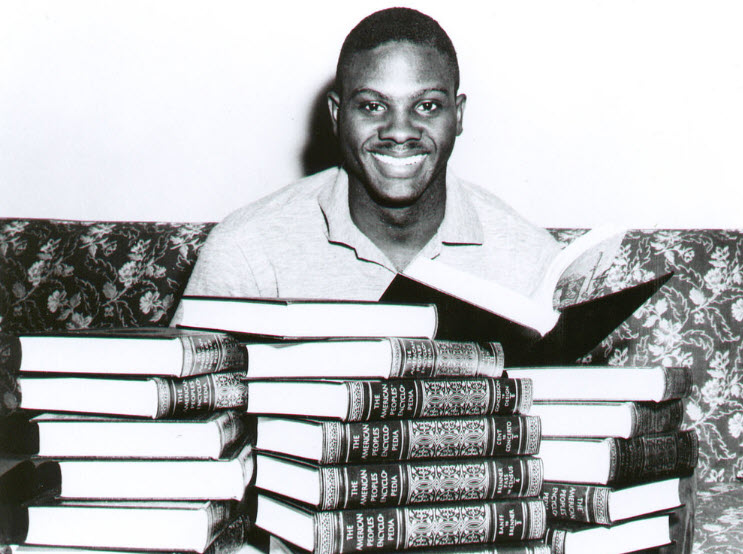
Big Red Legends: Jim Bakken

The record has stood the test of time. And it might just stand for the rest of time.

When Jim Bakken retired from the St. Louis Cardinals in 1979, after 17 seasons in the NFL, he was the franchise’s all-time scoring leader with 1,380 points.

Forty-four years later, that hasn’t changed. Bakken still holds that record—and he may never let go of it. Of the 49 players below him on the team scoring list, most are retired or playing for another team. The only exceptions are 37-year-old kicker Matt Prater (42nd with 137 points) and quarterback Kyler Murray (tied for 47th with 120 points).

“I guess I didn’t really think about that,” Bakken says when asked if he ever imagined his record would last this long. Actually, he takes more pride in a single-game NFL record he set.

On September 24, 1967, a windy day at Pitt Stadium in Pittsburgh, Bakken kicked seven field goals (18, 24, 33, 29, 24, 32 and 23 yards) in a 28-14 victory over the Steelers. (He attempted two more field goals into the wind that missed their mark.)

Continue reading
Big Red In Memoriam

Dedicated to the former, players, executives, and broadcasters who were part of the St. Louis Football Cardinals family.

Continue reading

Big Red Flashback 1965: Why the Cards traded John David Crow

Posted by Bob Underwood

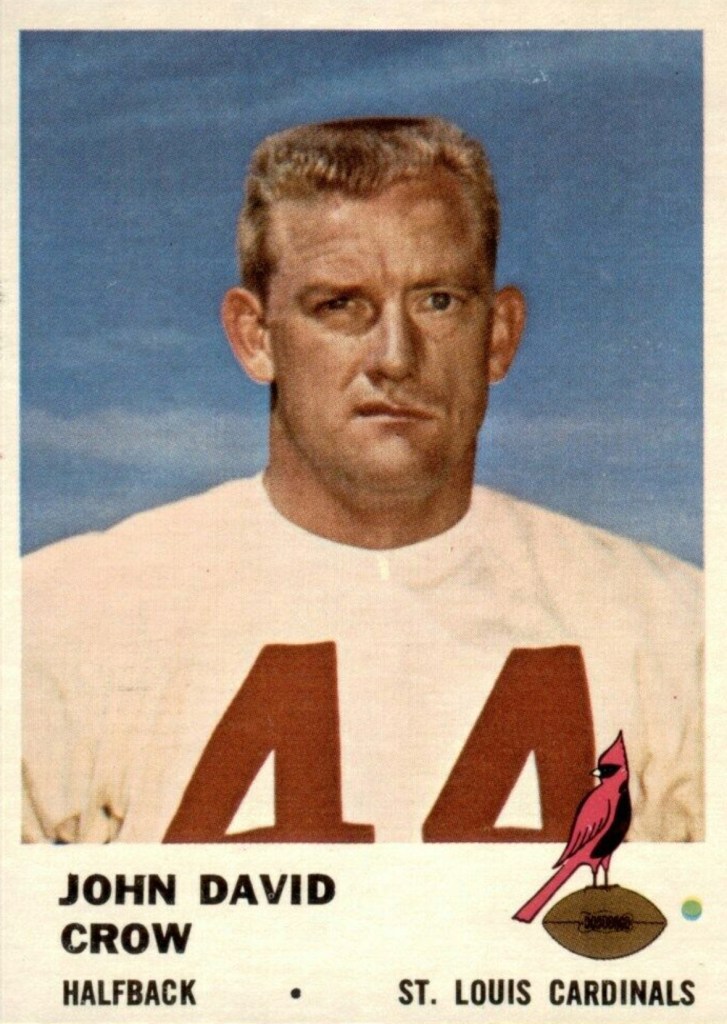
Frustrated about lack of playing time under head coach Wally Lemm, Big Red star running back John David Crow requested a trade after the 1964 season.

Crow won the Heisman trophy at Texas A&M in 1958 and was later the Chicago Cards first pick in the NFL draft. The team moved to St. Louis in 1960 where Crow became a star. His 1,533 total yards and 5.9 yards per carry were tops in the league in 1960 and he scored scored 17 touchdowns in 1962.

However, Crow struggled with injuries during his time in St. Louis. In 1961 he suffered a broken leg. In 1963 a knee operation limited him to just nine carries.

John David Crow was the Cardinals top pick in the 1958 NFL Draft.
Continue reading
Historic Moments in Missouri Governor’s Cup Rivalry

The Missouri Governor’s Cup was awarded to the winner of the annual meetings between the St. Louis Cardinals and the Kansas City Chiefs.

The first Governor’s Cup game was played two seasons after the NFL/AFL merger agreement in 1966. The contest was played on August 17, 1968, at Municipal Stadium in Kansas City in front of 47,462 fans. The Chiefs held on for a 13-10 victory.

The Chiefs pretty much dominated the Governor’s Cup series with a preseason record of 13-6-1. The Chiefs held 3-1-1 regular season advantage over the Big Red as well.

Here is a summary of the 20 preseason Missouri Governor’s Cup games played between the Chiefs and Cardinals.

Continue reading
Big Red Legends: Roy Green

Posted by Bob Underwood

He was known as “Jet Stream” in St. Louis, but at Henderson State University they called Roy Green the “Green Machine.”

“Every now and then we’ll be talkin’ about the ol’ days and someone’ll bring up the Monticello game and how incredible Roy was,” Green’s college coach Ralph Carpenter said in a St. Louis Post Dispatch story back in 1981.

Carpenter was referring to the Green Machine’s performance against the University of Arkansas-Monticello in 1978. Green returned a kickoff 90 yards for a touchdown, a punt 65 yards for a touchdown, and returned an interception 40 yards for a touchdown. He even blocked a field goal late in the game.

“There was nothin’ he couldn’t do. Nothin’,” Carpenter said.

Green was a NAIA All-American cornerback at Henderson State. He intercepted 9 passes his senior season and averaged over 13 yards on punt returns and almost 22 yards on kick returns.

Green was a speed burner, running the 40 yard dash in 4.3 seconds. The Cardinals drafted the Magnolia, Arkansas native in the fourth round in 1979 as a defensive back. He played in all 16 games his rookie season and was named the top return specialist by The Sporting News and Pro Football Weekly.

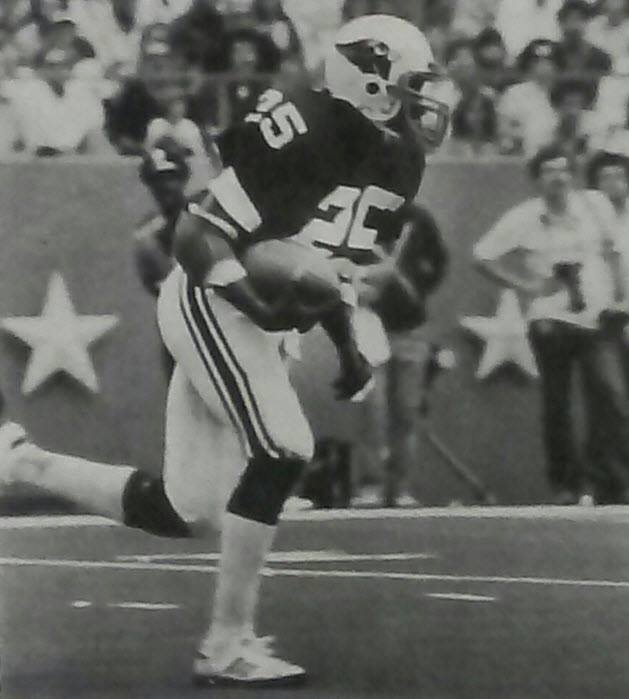
Roy Green returned this kick 106 yards against the Dallas Cowboys in 1979.
Continue reading

For The Birds — Steve Jones and the Cardinals

Nice story on former Big Red running back Steve Jones who scored 9 TDs for the Cardinals in 1976.

designatedhitter's avatarAlex Podlogar

Steve Jones, from his days as one of the greatest Duke Blue Devils of all time.


I’m posting last week’s column in this space because, well, because I was pretty pleased with how it came out, and as a writer, that doesn’t always happen. So allow me to feel good about myself for a bit. And if you missed the column about local sports star Steve Jones and his ties to the NFL’s Cardinals, here you go:

For The Birds

They get together every year now.

Before 2007, that didn’t happen. After all, the morning after the team he owns, the Arizona Cardinals, punched its ticket for the franchise’s first Super Bowl, notoriously frugal owner Bill Bidwill drank day-old coffee — grounds that were made 24 hours earlier, and rewarmed twice.

But he said he drank it smiling, so there’s that.

Since Bill’s boy Michael took over football operations, though, former Cardinals, be they of the Chicago variety, who last won the franchise a championship…

View original post 1,229 more words

Remembering Dr. Prentice Gautt

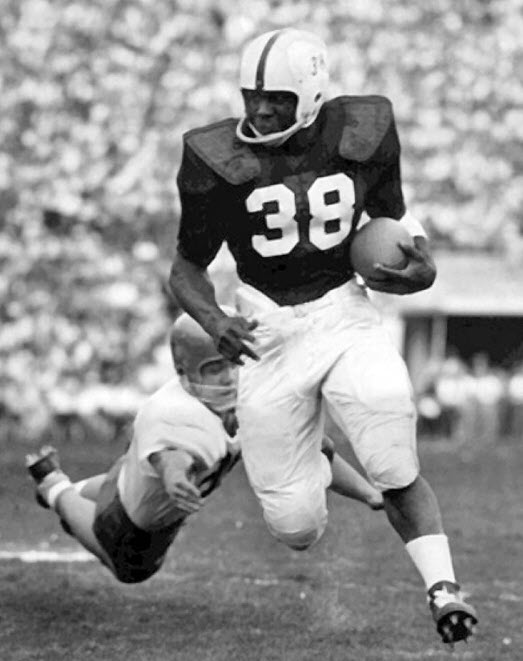
Prentice Gautt is a name that may not be familiar to younger generations of football fans. But the former Oklahoma Sooner, Cleveland Brown, and St. Louis Cardinal running back was a pioneer in the 1950s, becoming the first African-American to play football at OU, joining the team just one year after most racial restrictions were lifted at the school.

Gautt became a two-time All-Big Eight running back, led the team in rushing his junior and senior seasons, and earned MVP of the 1959 Orange Bowl. He was named an Academic All-American his senior season.

Although Gautt excelled on the gridiron, he faced many of the same racial obstacles encountered by Jackie Robinson off the field. Many local restaurants refused to serve him and he was not allowed to stay in some hotels with the rest of the team. Gautt also went through verbal and physical abuse at OU, including late hits in practice.

Continue reading

How the 1961 Cardinals Dominated the Toronto Argonauts

Posted by Bob Underwood

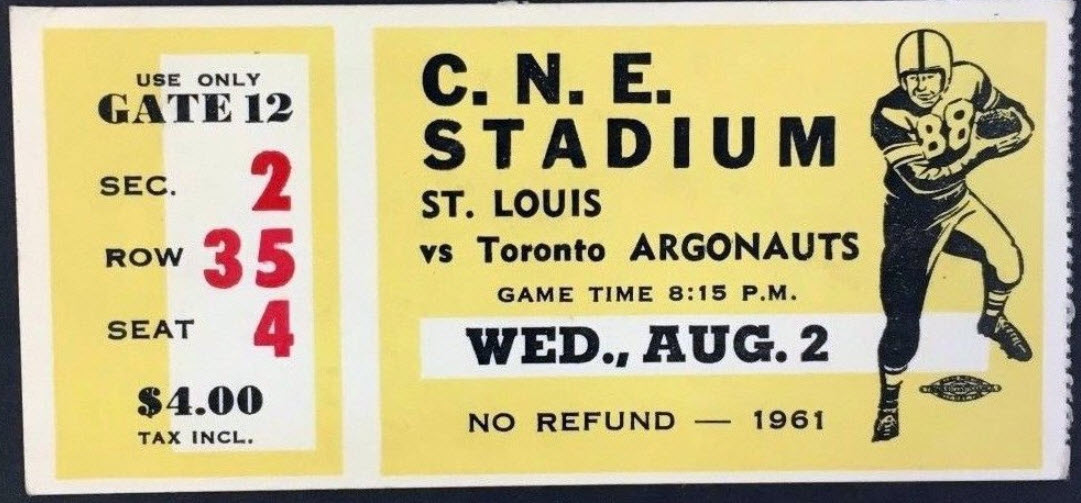
TICKET STUB from CFL Game

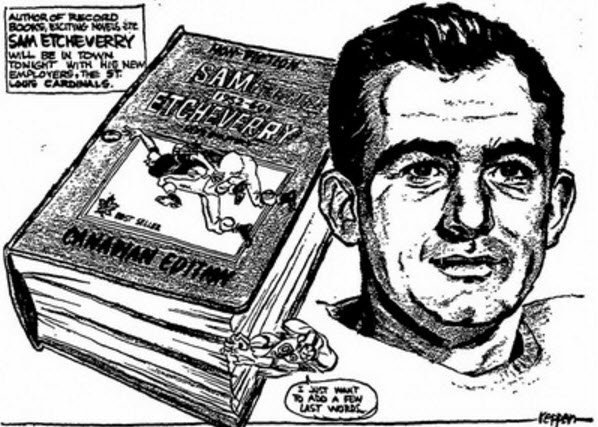
A few months after the 1961 signing of legendary Canadian Football League quarterback Sam “The Rifle” Etcheverry, the St. Louis Cardinals traveled north of the border to play an exhibition game with the Toronto Argonauts. Oddly enough, it wasn’t the first time the NFL and CFL hooked up. The New York Giants tangled with the Ottawa Rough Riders in 1950 and 1951. And the Chicago Cardinals beat the Argos in 1959 by a score of 55-26.

In 1960, the Cardinals relocated from Chicago and finished 6-5-1 in their inaugural season in St. Louis. The offense  featured star running back John David Crow and wide receiver Sonny Randle. However, quarterback play was inconsistent and below average. As a matter of fact, the 1960 trio of John Roach, King Hill, and first round pick George Izo would all be playing elsewhere by opening day of the 1961 season. Etcheverry, who threw for over 30,000 yards and 183 TDs with the Montreal Alouettes, was brought in to lead the team to an NFL Championship. Unfortunately, Sam injured his throwing shoulder on his first pass in training camp and struggled during his two seasons in St. Louis.

Etcheverry in CFL exhibition

The Cardinals spent 10 days practicing 12-man football to prepare for their exhibition matchup against the Argonauts, which would be played under Canadian rules. CFL fields are 10 yards longer, 15 yards wider, and feature 25-yard end zones, with 12 starters on each side. Fortunately for the Big Red, head coach Frank “Pop” Ivy was well-versed in the Canadian game—he led the Edmonton Eskimos to three straight Grey Cup titles before taking the reins of the Chicago Cardinals in 1958. Assistant coach Ray Willsey also brought CFL experience, having played quarterback for a season in Edmonton. With a bigger, stronger roster and a staff familiar with Canadian football, the Cardinals had every advantage going in.

Continue reading