Dedicated to the former, players, executives, and broadcasters who were part of the St. Louis Football Cardinals family.


Dedicated to the former, players, executives, and broadcasters who were part of the St. Louis Football Cardinals family.
(Editor’s Note: This is a short excerpt from Robert L. Burnes book Big Red: Story of the Football Cardinals, published in 1975 )
To present a picture of Wally Lemm, the best approach, perhaps, is to indicate what he was not as a coach. He was not, for instance, the bristling, driving type of coach Vince Lombardi was. Nor was he the perfectionist that Paul Brown always has been. Nor the fundamentalist that Tom Landry has been. Nor was he a devotee of the George Allen system, which dictates that twenty hours of every working day, seven days a week, must be given over to making the football team a winner.
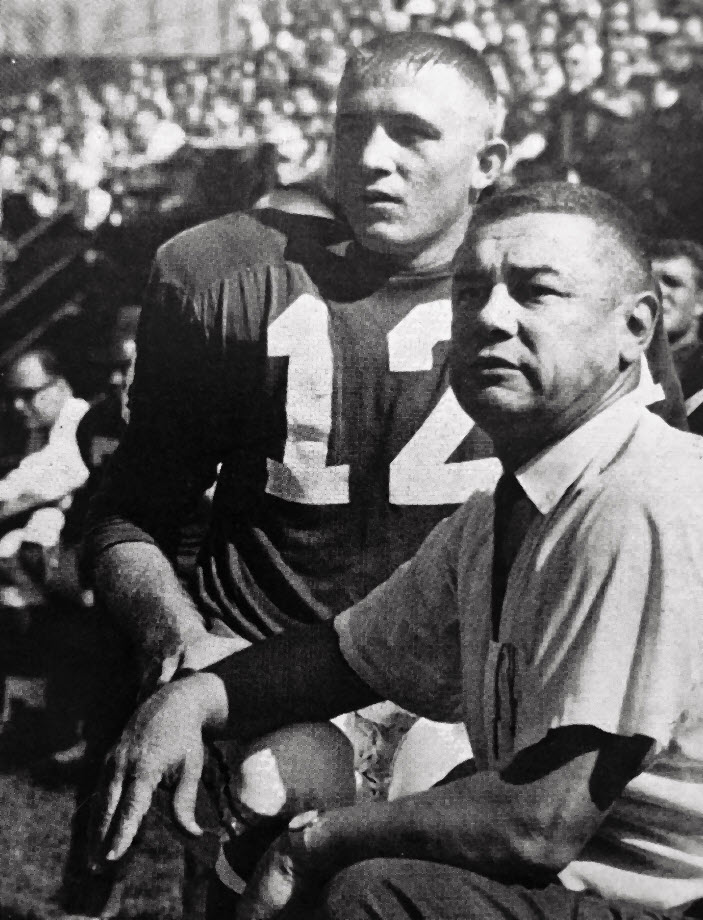
If he resembled any man in approach to the job, if not in flamboyancy, it was probably Jim Conzelman. Jim Conzelman always said, “Football is supposed to be fun,” and Lemm echoed the sentiment. Football was a major part of Jim Conzelman’s life, yet he walked away from the game several times and found other pursuits equally rewarding. So did Wally Lemm.
Continue reading(Editor’s Note: Jim Hanifan became the Cardinals head coach on January 30, 1980. Below is Coach Hanifan’s account of how he was hired. It was taken from an excerpt of his book Beyond Xs and Os: My Thirty Years in the NFL)
My name had come up when there were openings for head coaching jobs in the NFL, and i really thought if I kept my nose clean I would have a shot at getting one of those jobs. I just didn’t think it would be in St. Louis.
Even though I really did want the job, it still caught me a little off guard when Don (Coryell) walked into my office and said Bill (Bidwill) had called to request permission to speak with me. I didn’t hear from him until a week later. We were coaching at the Pro Bowl in Hawaii, and after the game I was back in my hotel room packing and getting ready to leave for the airport when Bill called. We agreed to meet two days later in San Diego.

The day that Bill arrived, it was pouring down rain. I agreed to meet him in a parking lot, because he wanted to be very secretive. I told him to follow me, and we would stop off and have lunch at a Mexican restaurant that was on the way to my house. It was managed by my friend Ray Ogas, who now works for the Rams.
Continue reading(Editor’s Note: This is an excerpt from Robert L. Burnes’ book Big Red: Story of the St. Louis Football Cardinals. Frank “Pop” Ivy was a member of the 1947 NFL Champion Chicago Cardinals and was the St. Louis Cardinals first head coach after they relocated from Chicago. He led them to a 6-5-1 record in 1960, but the team fell apart in 1961 and he resigned with just two games left in the season.)
When Pop Ivy abruptly resigned with two games left in the 1961 season, the general public impression was that he had been fired.
Walter Wolfner (the Cardinals Director of Operations) denied it vigorously. “We had no fault to find with Pop’s work, especially considering the injuries. He was under no pressure from management. In fact, I was waiting until the end of the season to talk to him about a new contract. I was shocked when he told me he wanted out.” The coach maintained that no one had pushed him, no one had leaned on him to leave. “It was my own idea,” he said.
The first sign that this was going to be an inauspicious weekend for the Big Red came when their Ozark Airlines charter touched down on the icy runway at Appleton International Airport—yes, that’s what they call it—less than 24 hours before their Super Bowl Tournament game against the Green Bay Packers.
The pilot tried the brakes, but they wouldn’t cooperate. The plane kept skidding down the runway. I gripped the seat handles tightly while behind me several Cardinals players screamed out in terror.

Finally—miraculously—the plane came to a stop. When it made a left turn to head for the terminal, it was only about 15 yards from a chain link fence at the end of the runway.
Shaken but safe, the players and coaches departed the plane—thanking the pilot as they exited—and boarded buses that would take them to the Paper Valley Hotel (where most Packers opponents stayed) in Appleton.
Later coach Jim Hanifan held an impromptu press conference in his hotel suite. Slipping into my smartass mode, I asked Hanifan what effect the plane landing might have on the players’ performance the following day.
Continue readingThe oldest living member in the Pro Football Hall of Fame rose from his chair, eyed his target squarely and moved in for the play. With his wife, Peggy, cheering him on, he huffed, and he puffed, and he blew out every one of the 99 candles on his birthday cake.
His health may be betraying him—his hearing is shot, his mobility is compromised, and he fell and broke his shoulder while walking out to the mail box a few months ago—but Charley Trippi hasn’t lost the singular trait that defined his magnificent football career, where he was a multi-dimensional player at the University of Georgia and in the NFL.

“I’ve never met a man more determined than my grandpa,” says Clint Watson. “If you go back and look at all the pictures of him in action, you’ll see a similarity. You’ll see the face that he’s making. He’s gritting his teeth and straining with every ounce of energy and determination that he has. When you see those pictures, you’re like, ‘That’s Pa-Pa.’ He has a determination about him that a lot of people just don’t have.”
Trippi lives in Athens, Ga., not far from the college stadium where he starred in the mid-1940s. You used to be able to drive by his house and see Charley out in his yard, raking leaves. But he pretty much stays inside any more.
Born on December 14, 1921 in Pittston, Pa., Trippi was the son of a Sicilian immigrant coal miner. His mother died when Trippi was young. Trippi played football at Pittston High School, but he felt he needed to add some weight before playing in college.
Continue readingMost St. Louis football fans probably remember Jim Hanifan from his assistant coaching days with Don Coryell and the Cardiac Cards or when he was the Big Red head coach from 1980-1985. Younger fans may remember his time with the St. Louis Rams or later as the straight-shooting beloved analyst in the Rams radio booth with Steve Savard.
But some forget that Jim Hanifan was one of the few assistant coaches who stuck around for a year after Don Coryell left the Cardinals in 1978. Owner Bill Bidwill shocked the football world when he hired college coaching legend Bud Wilkinson, who led Oklahoma to three national championships and 14 conference titles. At the time, Hanifan had a year left on his contract, but he also had several offers to leave St. Louis.

“I had options,” Hanny wrote in his book Beyond Xs & Os, My Thirty Years in the NFL. “At least six teams were vying for my services. I thought I was back in high school, being recruited all over again.”
Hanifan decided to stay in St. Louis and work under Wilkinson, a man who he once said “probably has more charisma than anybody I have ever met in my life.”
Continue readingSt. Louis has lost yet another institution with the passing of the beloved Jim Hanifan who coached with both the Big Red and St. Louis Rams.
Hanifan was the offensive line coach for the Football Cardinals from 1973-1978 and then head coach from 1980-1985. He later won Super Bowl rings while coaching with Washington and the St. Louis Rams. Many younger St. Louis NFL fans will remember Hanifan in the Rams radio booth from 2004-2008.
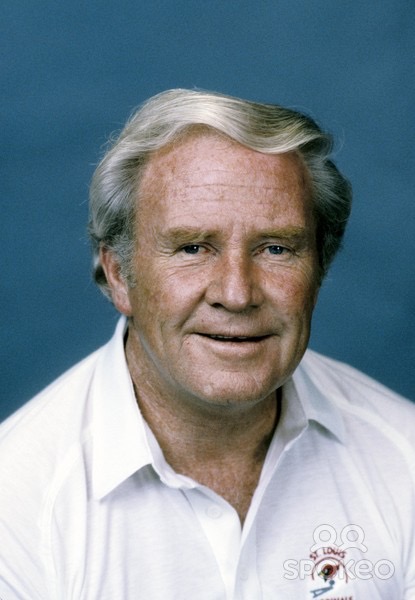
Hanifan was known as one of the top offensive line coach’s in the history of the NFL. His 1975 Big Red offensive line of Dan Dierdorf, Conrad Dobler, Tom Banks, Bob Young and Roger Finnie allowed only 8 sacks the entire season, an NFL record at the time. His first season in Washington, his offensive line gave up only 9 sacks as the Redskins went 14-2 and won the Super Bowl. And Hanifan coached a St. Louis Rams offensive line that protected Kurt Warner during the Greatest Show on Turf years which included two Super Bowl appearances and a Championship.
Coach Hanifan loved St. Louis, his former players, and the thousands of friends that he made over his 60+ years in football. He will be greatly missed.
Tributes started pouring in on social media just a couple of hours after the learning of Coach Hanifan’s passing.
Continue reading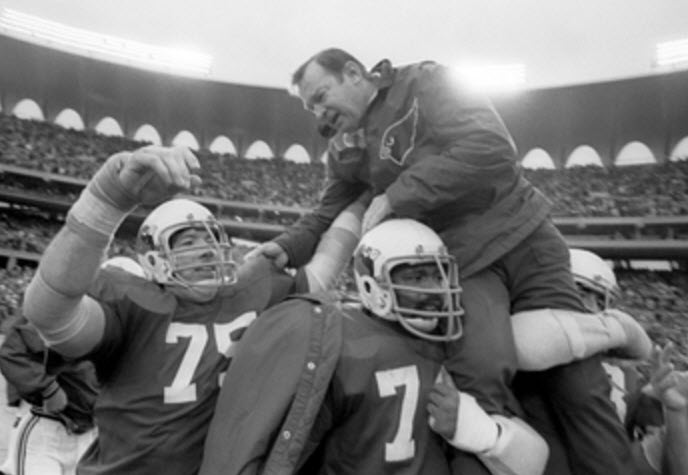
“Coryell was an innovator, but he was more than that. He was a coach who turned around the St. Louis Cardinals and the San Diego Chargers and made both into offensive juggernauts—not just good, but record-setting offensive teams.” – John Turney
NFL Historian John Turney of Pro Football Journal writes about how the chances of former Big Red head coach Don Coryell making the Pro Football Hall of Fame appear to be slipping.
Read Turney’s full story at SI.com here.
Posted by Bob Underwood

The late Chuck Drulis was known for his defensive talents. Some said that he was a generation ahead of his time. “He was a defensive genius,” linebacker Jamie Rivers told the St. Louis Post Dispatch in 1972.
The Pennsylvania native was a star offensive lineman at Temple before playing seven seasons in the NFL for the Chicago Bears and Green Bay Packers. He arrived in Chicago in 1956 as a defensive assistant under Cardinals head coach Ray Richards and would serve under five different head coaches until his sudden death in 1972. Drulis was also credited with two victories when he shared head coaching duties after Frank “Pop” Ivy resigned with two games left in the 1961 season.
WILDCAT
Drulis made his mark by devising the “safety blitz.” It involved a defensive back bursting through the offensive line just as the ball was snapped in a frantic attempt to sack the quarterback. Drulis called it the “Wildcat” and he had been tinkering with it for a couple of years, but needed a player who had the toughness and nerves of steel to successfully carry it out. That player arrived in 1960. Larry Wilson was drafted as a running back out of Utah in the eighth round of the draft, but was converted to safety by Drulis in training camp. After struggling early, Wilson showed just enough to make the team. He ended up starting 11 of 12 games his rookie season intercepting two passes.
Continue reading


 THE BIG RED ZONE