Dedicated to the former, players, executives, and broadcasters who were part of the St. Louis Football Cardinals family.


Dedicated to the former, players, executives, and broadcasters who were part of the St. Louis Football Cardinals family.
(Editor’s Note: This is a reprint of a story written by Howard Balzer on August 3, 1994 about Jackie Smith’s induction into the Pro Football Hall of Fame)
Canton, Ohio—Friends, fans and family.
On another sun-splashed Saturday in the city where professional football was born, a new class of the game’s greats was enshrined in the Pro Football Hall of Fame.
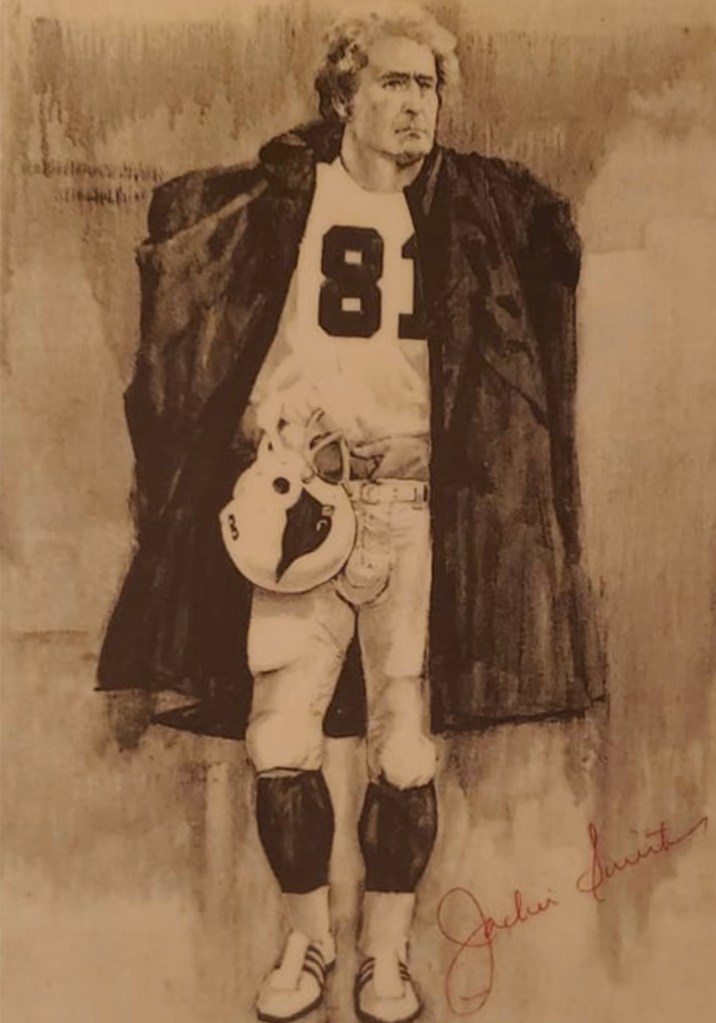
Friends, fans and families came from far and wide to honor them and show their love. Emotions were high as even the most stone-faced among them broke down. No matter what was said beforehand, the new Hall of Famers become overwhelmed by the moment, by the hospitality of the volunteers, by the fans lined deep on the sidewalks waving during the parade Saturday morning.
For Jackie Smith, the weekend was a whirlwind of non-stop action. He seemed to be operating on adrenaline alone, overcome by what is happening, surrounded by friends, fans and family.
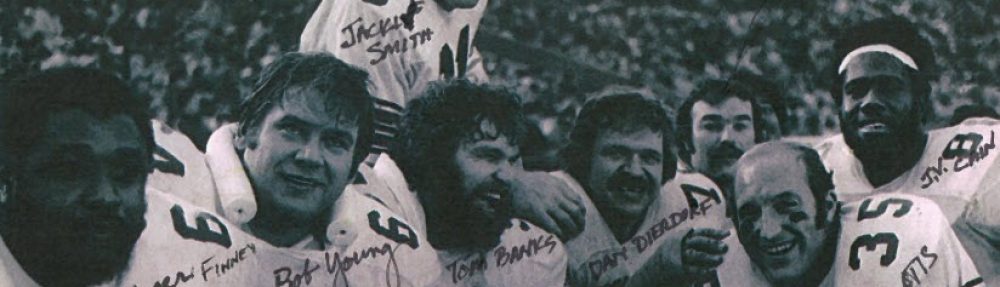
Friends: They came from everywhere, including teammates Charley Johnson, Jim Hart, Larry Stallings, Bill Koman, Terry Miller, Steve Jones, Tim Kearney, Kurt Allerman.
Continue readingIt’s been a rough couple of weeks for St. Louis sports fans. We lost baseball Hall of Famer Lou Brock on September 6 and on Friday we learned of the passing of former Big Red great Larry Wilson.
Wilson played college ball at the University of Utah and was the Chicago Cardinals 7th round draft choice in the 1960 NFL draft. He went on to a 13 year Hall of Fame career in St. Louis.
The Rigby, Idaho native played in 8 Pro Bowls and was named first team All-Pro five times. He was selected to the NFL 1960s All-Decade Team, the 75th Anniversary Team, and the NFL 100 All-Time Team. Wilson was the NFL Defensive Player of the Year in 1966 and is the all-time Cardinals leader in interceptions with 52. He was inducted into the Pro Football Hall of Fame in 1978.

Wilson was a member of the Cardinals organization as a player, coach, and executive for over 40 years. He was inducted into the team’s Ring of Honor in 2006.
Arizona Cardinals owner Michael Bidwill had this to say about Wilson.
“Besides my father, Larry Wilson was the most influential male figure in my life. He was someone who truly lived his faith and demonstrated it daily in the kindness he showed every single person he met. Any of us lucky enough to be in his orbit – whether that was for a few minutes or four decades – was always better off from the experience. I will remember Larry Wilson first as a fantastic person but then obviously as one of the greatest players the National Football League has ever seen. It’s fitting that his passing coincides with the league’s 100th birthday because his toughness and the way he revolutionized his position make him one of our game’s most unforgettable figures. Whether on the field playing with casts on both hands or brightening the lives of every person he knew, Larry’s selflessness defined who he was and how we will all remember him.”
Larry Wilson is survived by Nancy, his wife of 40 years, as well as daughter Christie, son Larry Jr., numerous grandchildren and one great-grandchild.
The Missouri Governor’s Cup was awarded to the winner of the annual meetings between the St. Louis Cardinals and the Kansas City Chiefs.
The first Governor’s Cup game was played two seasons after the NFL/AFL merger agreement in 1966. The contest was played on August 17, 1968, at Municipal Stadium in Kansas City in front of 47,462 fans. The Chiefs held on for a 13-10 victory.
The Chiefs pretty much dominated the Governor’s Cup series with a preseason record of 13-6-1. The Chiefs held 3-1-1 regular season advantage over the Big Red as well.
Here is a summary of the 20 preseason Missouri Governor’s Cup games played between the Chiefs and Cardinals.
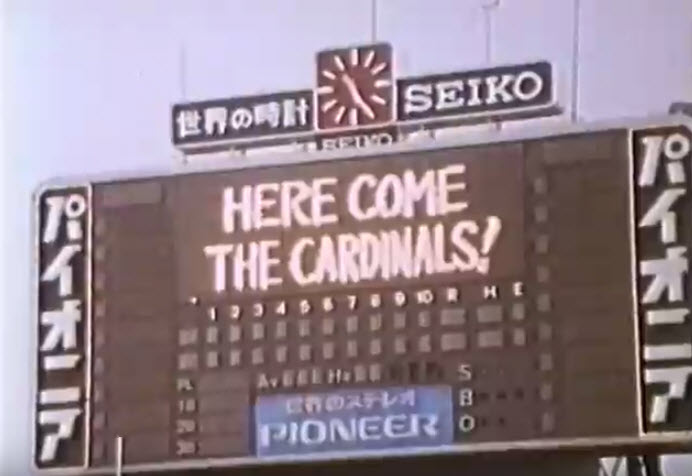
Continue readingThe St. Louis Cardinals and San Diego Chargers became the first teams to play an NFL game outside of North America on August 16, 1976.
The game was called the Mainichi Star Bowl and was sponsored by the Mainichi Daily News, an English-language newspaper in Tokyo. However, a lettuce farmer from California, Frank Takahashi, was the sole promoter of the game. A self-described “football nut,” Takahashi footed the entire bill for the exhibition contest.
“If we have a sellout, I will break even,” Takahashi told Doug Grow of the St. Louis Post-Dispatch in a 1976 interview.
Unfortunately, it was not a sellout, and Takahashi reportedly lost tens of thousands of dollars to bring the NFL to Japan.
Regarding the game, Jim Hart’s 60-yard touchdown pass to Ike Harris helped give the Cardinals a 20-10 victory. It was the second victory of the preseason for St. Louis.
(Editor’s Note: Former St. Louis Post Dispatch columnist and Cards beat writer Jeff Meyers wrote this story a few years ago on Big Red guard Conrad Dobler and has been kind enough to share it here in the Big Red Zone)
As his autobiography “They Call Me Dirty” suggests, Conrad Dobler inflicted a world of hurt during his 10 years as a leg-whipping, eye-gouging, gut-punching, head-slapping and — famously — finger-biting offensive lineman in the brutal world of professional football.
Dobler dished it out but also took his share of hits. Knee and shoulder injuries put him on the operating table and broken fingers mangled his hands. Perpetual pain became part of his job description. Pain management was assigned to the coach. Playing with pain was the order of the day.
“Coaches get you motivated, they train you mentally to go out there and play through the pain,” the former All-Pro guard said. “It starts in training camp when you have to practice with injuries, You’ve heard the old saying: ‘Can’t make the club in the tub.’ The goal of the coaches is to get us in ‘playing shape,’ which means to reach a higher threshold of pain. You learn to live with it and say ‘it is what it is.’ ”

Desperate for defensive line help in the 1974 NFL draft, Big Red personnel director George Boone shocked everyone when he selected tight end James Victor Cain with the 7th overall pick in the draft.
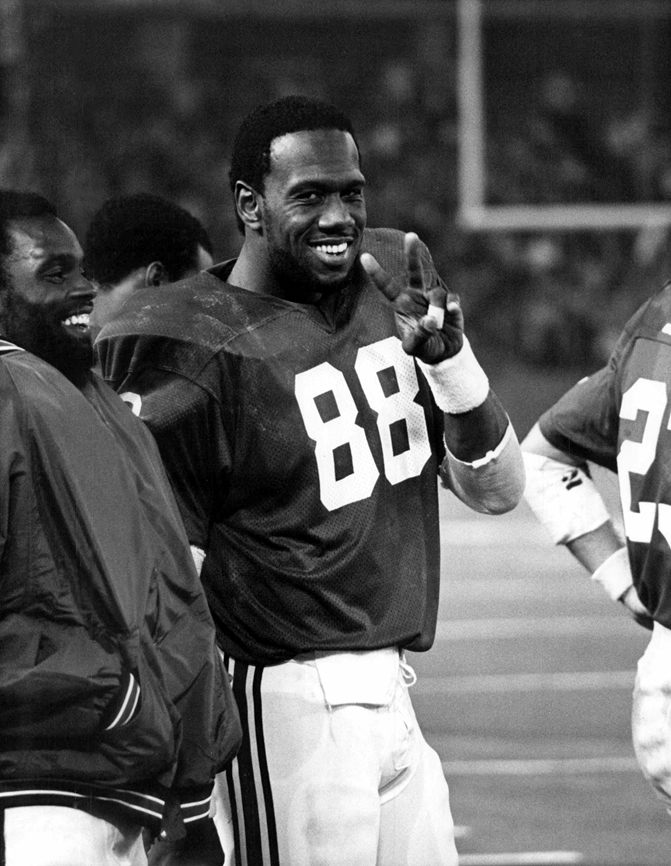
“We didn’t feel we could pass up a guy like that,” Boone told the St. Louis Post Dispatch after the Cardinals picked the Colorado All-American.
The Big Red already had a pretty good tight end in future Hall of Famer Jackie Smith, so they worked Cain out at both tight end and wide receiver during his first training camp. And it didn’t take long for the tall, rangy Houston native to make an impression with his new teammates in St. Louis.
“You seldom see a wide receiver hit people all over the field the way J.V. does,” reserve quarterback Bill Bynum said. “He’s so big and strong that he can get down into the pattern quickly and doesn’t have to worry about having trouble releasing from the linebacker.”
“Cain is just super,” head coach Don Coryell said. “He catches everything. That’s what I like about him. He’s a tremendous athlete.”
Continue readingWith the NFL celebrating its centennial season in 2019, the league will soon be announcing its top 100 players of all-time. I thought it would be fun to go back and rank the Big Red’s top 100 players who played in St. Louis.
The Cardinals moved from Chicago after the 1959 season and played 28 years in St. Louis before Bill Bidwill moved to the desert in 1988. Several great players played under the arch during this period including four Hall of Famers.
These rankings are only based on the player’s time spent in St. Louis. Consideration was given to the player’s statistics, All-Pro/Pro Bowl selections, team leadership, and impact in the community. It is next to impossible to compare eras, so many of these picks were very difficult.
The Top 100 St. Louis Football Cardinals of All-Time: 90-81
90. Donny Anderson (RB)
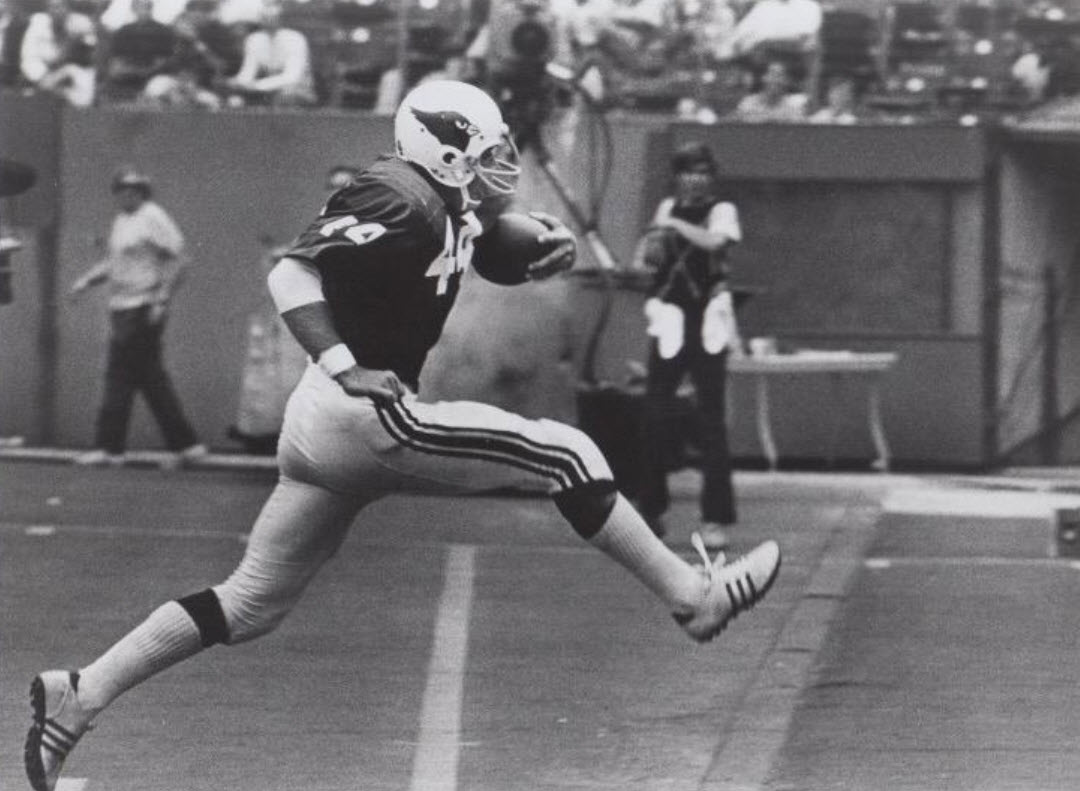
Donny Anderson was acquired for MacArthur Lane in 1972 and scored 25 TDs in just three seasons in St. Louis. Anderson lead the team in rushing in 1972 and finished second in the league with 13 TDs in 1973. The versatile Anderson also was team co-leader with 41 receptions in ’73. He was the Green Bay Packers first round draft pick out of Texas Tech in 1965 and was a member of their Super Bowl teams in 1966-1967.
Continue readingPosted by Bob Underwood
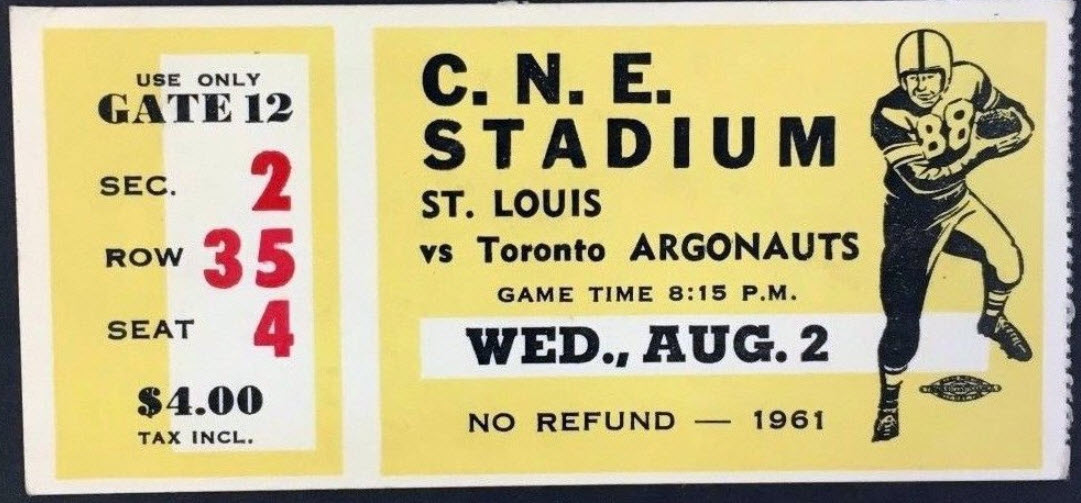
A few months after the 1961 signing of legendary Canadian Football League quarterback Sam “The Rifle” Etcheverry, the St. Louis Cardinals traveled north of the border to play an exhibition game with the Toronto Argonauts. Oddly enough, it wasn’t the first time the NFL and CFL hooked up. The New York Giants tangled with the Ottawa Rough Riders in 1950 and 1951. And the Chicago Cardinals beat the Argos in 1959 by a score of 55-26.
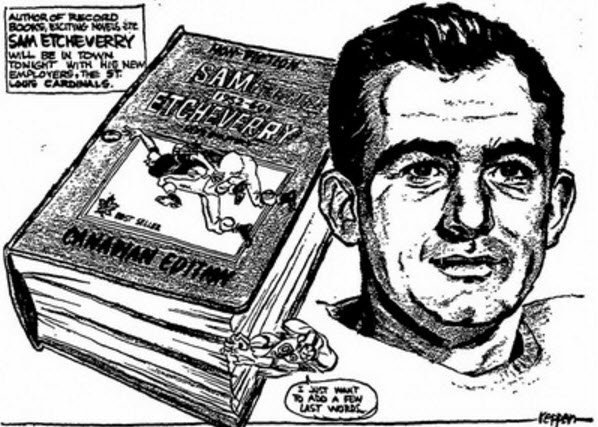
In 1960, the Cardinals relocated from Chicago and finished 6-5-1 in their inaugural season in St. Louis. The offense featured star running back John David Crow and wide receiver Sonny Randle. However, quarterback play was inconsistent and below average. As a matter of fact, the 1960 trio of John Roach, King Hill, and first round pick George Izo would all be playing elsewhere by opening day of the 1961 season. Etcheverry, who threw for over 30,000 yards and 183 TDs with the Montreal Alouettes, was brought in to lead the team to an NFL Championship. Unfortunately, Sam injured his throwing shoulder on his first pass in training camp and struggled during his two seasons in St. Louis.
The Cardinals spent 10 days practicing 12-man football to prepare for their exhibition matchup against the Argonauts, which would be played under Canadian rules. CFL fields are 10 yards longer, 15 yards wider, and feature 25-yard end zones, with 12 starters on each side. Fortunately for the Big Red, head coach Frank “Pop” Ivy was well-versed in the Canadian game—he led the Edmonton Eskimos to three straight Grey Cup titles before taking the reins of the Chicago Cardinals in 1958. Assistant coach Ray Willsey also brought CFL experience, having played quarterback for a season in Edmonton. With a bigger, stronger roster and a staff familiar with Canadian football, the Cardinals had every advantage going in.


 THE BIG RED ZONE