Read about Larry Wilson’s famous interception with two broken hands in a 1965 game against the Pittsburgh Steelers. Another great post by Mike Tomasik over at Retro Simba!
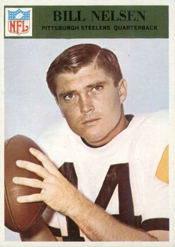
Larry Wilson caused NFL quarterbacks to lay awake at night with worry and Bill Nelsen was no exception.
Nelsen, who died April 11, 2019, at 78, had a prominent role in the play that defined the Pro Football Hall of Fame career of Wilson, the St. Louis Cardinals safety who was as tough as any player in the NFL.
On Nov. 7, 1965, in a game between the Cardinals and Pittsburgh Steelers at Busch Stadium in St. Louis, Wilson intercepted a pass from Nelsen while wearing casts on both fractured hands.
Wilson’s performance remains an enduring testament to his willpower and illustrates why he was so widely respected.
Mind game
Wilson, who played his entire professional career (1960-72) with the Cardinals, fractured his hands in a game against the New York Giants on Oct. 31, 1965, at New York.
Cardinals head coach Wally Lemm said Wilson would play the following…
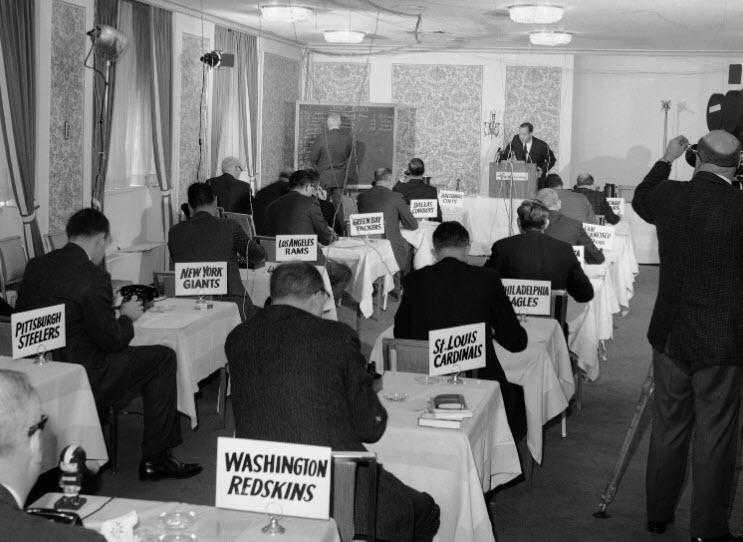
On the eve of the 2019 NFL Draft, let’s take a close look at the 31 St. Louis Football Cardinals first round draft picks.
The Big Red drafted four quarterbacks who combined to start only 5 games for the team. Two Hall of Famers were drafted, but only one actually suited up in St. Louis. Of the 31 top picks, 12 can be considered busts. Many of these picks were made by the late George Boone, who was the team’s long time player personnel director. He may or may not have had incriminating photos of owner Bill Bidwill.
And so, here’s my ranking of the Big Red first round draft picks, worst to first. Let me know what you think!
31. Kelly Stouffer QB (1987 – 6th Pick)
On the 10th anniversary of the Steve Pisarkiewicz pick, the Big Red reached for the relatively unknown Stouffer out of Colorado State who also admitted he was shocked to be taken that early in the draft. He also held out of training camp and never signed with the Big Red. He was traded a year later to Seattle for three draft picks where he started 16 games in four seasons.
Kelly Stouffer at Colorado State
30. Clyde Duncan WR (1984 – 17th Pick)
The Big Red passed on eventual rookie of the year Louis Lipps and drafted Duncan after one good college season at Tennessee. There was only one problem according to then head coach Jim Hanifan, “He couldn’t play.” Duncan, who was admittedly surprised to be a first round pick, held out of training camp and then suffered a shoulder injury. He caught only four passes in his career and was out of football after two season.
Clyde Duncan
29. Steve Little K (1978 – 15th Pick)
It’s never a good idea to draft a kicker in the first round, but the Big Red were desperate to replace their all-time leading scorer Jim Bakken. They drafted Little out of Arkansas who had a big leg (kicked 67 yard FG), but was never able to transition to kicking FGs without a tee. Little lasted three forgettable seasons. After being released in 1980, Little was paralyzed after crashing his car on a rain slicked highway in St. Louis.
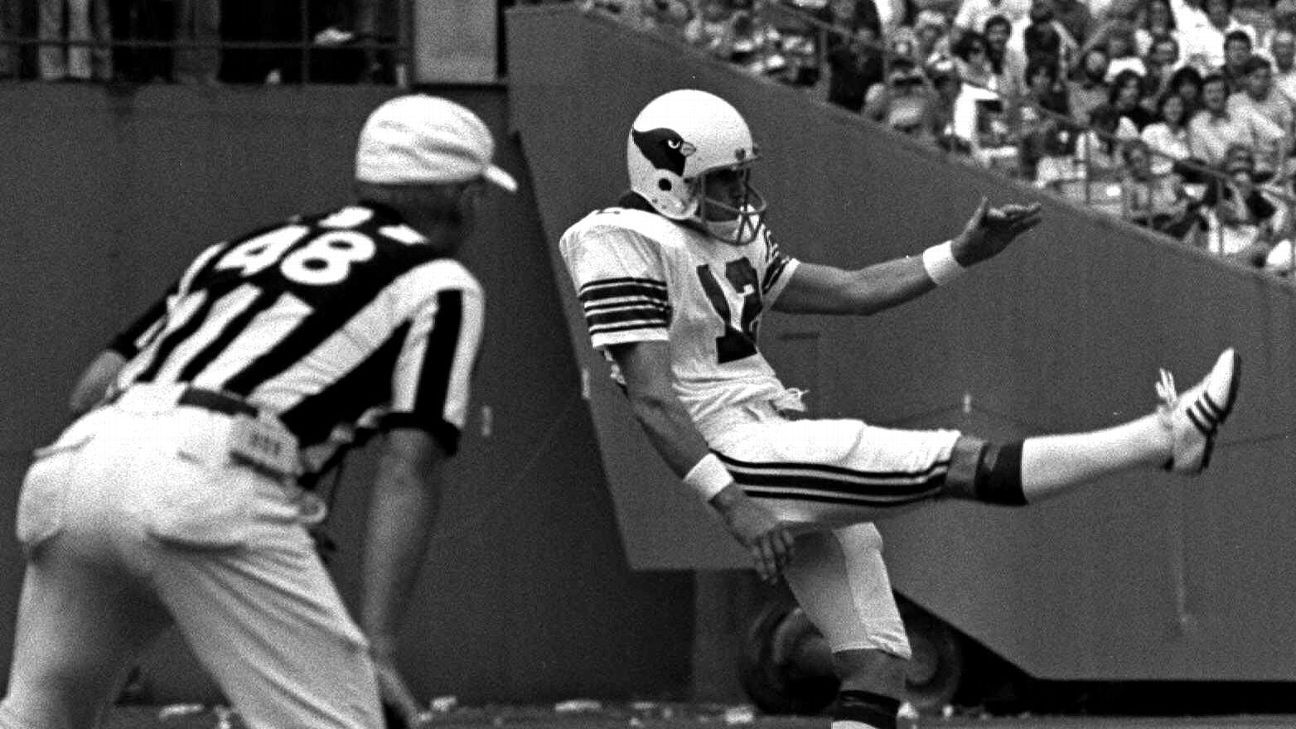
Steve Little also served as the team’s punter for two seasons
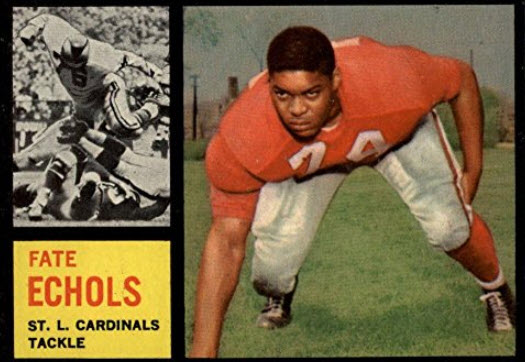
28. Fate Echols DT/OT (1962 – 6th Pick)
The Northwestern product arrived at training camp overweight and was cut before the season started. He was later resigned and played sparingly over the next two seasons before being released.
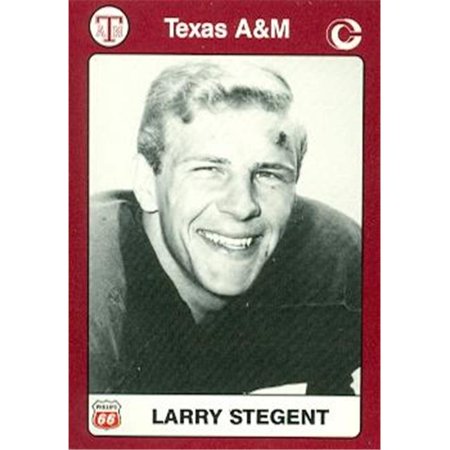
27. Larry Stegent RB (1970 – 8th Pick)
The Big Red drafted the injury prone running back out of John David Crow’s old school Texas A&M. The Cards drafted him despite Stegent playing very little his senior season. He was injured before training camp in the College All-Star game and then tore knee ligaments on his first preseason carry and was out for the year. He caught one pass in 1971 and tore up his other knee and never played another down in the NFL.
I’m posting last week’s column in this space because, well, because I was pretty pleased with how it came out, and as a writer, that doesn’t always happen. So allow me to feel good about myself for a bit. And if you missed the column about local sports star Steve Jones and his ties to the NFL’s Cardinals, here you go:
For The Birds
They get together every year now.
Before 2007, that didn’t happen. After all, the morning after the team he owns, the Arizona Cardinals, punched its ticket for the franchise’s first Super Bowl, notoriously frugal owner Bill Bidwill drank day-old coffee — grounds that were made 24 hours earlier, and rewarmed twice.
But he said he drank it smiling, so there’s that.
Since Bill’s boy Michael took over football operations, though, former Cardinals, be they of the Chicago variety, who last won the franchise a championship…
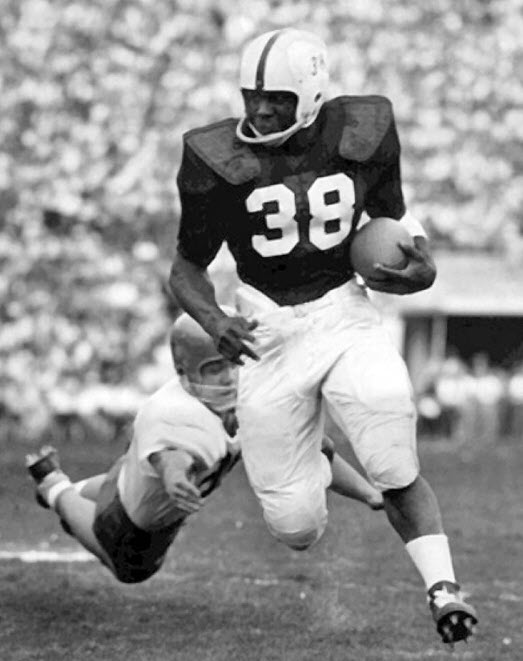
Prentice Gautt is a name that may not be familiar to younger generations of football fans. But the former Oklahoma Sooner, Cleveland Brown, and St. Louis Cardinal running back was a pioneer in the 1950s, becoming the first African-American to play football at OU, joining the team just one year after most racial restrictions were lifted at the school.
Gautt became a two-time All-Big Eight running back, led the team in rushing his junior and senior seasons, and earned MVP of the 1959 Orange Bowl. He was named an Academic All-American his senior season.
Although Gautt excelled on the gridiron, he faced many of the same racial obstacles encountered by Jackie Robinson off the field. Many local restaurants refused to serve him and he was not allowed to stay in some hotels with the rest of the team. Gautt also went through verbal and physical abuse at OU, including late hits in practice.
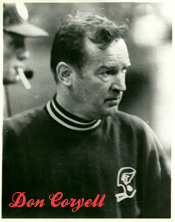
02/09/2023 Update: The NFL finally got it right by inducting Don Coryell into the Pro Football Hall of Fame. Revisit this 2019 post by retrosimba on the great Don Coryell.
Don Coryell was the best coaching hire in St. Louis Cardinals football history.
On Jan. 18, 1973, the football Cardinals, responding to an unsolicited letter, hired Coryell to be their head coach.
An innovator known for producing winning college teams and high-powered offenses, Coryell overcame his lack of NFL experience and transformed the Cardinals into a championship-caliber club.
In five seasons (1973-77) under Coryell, the Cardinals posted a 42-27-1 record and twice qualified for the playoffs. Those were the Cardinals’ first playoff berths since 1948 and their first division titles since moving from Chicago to St. Louis in 1960.
Few predicted such success in January 1973. The Cardinals had finished the 1972 season with their second consecutive 4-9-1 record under head coach Bob Hollway. They ranked 23rd in scoring in the 26-team NFL.
Coryell, 48, had a 104-19-2 record in 12 years at San Diego State. He had developed future NFL players such…
Art Monk grabbed 11 passes for 136 yards and 2 TDs in the Redskins 29-27 win over the Big Red.
The St. Louis Cardinals and Washington Redskins met at RFK Stadium on December 16, 1984. The stakes were simple. A Big Red victory would give them their first NFC East title since 1975 and their first home playoff game. A loss would end their season. Turnovers and mistakes gave the Redskins a 23-7 halftime lead and it appeared the Cardinals would soon be dusting off their golf clubs. But, as it turned out, the Cards were not ready to give up.
“At halftime, we said that anybody who didn’t think we couldn’t win the game shouldn’t go back out.” — Big Red safety Benny Perrin.
The Big Red came out on fire in the second half. After a slow start to the game, Neil Lomax shredded the Washington secondary going 25 of 28 for 314 yards and two touchdowns. He finished the with 468 passing yards, his best day as a pro. It was the most passing yards ever given up by a Redskin defense. “We were a little nervous; this was our first big game for most of us. Once we got our timing down in the second half, things opened up a little bit.”
For the majority of their 28 seasons in St. Louis, the Big Red had only three starting quarter backs. That’s pretty remarkable considering the team only saw the post season three times. But, there weren’t many QBs better than Charley Johnson (1961-1969), Jim Hart (1966-1983) and Neil Lomax (1981-1987).
PASSING YARDS – CAREER
YARDS
Jim Hart (1966-1983)
34,639
Neil Lomax (1981-1987)
19,376
Charley Johnson (1961-1969)
12,928
Jim Hart played 18 seasons in St. Louis and still holds almost all career passing records.
Former Big Red greats, cheerleaders and fans convened at The Village Bar on December 9 to watch the Cardinals take on the Detroit Lions. Greg Marecek was there signing his book “The St. Louis Football Cardinals: A Celebration of the … Continue reading →
A few months after the 1961 signing of legendary Canadian Football League quarterback Sam “The Rifle” Etcheverry, the St. Louis Cardinals traveled north of the border to play an exhibition game with the Toronto Argonauts. Oddly enough, it wasn’t the first time the NFL and CFL hooked up. The New York Giants tangled with the Ottawa Rough Riders in 1950 and 1951. And the Chicago Cardinals beat the Argos in 1959 by a score of 55-26.
In 1960, the Cardinals relocated from Chicago and finished 6-5-1 in their inaugural season in St. Louis. The offense featured star running back John David Crow and wide receiver Sonny Randle. However, quarterback play was inconsistent and below average. As a matter of fact, the 1960 trio of John Roach, King Hill, and first round pick George Izo would all be playing elsewhere by opening day of the 1961 season. Etcheverry, who threw for over 30,000 yards and 183 TDs with the Montreal Alouettes, was brought in to lead the team to an NFL Championship. Unfortunately, Sam injured his throwing shoulder on his first pass in training camp and struggled during his two seasons in St. Louis.
The Cardinals spent 10 days practicing 12-man football to prepare for their exhibition matchup against the Argonauts, which would be played under Canadian rules. CFL fields are 10 yards longer, 15 yards wider, and feature 25-yard end zones, with 12 starters on each side. Fortunately for the Big Red, head coach Frank “Pop” Ivy was well-versed in the Canadian game—he led the Edmonton Eskimos to three straight Grey Cup titles before taking the reins of the Chicago Cardinals in 1958. Assistant coach Ray Willsey also brought CFL experience, having played quarterback for a season in Edmonton. With a bigger, stronger roster and a staff familiar with Canadian football, the Cardinals had every advantage going in.