Why Terry Metcalf Left the Cardinals for the CFL

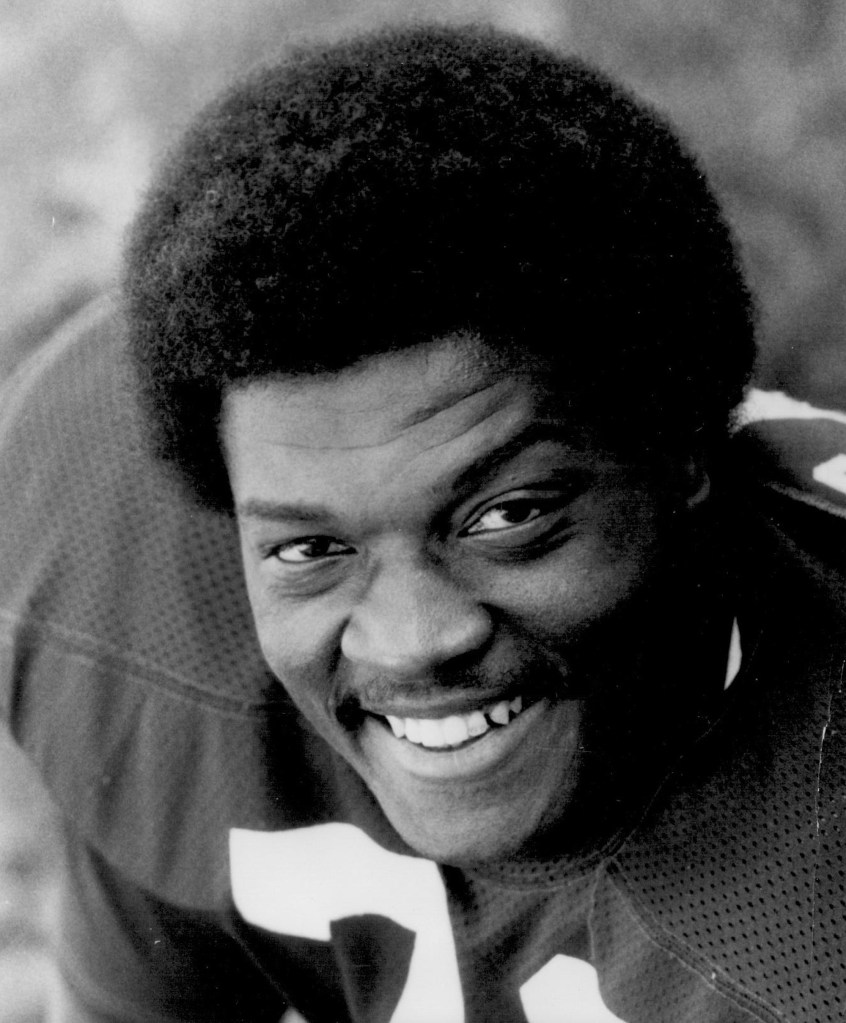
“Best of luck to him,” Cardinals director of operations Joe Sullivan told the St. Louis Post Dispatch after star running back Terry Metcalf announced he was taking his talents to the Canadian Football League in March of 1978. “Money is a great thing to have in life when you’re young.”

Metcalf signed a seven-year, $1.4 million contract with the Toronto Argonauts after turning down a 3-year, $240,000 offer from the Cardinals and curiously similar proposals from other NFL teams. Metcalf was looking for a reported $300,000 yearly contract.
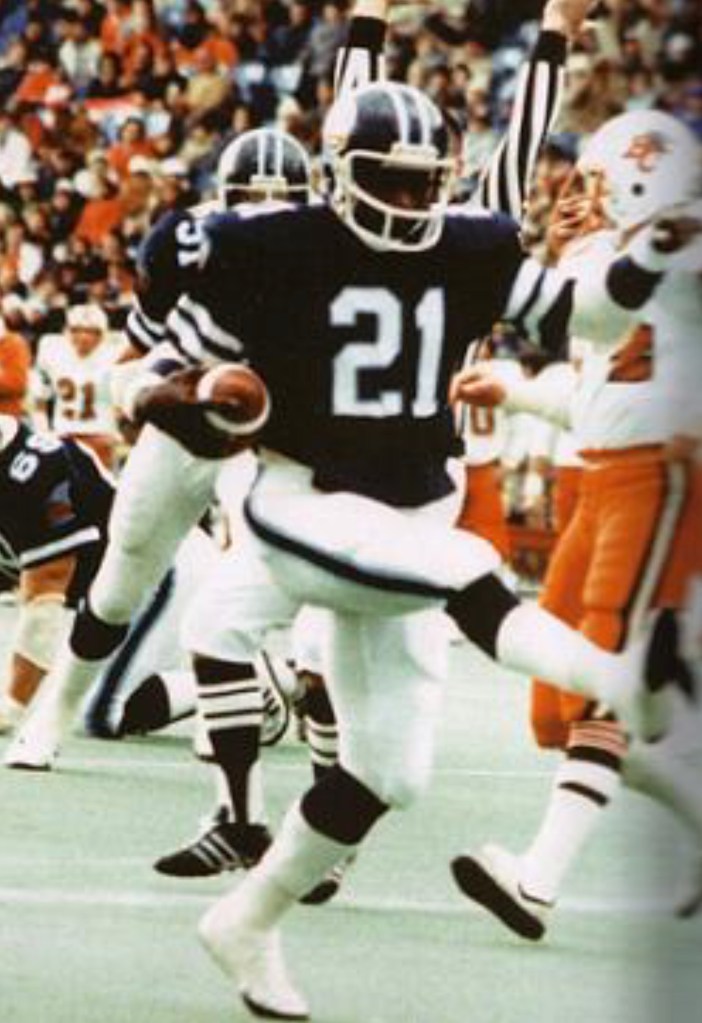
“I wouldn’t have made as much in five years in St. Louis as I’ll make in one year in Toronto,” Metcalf told the St. Louis Post Dispatch after the deal was announced. “I laid in bed all Saturday night thinking about it. There were a lot of doubts in my mind, but I have to do what’s right for me.”

Metcalf added, “I thought I would still be in the NFL, but nobody seemed willing to want to talk. So I had to look elsewhere.”

The 26-year-old Metcalf was known as “The Franchise” in St. Louis and was the Cardinals’ third-round draft choice in 1973 out of Long Beach State. He quickly became one of the greatest all-purpose backs the game had ever seen.

In 1974, Metcalf became the first NFL player to average 30 yards per kick return and 10 yards per punt return in the same season. The following year he set an NFL record with 2462 combined yards and became one of only four players to account for touchdowns by rushing, receiving, kick return, punt return, and passing in a season.

“He did everything for us except drive the bus to the stadium,” Dan Dierdorf said of Metcalf in a 2018 interview on KFNS radio.

Continue reading
Emotional Moments from Jackie Smith’s Hall of Fame Induction

(Editor’s Note: This is a reprint of a story written by Howard Balzer on August 3, 1994 about Jackie Smith’s induction into the Pro Football Hall of Fame)

MAKING A HALL by Howard Balzer

Canton, Ohio—Friends, fans and family.

On another sun-splashed Saturday in the city where professional football was born, a new class of the game’s greats was enshrined in the Pro Football Hall of Fame.

Friends, fans and families came from far and wide to honor them and show their love. Emotions were high as even the most stone-faced among them broke down. No matter what was said beforehand, the new Hall of Famers become overwhelmed by the moment, by the hospitality of the volunteers, by the fans lined deep on the sidewalks waving during the parade Saturday morning.

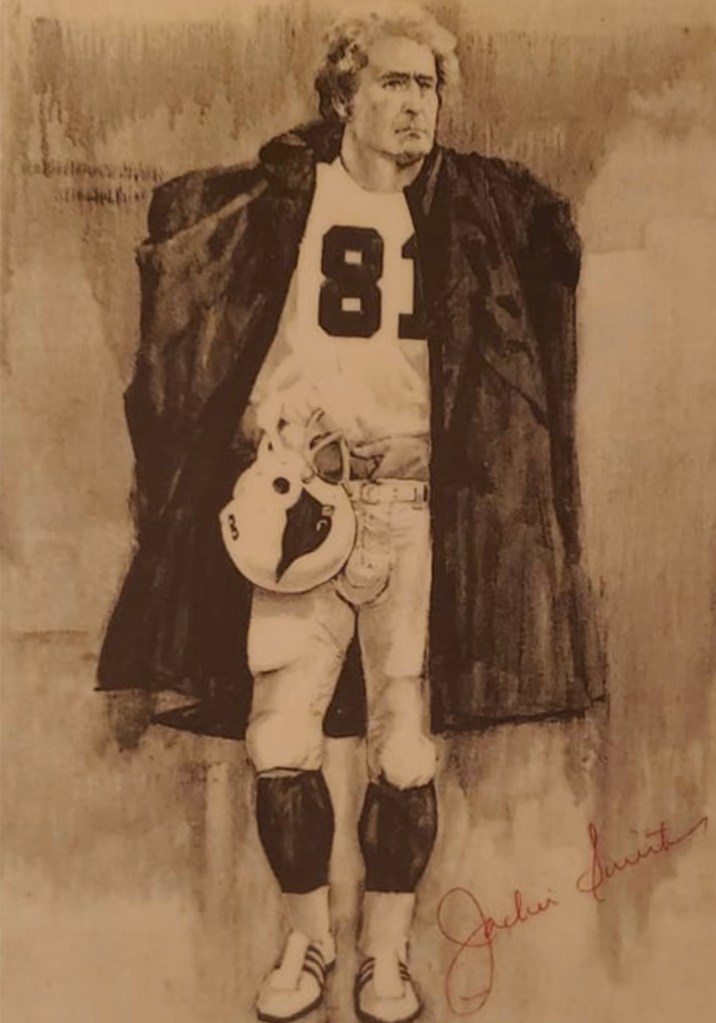
For Jackie Smith, the weekend was a whirlwind of non-stop action. He seemed to be operating on adrenaline alone, overcome by what is happening, surrounded by friends, fans and family.

Friends: They came from everywhere, including teammates Charley Johnson, Jim Hart, Larry Stallings, Bill Koman, Terry Miller, Steve Jones, Tim Kearney, Kurt Allerman.

Continue reading

Big Red Flashback 1962: Cards Hire Wally Lemm

(Editor’s Note: This is a short excerpt from Robert L. Burnes book Big Red: Story of the Football Cardinals, published in 1975 )

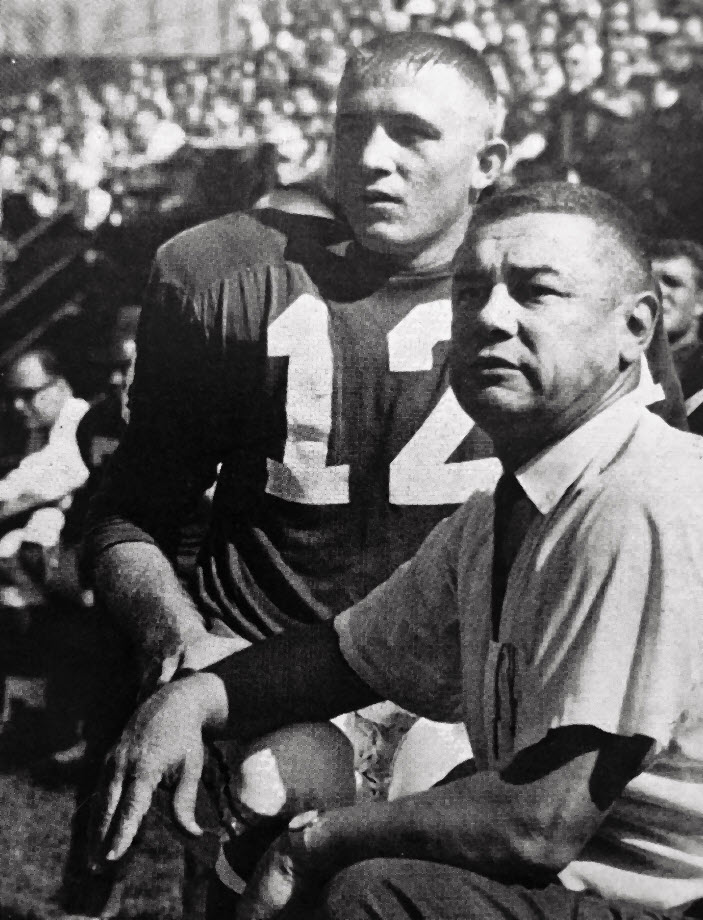
To present a picture of Wally Lemm, the best approach, perhaps, is to indicate what he was not as a coach. He was not, for instance, the bristling, driving type of coach Vince Lombardi was. Nor was he the perfectionist that Paul Brown always has been. Nor the fundamentalist that Tom Landry has been. Nor was he a devotee of the George Allen system, which dictates that twenty hours of every working day, seven days a week, must be given over to making the football team a winner.

Wally Lemm with Big Red QB Charley Johnson in 1962

If he resembled any man in approach to the job, if not in flamboyancy, it was probably Jim Conzelman. Jim Conzelman always said, “Football is supposed to be fun,” and Lemm echoed the sentiment. Football was a major part of Jim Conzelman’s life, yet he walked away from the game several times and found other pursuits equally rewarding. So did Wally Lemm.

Continue reading

Big Red Legends: Ernie McMillan

Posted by Bob Underwood

Ernie McMillan grew up in Chicago, where he lettered in baseball, basketball, and football at DuSable High School. He attended the University of Illinois but didn’t play much in his first three years.

“I had wanted to go to Arizona or some other college far away, but my mother didn’t want me to be too far from home,” Ernie said in a Post Dispatch story in 1969.

McMillan was used primarily as a blocking tight end at Illinois and caught only 7 passes in his college career, but the Cards drafted him in the 13th round of the 1961 NFL draft. The 6-foot-6 McMillan reported to camp at 283 pounds and requested to switch to tackle just a few days into practice. The Big Red agreed, and neither would regret it.

Ernie McMillan was a four time Pro Bowl tackle for the Big Red from 1961-1974.

“When Billy Bidwill came to Illinois to sign me, I told him I didn’t think I could make the team,” McMillan told attendees at the annual kickoff luncheon in 1961. “I taught school for six months and I realized there had to be a better and easier way to make a living, so here I am.”

Continue reading

Big Red Flashback 1965: Why the Cards traded John David Crow

Posted by Bob Underwood

Frustrated about lack of playing time under head coach Wally Lemm, Big Red star running back John David Crow requested a trade after the 1964 season.

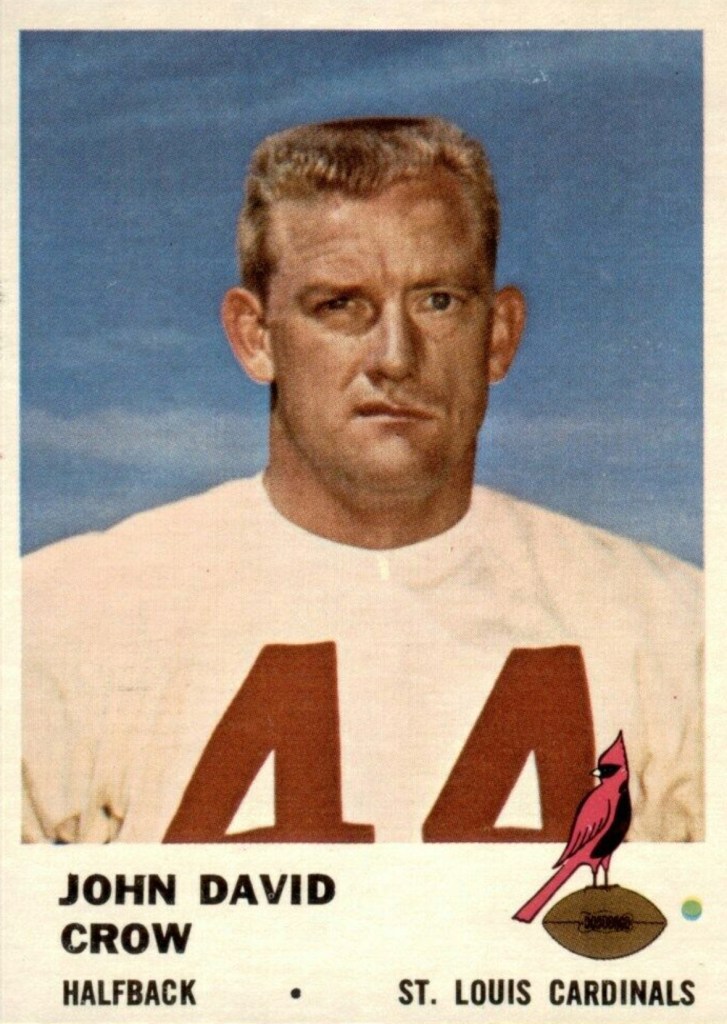
Crow won the Heisman trophy at Texas A&M in 1958 and was later the Chicago Cards first pick in the NFL draft. The team moved to St. Louis in 1960 where Crow became a star. His 1,533 total yards and 5.9 yards per carry were tops in the league in 1960 and he scored scored 17 touchdowns in 1962.

However, Crow struggled with injuries during his time in St. Louis. In 1961 he suffered a broken leg. In 1963 a knee operation limited him to just nine carries.

John David Crow was the Cardinals top pick in the 1958 NFL Draft.
Continue reading

Big Red Draft: All-Time Picks by Round

Posted by Bob Underwood

Most people are aware of the historic struggles the St. Louis Cardinals had when it came to the NFL draft. There were some very good drafts over the years (1979-1983 for example), but more times than not, the Big Red left their fans scratching their heads (“They drafted a girl!”).

I thought it would be fun to go back and rank the all-time Big Red draft picks by round. Many on this list were no-brainers, but there were a few very competitive rounds. I’m sure everyone will agree that some of the greatest names in Cardinals history are on this list, including four Cardiac Cards offensive lineman, and all four Hall of Famers. But I also learned something about the Cards top 16th and 20th round picks, Jimmy Lee Hunt and Tom Day. Both were released by the Cardinals and both went on to become stars in the AFL. Hope you enjoy!


ALL-TIME ST. LOUIS CARDINAL DRAFT PICKS BY ROUND

ROUND 1 – ROGER WEHRLI (1969)

Wehrli was a consensus All-American at Missouri when the Cards selected him with the 19th pick in the draft. He went on to a 14 year career in St. Louis that included 3 All-Pro and 7 Pro Bowl selections. He had 40 interceptions, 19 fumble recoveries and was the longtime holder for Big Red kickers. He returned a fake FG for a TD in his final NFL game in 1982. Roger Staubach called him the best cornerback he ever played against. Wehrli was inducted to the Pro Football Hall of Fame in 2007, a member of the College Football Hall of Fame and the 1970s NFL All-Decade Team.

Continue reading

Big Red Flashback 1980: Cards Hire Jim Hanifan

(Editor’s Note: Jim Hanifan became the Cardinals head coach on January 30, 1980. Below is Coach Hanifan’s account of how he was hired. It was taken from an excerpt of his book Beyond Xs and Os: My Thirty Years in the NFL)

My name had come up when there were openings for head coaching jobs in the NFL, and i really thought if I kept my nose clean I would have a shot at getting one of those jobs. I just didn’t think it would be in St. Louis.

Even though I really did want the job, it still caught me a little off guard when Don (Coryell) walked into my office and said Bill (Bidwill) had called to request permission to speak with me. I didn’t hear from him until a week later. We were coaching at the Pro Bowl in Hawaii, and after the game I was back in my hotel room packing and getting ready to leave for the airport when Bill called. We agreed to meet two days later in San Diego.

The day that Bill arrived, it was pouring down rain. I agreed to meet him in a parking lot, because he wanted to be very secretive. I told him to follow me, and we would stop off and have lunch at a Mexican restaurant that was on the way to my house. It was managed by my friend Ray Ogas, who now works for the Rams.

Continue reading

Big Red Drafts: Larry Stegent

Posted by Bob Underwood

Picking eighth in the 1970 NFL draft, the St. Louis Football Cardinals selected running back Larry Stegent out of Texas A&M.

“It’s unbelievable—I’m overwhelmed,” Stegent said in a St. Louis Post Dispatch interview after the draft. “I didn’t feel I’d be picked until much later. I didn’t really think anyone wanted me that much.”

Stegent was an All-American high school halfback and Southwest Conference all-star his sophomore and junior seasons at A&M. The Houston native was slowed by injuries for much of his senior season, but that didn’t stop the Cardinals from drafting him ahead of All-American running back Steve Owens from Oklahoma.

“Owens is a straight-ahead type runner,” Big Red head coach Charley Winner said. “We think Stegent can go outside for us, and he’s a good pass receiver.

Unfortunately, Stegent would never “go outside” for the Cards and became yet another Cards first round disappointment.

Larry Stegent was a high school and college star at Texas A&M when the Cardinals drafted him with the 8th pick in the 1970 draft.
Continue reading

Why Frank “Pop” Ivy Left the Cardinals in 1961

(Editor’s Note: This is an excerpt from Robert L. Burnes’ book Big Red: Story of the St. Louis Football Cardinals. Frank “Pop” Ivy was a member of the 1947 NFL Champion Chicago Cardinals and was the St. Louis Cardinals first head coach after they relocated from Chicago. He led them to a 6-5-1 record in 1960, but the team fell apart in 1961 and he resigned with just two games left in the season.)

When Pop Ivy abruptly resigned with two games left in the 1961 season, the general public impression was that he had been fired.

Walter Wolfner (the Cardinals Director of Operations) denied it vigorously. “We had no fault to find with Pop’s work, especially considering the injuries. He was under no pressure from management. In fact, I was waiting until the end of the season to talk to him about a new contract. I was shocked when he told me he wanted out.” The coach maintained that no one had pushed him, no one had leaned on him to leave. “It was my own idea,” he said.

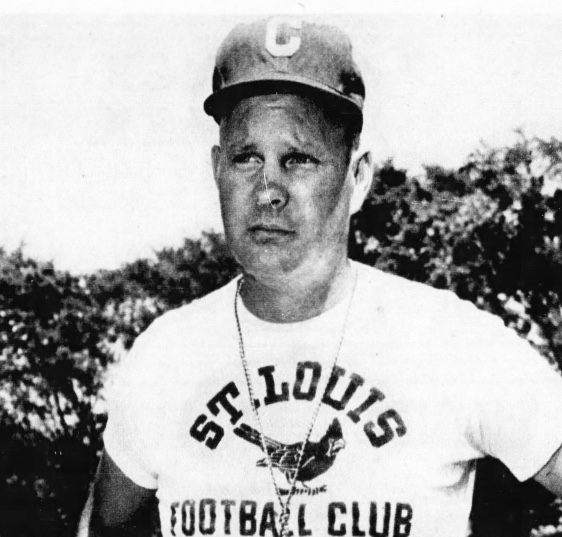
Frank “Pop” Ivy won three Grey Cups with the Edmonton Eskimos in the CFL before landing the head coaching job with the Chicago Cardinals. He compiled a 15-31-2 record in 3+ seasons.
Continue reading

1964: Why the Big Red Almost Moved to Atlanta

Twenty four years before the St. Louis Football Cardinals moved to Arizona, the Bidwill brothers almost relocated to Atlanta.

In April of 1964, Bill and Stormy Bidwill denied a Nashville Banner report of the Cards interest in moving to the Georgia capital.

“No. 1, I’d rather not comment. No. 2, neither I nor my brother ever has talked to the person who carried the story. No. 3, we’re not contemplating any change,” Cards vice president Bill Bidwill told the St. Louis Post Dispatch.

However, a month later, Bidwill admitted that he had received a “fine proposal” from Atlanta to play in their new $18,000,000 stadium starting in 1965.

BIDWILL’S CONCERNS

The Bidwill brothers wanted to stay in St. Louis, but had a number of concerns. First, they weren’t happy with the length of the proposed 30 year lease in an unproven football market. They also weren’t happy with the rental agreement of 12% of the gate revenue and the 5% city tax on ticket sales.

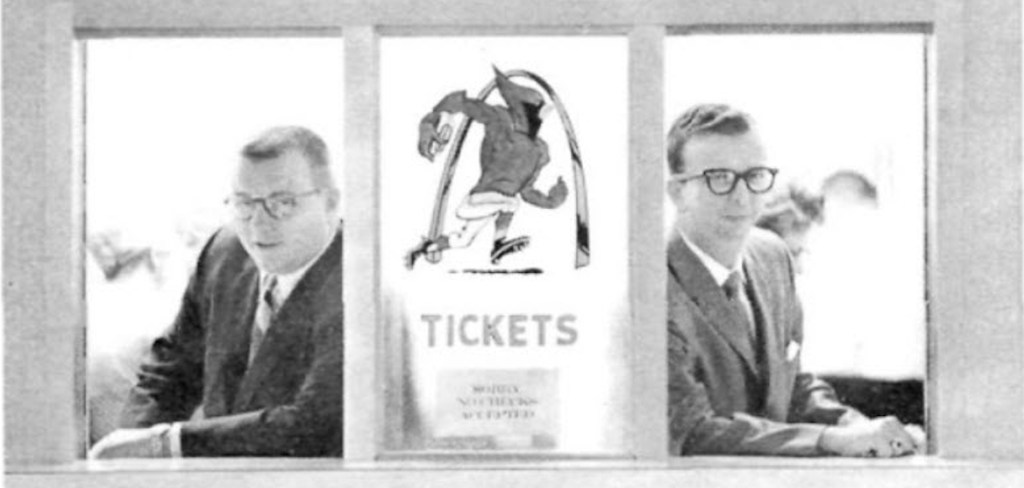
Bill (L) and Stormy (R) Bidwill in a 1965 photo (courtesy Sports Illustrated)
Continue reading