Bob Rowe: From Walk-On to NFL Star

Bob Rowe had dreamed of being a professional football player ever since he was a kid.

“Most kids forget ambitions of being a pro football player about the time they suffer their first split lip,” Rowe said in a 1970 story in the St. Louis Post-Dispatch. “Seeing blood may give them ideas of being a doctor.”
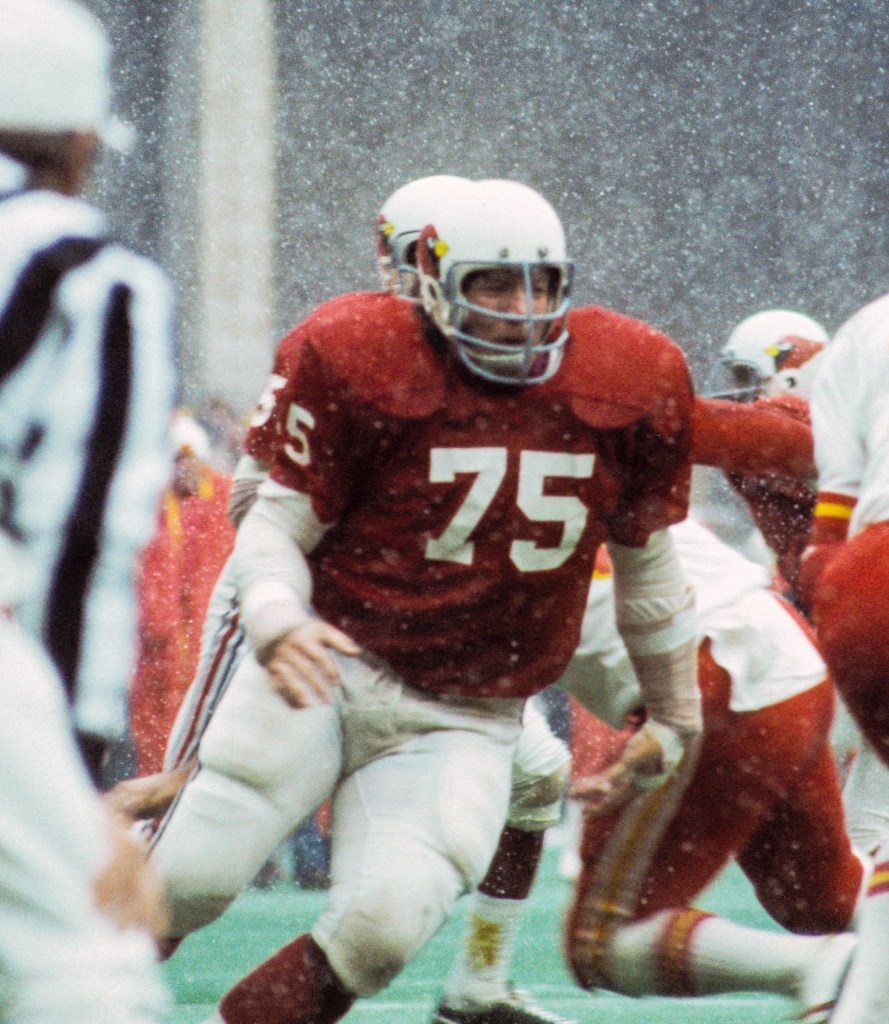
Bob Rowe in 1974 (Photo by Herb Weitman)

But not Rowe.

“I always had my sights on playing pro ball.”

His dream came true when the St. Louis Cardinals selected the 245-pound defensive tackle in the 2nd round of the 1967 NFL Draft.

“I was sort of surprised going that high,” the modest Rowe said in a 1970 interview in the The Flint Journal. “There were a lot of good linemen available, like Bubba Smith, and I just hoped to be drafted.

“I’ve always been a Lions fan ever since I was a kid,” the Michigan native said. “I sort of hoped they would draft me.”

Rowe was a standout in both football and basketball at Flushing (MI) High School, but no scholarship offers came his way. Determined to keep playing, he enrolled at Western Michigan University in Kalamazoo to pursue his college football dream.

“I was a walk-on,” he said.

Continue reading
Willis Crenshaw, St. Louis Sports Star, Dies at 84

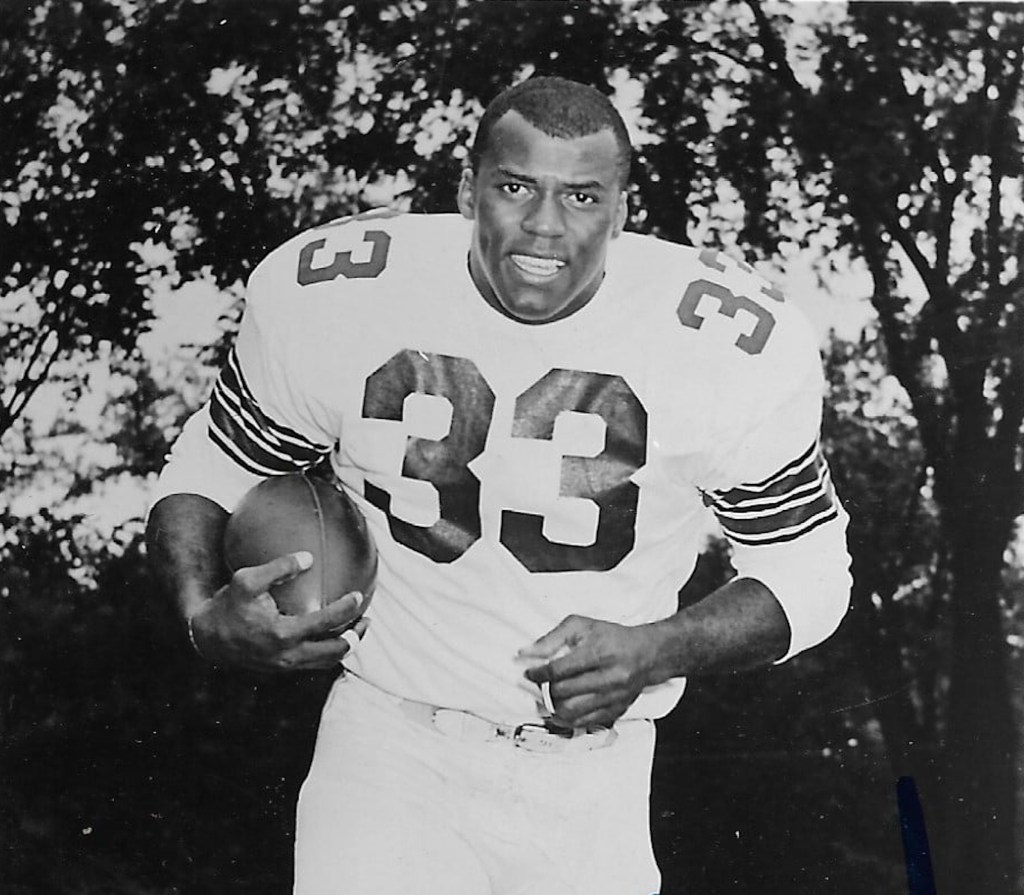
St. Louis native and former Cardinals running back Willis Crenshaw passed away on Monday at the age of 84.

Crenshaw grew up in St. Louis’ Central West End, where he became a standout two-sport athlete at Soldan High School before continuing his football career at Kansas State University. The Cardinals selected him in the ninth round of the 1963 NFL Draft, and he went on to spend six seasons with the Big Red (1964–69) as a versatile offensive threat who could run, block, and catch. He finished his NFL career with the Denver Broncos in 1970.

In a 2022 interview with Dennis Dillon, Crenshaw was asked what it was like performing in front of friends and family at Busch Stadium during his time in St. Louis.

Continue reading

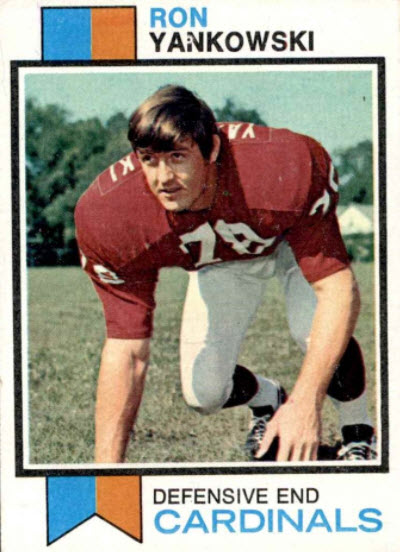
Ron Yankowski: A Quiet Force of the 1970s Cardinals

Throughout the 1970s, the Cardinals’ defensive front saw plenty of change—but one steady presence anchored it all: Ron Yankowski.

“Yank” started 87 games while capably handling both tackle and end duties. Though he spent much of his career outside the spotlight, he quietly delivered consistent, dependable play year after year.

“I’m used to my status,” he said in a St. Louis Post-Dispatch story in 1979. “I never have been one for saying a lot. I don’t need the recognition.”

“My first seven years, I was a starter. Then, all of a sudden, I was a backup. I had to stop and think for a minute. I had to recognize what they wanted me to do to help the team. Then, I tried to do it the best I could.”

“I wanted to be satisfied with myself each week when I picked up my paycheck.”

Continue reading

Why the Cardinals Traded OJ Anderson

O.J. Anderson burst onto the NFL scene with authority.

On September 2, 1979, the rookie running back from the University of Miami stormed through the Dallas Cowboys for 193 yards in his professional debut. His electrifying 76-yard touchdown run in the fourth quarter gave the Big Red a 21–19 lead over the defending NFC champions—and left even legendary Cowboys coach Tom Landry in awe.

“He’s gonna be a star,” Landry said afterward. “He’s gonna gain lots of yards this season. He can outrun all of us. He proved that today.”

Though the Cardinals finished a disappointing 5–11, Anderson delivered one of the greatest rookie seasons in NFL history. He was the unanimous NFL Rookie of the Year, NFC Offensive Player of the Year, and a first-team All-Pro. He set or tied nine NFL marks and nine team records, finishing the year with 1,605 rushing yards—just five shy of Walter Payton’s league-leading total.

Anderson remained the Cardinals’ offensive centerpiece for years to come, surpassing 1,000 rushing yards in five of his first six seasons (the exception being the strike-shortened 1982 campaign, when he gained 587 yards in just eight games). In 1981, barely halfway through his third season, he became the franchise’s all-time leading rusher.

By 1985, injuries began to take their toll. Anderson battled through a nagging right leg injury and missed seven games that season.

Continue reading

From Dreams to the NFL: The Journey of Cardinals Linebacker Eric Williams

They called him ‘Dirty Red’—a name that stuck not just because of his hair, but because of the way he played: rough, relentless, and with zero apologies.

“I like any name that sounds violent,” Williams said in a St. Louis Post-Dispatch interview in 1978. Sometimes they call me ‘Filthy,’ sometimes ‘Red’ and sometimes ‘Dirty Red.’ Anything they call me is all right with me.”

If you’ve ever met Eric Williams, you’d learn that he is a soft-spoken, easygoing guy. But once he strapped on a helmet, he morphed into a relentless force—ferocious, focused, and utterly fearless.

“Off the field, I’m this happy-go-lucky guy that you’re talking to. On the field, I’m crazy. In the game, I’m ready for four quarters of violence. A linebacker has to destroy people. A linebacker has to put fear in people’s hearts—like Willie Lanier and Dick Butkus did. I pattern myself after them.”

Williams overcame many odds on his journey to the NFL. He lost his dad at a young age, overcame a heart murmur, and found a father figure in his high school football coach who kept him on the straight and narrow and never let him quit.

He was introduced to football at a Kansas City Boys Club as a young boy in the 1960s. However, his real training ground was the street. He battled kids who were older, tougher, and twice his size.

“That’s how I got my toughness. They kind of knocked me around a bit.”

It was at Kansas City Central High School, where Williams blossomed under the guidance of his head coach, Charlie Lee.

Lee moved Williams from running back to linebacker and ensured Williams was academically ready for college. Later, Lee advised the young football player against leaving USC after he didn’t see the field during his freshman year.

Continue reading

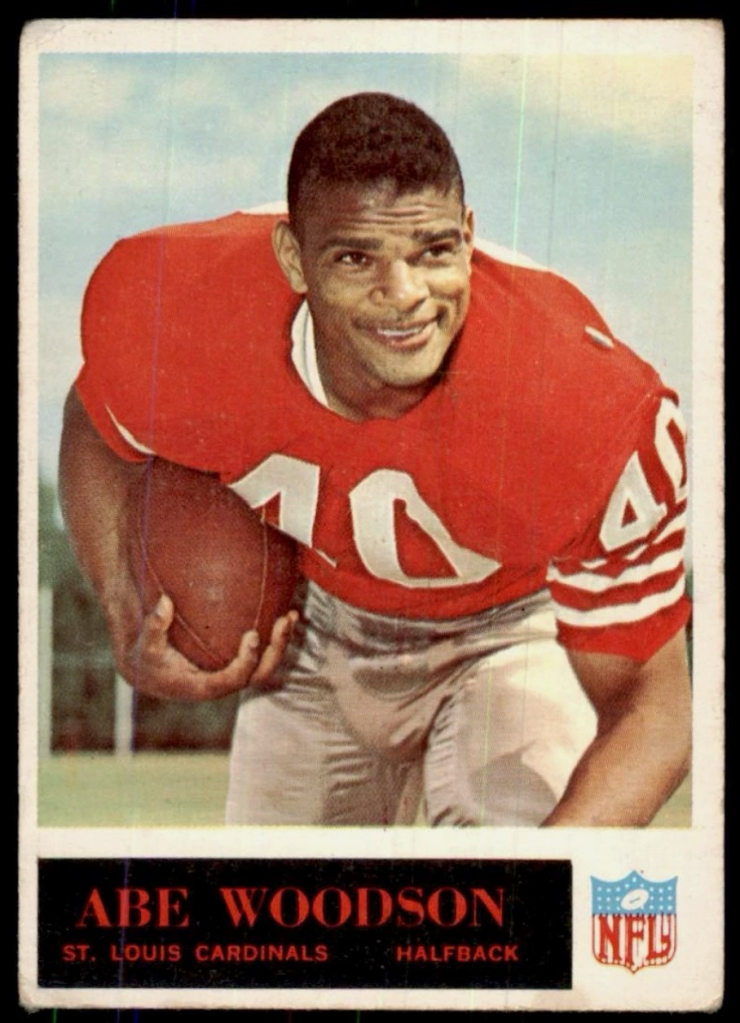
Abe Woodson: An innovator in Cardinals secondary

It’s always a pleasure to reblog stories written by Mark Tomasik over at retrosimba.com.

This week, Mark wrote about former Fighting Illini star Abe Woodson, who was an All-Pro performer for the San Francisco 49ers and was later traded to the Cardinals for John David Crow.

Woodson played two years for the Cardinals as a return specialist and cornerback. He intercepted four passes and recovered a fumble in 13 starts with the Big Red.

Big Red Flashback: Pat Tilley Calls it a Career

On July 28, 1987, the St. Louis Cardinals said goodbye to one of their greatest players.

Wide receiver Pat Tilley failed his physical examination after reporting to training camp at Eastern Illinois University.

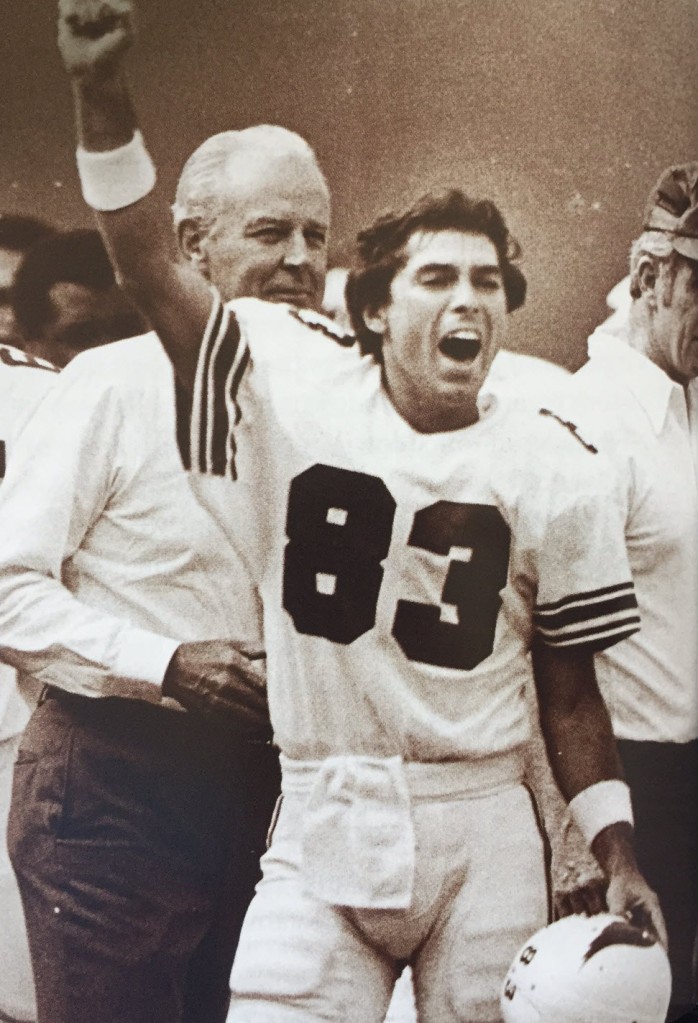
Pat Tilley celebrates on the sideline in 1978

“I’ve got a pretty screwed up back,” the 34-year-old told the St. Louis Post-Dispatch. “I’ve got a ruptured disc that was removed by surgery. I’ve also got a herniated disc. Put those two together and the chances of me ever playing again are very slim.”

‘It’s been almost a year since my operation and I’m still unable to do any activity beyond jogging, and even jogging aggravates my back. I don’t see my back ever improving to the point that I could be able to go out on the Busch Stadium AstroTurf and let Lawrence Taylor hit me.”

Tilley didn’t officially retire until after the season due to some contract formalities.

“There are certain things that have to be done through proper channels with a player who has an injury like mine,” Tilley said.

Tilley played 11 seasons in the NFL. He was the team’s 4th round draft choice in 1976 out of Louisiana Tech. From 1978 through 1982, he led the Cardinals in receiving and finished his NFL career with 468 receptions for 7,005 yards. He scored 37 touchdowns.

Continue reading

How Al “Bubba” Baker Revitalized His Career with the Cardinals

On July 19, 1983, the St. Louis Cardinals upgraded their pass rush when they traded defensive tackle Mike Dawson to the Detroit Lions for veteran defensive end Al “Bubba” Baker.

Dawson was the Cardinals’ No. 1 draft pick in 1976 and started 84 of 88 games in St. Louis. He had 31.5 sacks in seven seasons with the Big Red.

Baker was the NFL Defensive Rookie of the Year for the Lions in 1978, after setting an unofficial NFL record with 23 sacks in a single season. In his five years in Detroit, the 6-foot-6, 260-pounder started 67 games and had 75.5 sacks.

The Jacksonville, FL native was the Lions’ second-round draft pick in 1978 out of Colorado State University. He earned All-Pro honors in his rookie year and Pro Bowls in his first three seasons in the league.

Baker was one of the Lions’ most popular and colorful players. Not only could he sack the opposing quarterbacks, but his cheering, hugging, and hand-slapping style quickly made him a fan favorite in Detroit.

But his open unhappiness about his contract and a falling out with head coach Monte Clark led to the trade.

“I’d get four sacks and he’d (Clark) look at me like that’s still not enough and say, ‘you could have done better,'” Baker said in a St. Louis Post Dispatch interview. “I decided this is a real screwed-up game. I hated football. I just wanted Monday to come because that was the day we got paid.”

“He was unhappy here, and it was time to move on,” Lions’ director of player personnel, Tim Rooney, told the Detroit Free Press. “He may be happier elsewhere.”

Continue reading

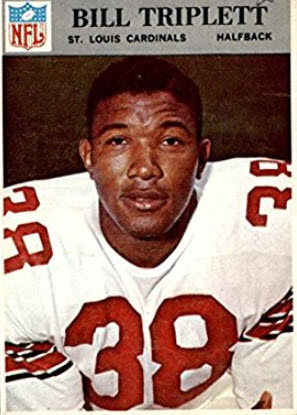
How Bill Triplett Breathed Life into Cardinals’ Ground Game

Great story by Mark Tomasik on the career of former St. Louis Cardinals running back Bill Triplett and how he overcame a serious health issue and led the team in rushing in 1965.

Triplett started the season opener at the new Busch Stadium in 1966, but after an ineffective first half, he was benched in favor of rookie Johnny Roland. It was Triplett’s last start in St. Louis. He was traded to the New York Giants in the offseason.

Continue reading

Luis Sharpe’s Bold Move: From Cardinals to Showboats

On April 17, 1985, the St. Louis Cardinals suffered their first major defection to the rival United States Football League.

Left tackle Luis Sharpe signed a reported four-year, $2.3 million deal to join the Memphis Showboats.

Luis Sharpe

The USFL was a spring/summer league that started in 1983. The league had successfully picked off NFL talent and paid top dollar for college stars, such as Herschel Walker, Jim Kelly, and Reggie White.

Sharpe was the Cardinals’ number one draft pick in 1982 out of UCLA and was named to the All-Rookie Team after his freshman season. In the three years preceding Sharpe’s arrival, the club had a composite record of 17-31. In his first three seasons in St. Louis, the team never had a losing campaign and posted an overall mark of 22-15-1.

Head coach Jim Hanifan often said he thought Sharpe was the best offensive tackle in the NFL

Continue reading