Stormy Bidwill, Former Cardinals Owner, Dies at 97

Charles “Stormy” Bidwill Jr. passed away on November 3. He was 97 years old.

Charles Jr. and his younger brother Bill were adopted by Charles and Violet Bidwill, owners of the Chicago Cardinals. He went on to attend Georgetown University, where he earned his law degree.

Prior to the 1960 NFL season, Violet Bidwill, who inherited the team after Charles Sr.’s death in 1947, moved the Cardinals from Chicago to St. Louis. The brothers assumed control of the team after their mother’s sudden passing in 1962.

The Cardinals saw immediate success on the field after the boys took over, winning 18 games over the next two seasons and coming within half a game of hosting the 1964 NFL Championship. However, tensions between the two grew in the years that followed.

As his nickname implied, Stormy was emotional and outspoken, while Bill was quiet and reserved—the two couldn’t have been more different. For the most part, however, they kept their differences private and out of the public eye.

Continue reading
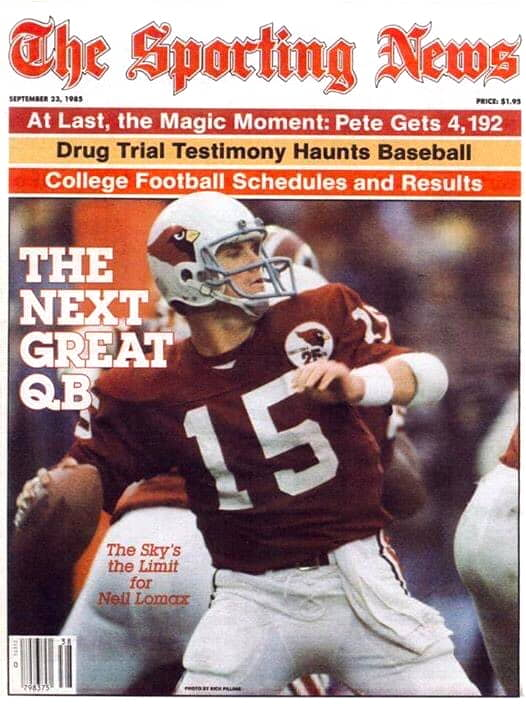
The Next Great Quarterback

Marino, Montana May Have To Make Room For Neil Lomax

(Editor’s Note: This is a reprint of a Dennis Dillon article from the September 23, 1985 edition of The Sporting News)

Over the years, quarterbacks have formed the Ursa Major in the National Football League’s galaxy of stars.

In the 1960s, Johnny Unitas and Bart Starr were the luminaries. Terry Bradshaw, Roger Staubach and Fran Tarkenton shown as brightly as anyone in the next decade. Thus far in the ‘90s, indelible prints have been left by Joe Montana and Dan Marino.

But a new star is rising. He began his ascent gradually, then shot into the constellation last year.

That star is the St. Louis Cardinals’ Neil Lomax, the latest in the NFL’s lineage of passing princes.

Lomax clearly exhibited credentials last season, throwing for 28 touchdowns and 4,614 yards and compiling the NFL’s fourth-best passer rating (92.5). He was fifth in completion percentage (.616) and sixth in yards per attempt (8.24).

Montana and Marino wound up as the leading men in Super Bowl XIX and, afterward, a Pepsi commercial. Lomax then adjourned to less-than-cosmopolitan West Linn, Oregon, where he spent a predominantly quiet off-season clutching golf clubs and fishing rods.

And there’s the disparity. Montana and Marino have become celebrities off the field. Lomax’s star? After the season, it sets rather inconspicuously in the Pacific Northwest.

Continue reading

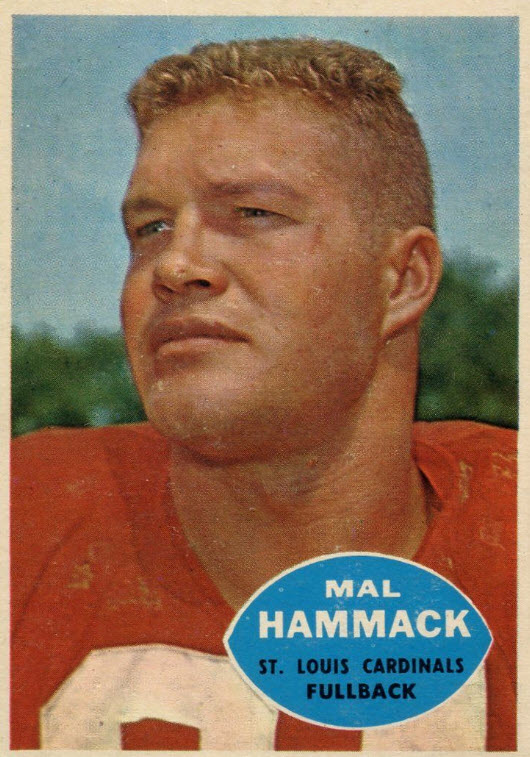
Forgotten Big Red Stars: Mal Hammack

Many remember hard-hitting Big Red special teamers like “Dr. Doom” John Barefield and Ron Wolfley, but a long forgotten “wedge-buster” from the 1960s was Mal Hammack.

Malcolm “Mal” Hammack started his career with the Chicago Cardinals in 1955. The Roscoe, Texas native played college ball at the University of Florida where he was second team all-SEC fullback. Chicago drafted him in the third round and wanted him to play linebacker, however, his weight of 200 pounds was on the light side, even in 1955.

Hammack was used sparingly at linebacker his rookie season and was soon moved to fullback where he would play most of his career. But he earned his mark on special teams. Hammack was a fierce competitor, loved contact, and was known for his body-jolting blocking and tackling. He was the lead Kamikaze and captain of the special teams.

“I like to go down on punts with a chance to kill the ball close in or maybe jolt the ball out of a receiver’s hands,” Hammack told Bob Broeg of the St. Louis Post Dispatch in a 1966 interview, “but I believe the most satisfaction is in peeling back to help block for a punt return, hopeful that it might go all the way. The most satisfaction, that is, next to winning.”

Continue reading

SI VAULT: HE DON’T GET NO RESPECT FROM HIS CARDINALS

(Excerpt from February 20, 1978 Edition of Sports Illustrated)

HIS PLAYERS HAVE LITTLE USE FOR ST. LOUIS OWNER BILL BIDWILL, AND THE TEAM IS DISINTEGRATING. COACH DON CORYELL AND ALL-PRO GUARD CONRAD DOBLER ARE GONE. TERRY METCALF MAY BE THE NEXT DEFECTOR.

Written by Joe Marshall

Above the hallway leading to the offices of the St. Louis Cardinals’ coaches in Busch Memorial Stadium there is a new ceiling. A leak caused the old ceiling to collapse back on Dec. 10. For St. Louis, more than the roof fell in that day. The Cardinals were springing leaks all over the place. On the heels of a 26-20 loss to Washington that ended his team’s playoff hopes, St. Louis Coach Don Coryell leveled a verbal blast at local fans and the Cardinal management. “I’m not staying in a place I’m not wanted,” Coryell raged. “I’d like to be fired. Let me have a high school job.”

Last Friday, two months to the day from Coryell’s outburst, the Cardinals patched up one of their leaks by announcing that through a “mutual agreement” between Coryell and and team owner Bill Bidwill, Coryell would no longer be the coach. Unfortunately, Bidwill’s patchwork wasn’t as neat as the handiwork on the ceiling. For the last two months the Cardinals, who under Coryell had been one of the NFL’s most successful and exciting teams, have been in turmoil, and the once dazzling Cardiac Cards were being called the Chaotic Cards.

Continue reading

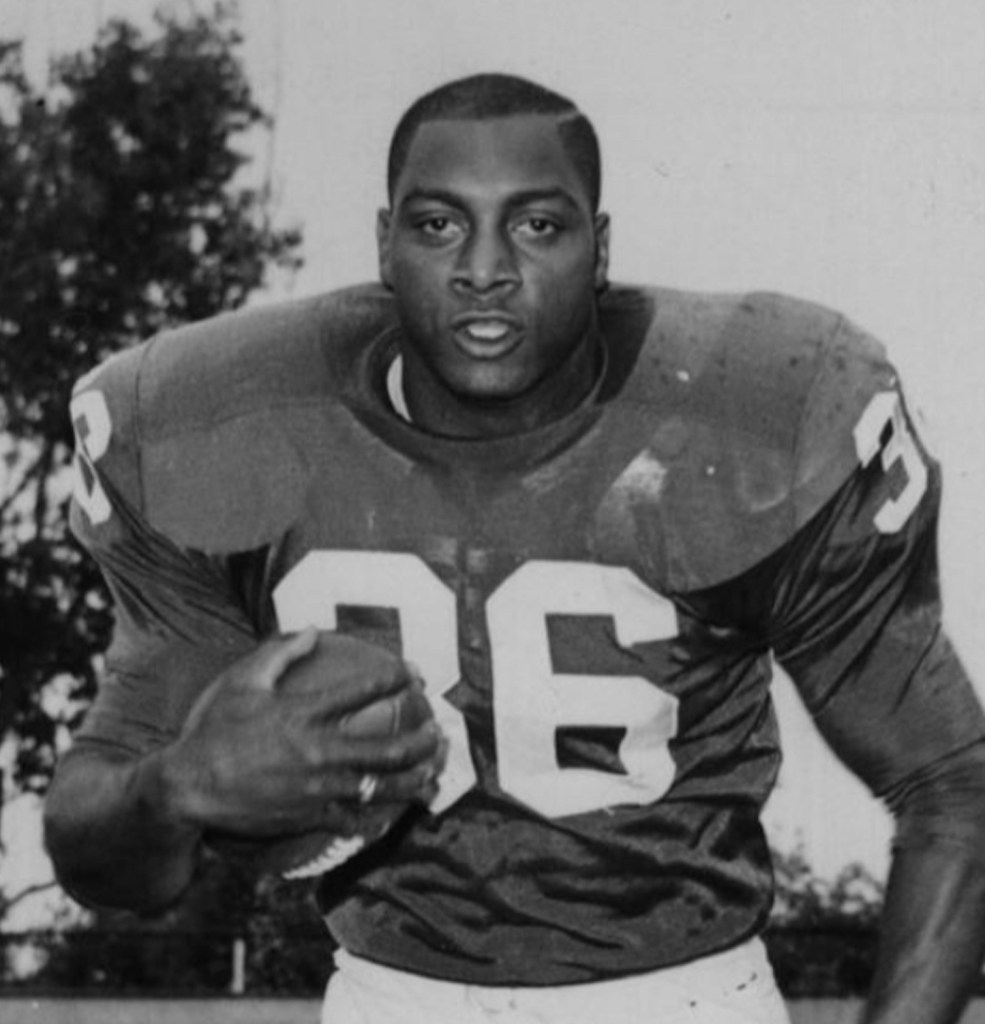
MacArthur Lane: From Penthouse to Doghouse

MacArthur Lane was the Cardinals’ top draft pick in 1968 out of Utah State. The 6-foot-1-inch, 200-pound running back played sparingly his first two seasons in St. Louis, although he did lead the team in kickoff returns in 1969.

Lane had his breakout season in 1970 when he scored 13 touchdowns and gained 1342 all-purpose yards out of the Big Red backfield. He scored 4 touchdowns against the Eagles in an October game at Busch Stadium and scored 3 touchdowns against the Boston Patriots in November.

Despite a Pro Bowl season, Lane was not satisfied. He told Jeff Meyers of the St. Louis Post Dispatch that he was bitter at the end of the 1970 season because, “We just stopped running the ball,” thereby diminishing his chances of gaining 1000 yards.

Additionally, after a 7-2 start, the Cardinals lost their last three games of the season and missed the playoffs.

MacArthur Lane was the Cards first round draft choice in 1968

Lane became further dissatisfied after the Cardinals failed to sign him to a new contract after his Pro Bowl season. He became surly with the press, and it affected his play on the field. He rushed for only 592 yards and three touchdowns under new head coach Bob Hollway.

“I should have been signed in January of 1971,” Lane told Jeff Meyers in a 1972 interview. I got like that because I was under a lot of pressure because I hadn’t signed. There there was a lot of pressure because we weren’t winning. The pressures were there, all right, both internal and external.”

At 29 years of age, Lane took a pay cut in 1971 and played for 90% of his 1969 salary, which was based on two unproductive years.

Continue reading

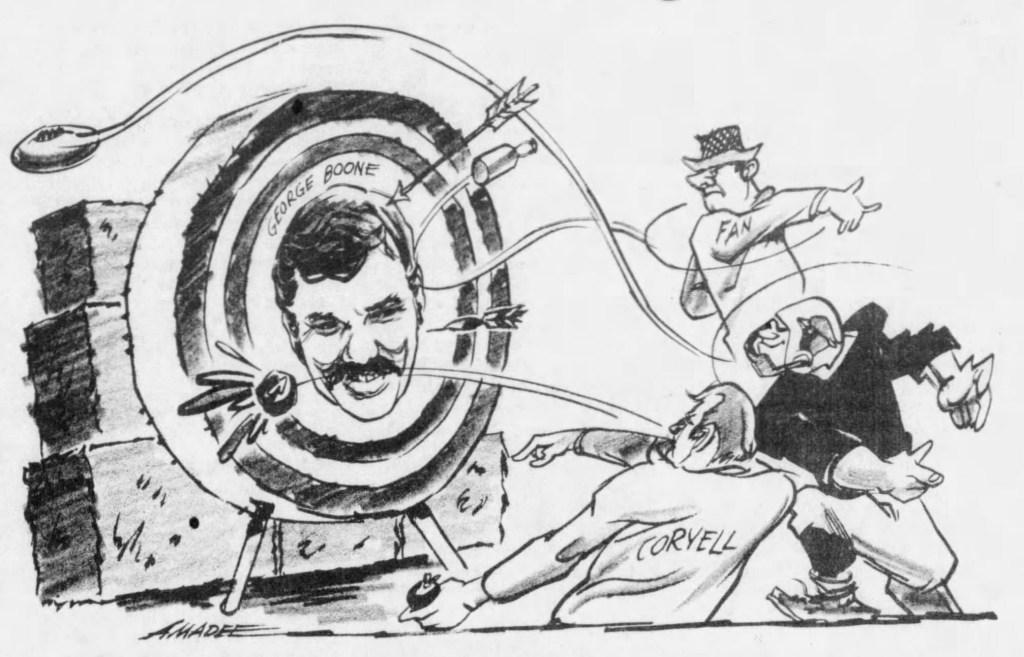
Big Red Draft Guru: George Boone Had No Regrets

“If you are a coach, you coach; if you are a scout, you scout,” Cardinals owner Bill Bidwill once said. “We believe in a policy of separation.”

More times than not, that policy did not work for the St. Louis Football Cardinals.

After the 1973 NFL draft, the Cards promoted Kentucky native George Boone to the position of director of player personnel. From 1974 to 1987 only the Green Bay Packers had fewer collective Pro Bowl appearances among their draft picks.

George Boone was the Cardinals controversial personnel director from 1973-1991.

And only three teams saw a higher percentage of their number one draft choices fail to develop into quality players.

Continue reading

Big Red Flashback 1980: Cards Hire Jim Hanifan

(Editor’s Note: Jim Hanifan became the Cardinals head coach on January 30, 1980. Below is Coach Hanifan’s account of how he was hired. It was taken from an excerpt of his book Beyond Xs and Os: My Thirty Years in the NFL)

My name had come up when there were openings for head coaching jobs in the NFL, and i really thought if I kept my nose clean I would have a shot at getting one of those jobs. I just didn’t think it would be in St. Louis.

Even though I really did want the job, it still caught me a little off guard when Don (Coryell) walked into my office and said Bill (Bidwill) had called to request permission to speak with me. I didn’t hear from him until a week later. We were coaching at the Pro Bowl in Hawaii, and after the game I was back in my hotel room packing and getting ready to leave for the airport when Bill called. We agreed to meet two days later in San Diego.

The day that Bill arrived, it was pouring down rain. I agreed to meet him in a parking lot, because he wanted to be very secretive. I told him to follow me, and we would stop off and have lunch at a Mexican restaurant that was on the way to my house. It was managed by my friend Ray Ogas, who now works for the Rams.

Continue reading

1964: Why the Big Red Almost Moved to Atlanta

Twenty four years before the St. Louis Football Cardinals moved to Arizona, the Bidwill brothers almost relocated to Atlanta.

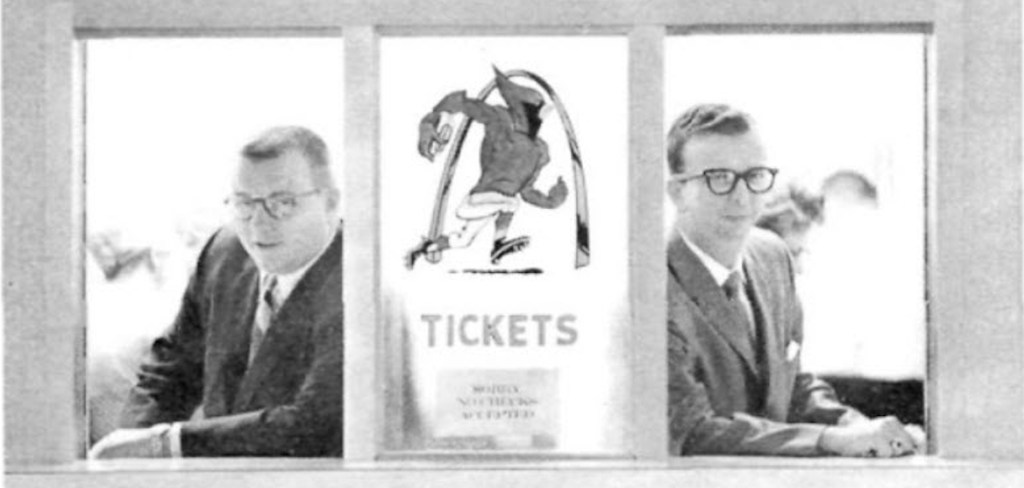
In April of 1964, Bill and Stormy Bidwill denied a Nashville Banner report of the Cards interest in moving to the Georgia capital.

“No. 1, I’d rather not comment. No. 2, neither I nor my brother ever has talked to the person who carried the story. No. 3, we’re not contemplating any change,” Cards vice president Bill Bidwill told the St. Louis Post Dispatch.

However, a month later, Bidwill admitted that he had received a “fine proposal” from Atlanta to play in their new $18,000,000 stadium starting in 1965.

BIDWILL’S CONCERNS

The Bidwill brothers wanted to stay in St. Louis, but had a number of concerns. First, they weren’t happy with the length of the proposed 30 year lease in an unproven football market. They also weren’t happy with the rental agreement of 12% of the gate revenue and the 5% city tax on ticket sales.

Bill (L) and Stormy (R) Bidwill in a 1965 photo (courtesy Sports Illustrated)
Continue reading

Forgotten Big Red Star: Dale Meinert

Bill Bidwill called him “one of the great defensive players we had.”

Dale Meinert was a three-time Pro Bowl middle linebacker with the Cardinals from 1958-1967. He was a college star at Oklahoma A&M (now Oklahoma State) and was drafted by the Baltimore Colts in 1955. But instead of playing in the NFL, the Lone Wolf, Oklahoma native decided to play in the CFL for Frank “Pop” Ivy and the Edmonton Eskimos, where he won a Grey Cup Championship.

Dale Meinert played 10 seasons with the Cards

In1958, after spending a couple of years in the Air Force, Meinert rejoined Pop Ivy with the NFL Chicago Cardinals. He played offensive line his first two seasons, but defensive coordinator Chuck Drulis converted him to linebacker in 1960.

“I guess they figured I wasn’t big enough to play guard,” the 215 pound Meinert said in Bob Burnes book Big Red, “and I sort of agreed with them because those defensive tackles kept looking bigger and bigger.”

It was a decision the Cardinals and Meinert would not regret. The tall rangy linebacker intercepted a pass in his first start against the Rams in 1960 and quickly developed into an aggressive tackler and pass defender. He was named team MVP in 1961 and earned Pro Bowl selections in 1963, 1965, and 1967. He did a brilliant job quarterbacking the Big Red defense and calling all the plays.

Continue reading

How the Big Red Helmet Cart Almost Took Out Lou Brock

By Lori Greenstein

Long, long ago in a place called the Civic Center Busch Memorial Stadium, a couple of minor miracles occurred.

Bill Bidwill bought the nifty Golf Cart shaped like a football helmet, featuring a giant Cardinal bird head decal. He strolled into our PR office, smiled and asked if I’d like to drive the new golf cart. “Heck yes!”, I said. I didn’t bother to tell him I’d never driven one before!

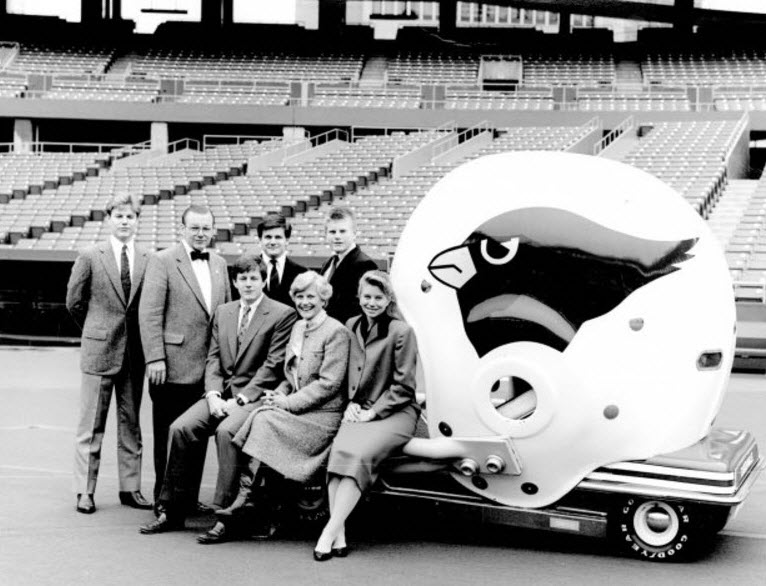
Bill Bidwill and family with the Big Red Helmet Cart (circa 1987)

It was parked outside the double doors separating the football and baseball offices in the stadium. He showed me how to start it, where the brake and the go pedal was. He told me to have fun.

I was terrified. What if I wrecked it? He went back into the offices and I turned the key. Off I went, at a snail’s pace to begin. Down the main concourse I went, wearing a huge smile, I am sure.

The longer I drove it, the more confidence I gained and the faster I went. That was a big stadium, with a whole lot of concrete concourses, which took me up to the top of the stadium, around it and then back down. I grew braver with each passing moment.

By the time I was coming down the last ramp, it was floored! And just as I came into view of the parking place across from the baseball home plate netting, the door opened and a young man walked into my path. I screamed “Woman at the wheel”, he turned his head, saw me and set a new land speed record to safety on the other side of the concourse, behind the net.

That was a historic moment. To this day, I maintain that the Cardinal golf cart and I scared the SPEED into LOU BROCK. It might have been about the time he started stealing bases and setting records. ‘Nuff said.

(Editor’s Note: Lori Greenstein served as the Football Cardinals Assistant Public Relations Director from 1965-1971)