Coach Jim Hanifan Memorial Held in St. Louis

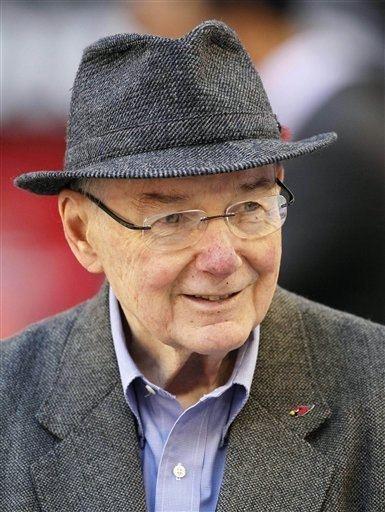
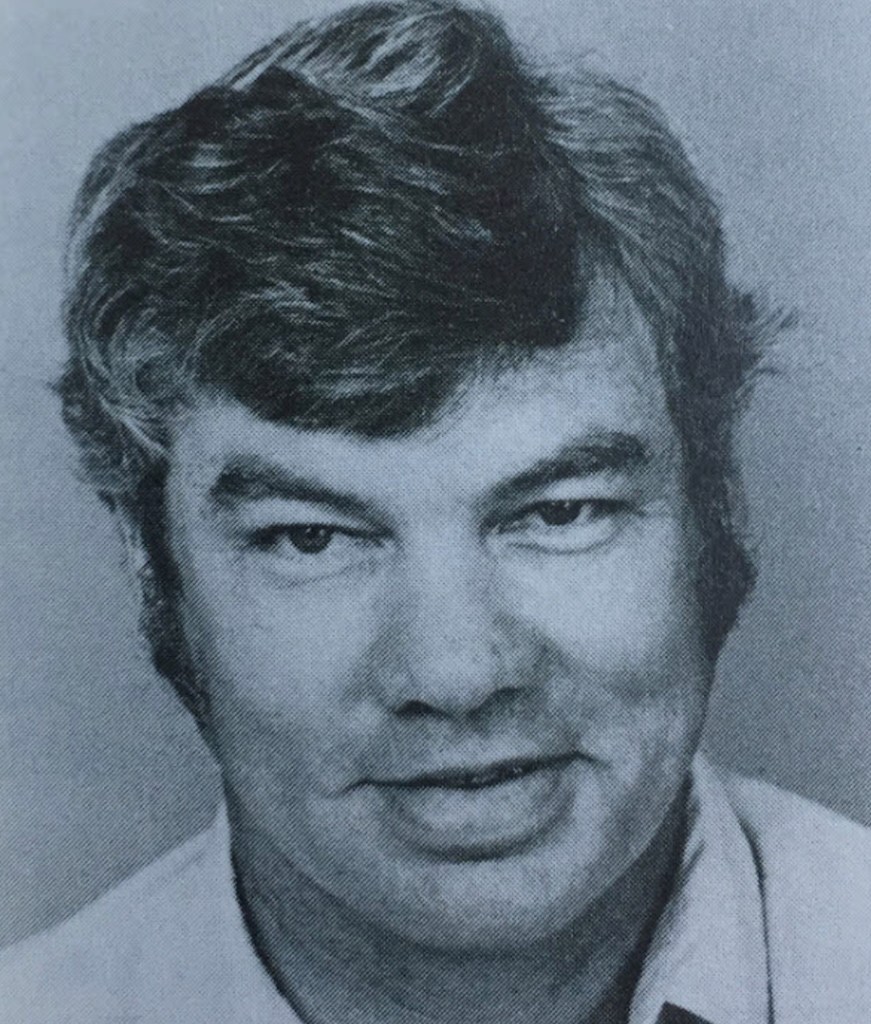
A golf outing and Memorial were held last week in honor of longtime Cardinals and Rams coach Jim Hanifan who passed away last November at the age of 87.

Many of Hanifan’s former players and fellow coaches attended the Thursday Memorial Service including Dan Dierdorf, Jackie Smith, Dick Vermeil, Carl Peterson, Luis Sharpe, Adam Timmerman, and dozens of others.

Jim Hanifan

Dierdorf and Vermeil gave eulogies, Jackie Smith sang Danny Boy, and countless stories were told by friends and family into the night.

On Wednesday, the first annual Jim Hanifan Memorial Top Golf outing was held to benefit Cherish. Many former players were in attendance such as Mel Gray, Johnny Roland, Joe Bostic, Irv Goode and Willard Harrell. A good time was had by all.

Hanifan’s daughter Kathy, son Jim, and grandson Austin were in town to participate in the celebration of his life.

Hanifan was the offensive line coach for the Cardinals from 1973-1978 and was head coach from 1980-1985. He later returned to St. Louis and became the offensive line coach for the Rams under Dick Vermeil in 1997 where he would remain until 2002. A couple of years later he moved to the Rams radio booth and became a beloved straight-shooting sidekick of Steve Savard. Hanifan remained in St. Louis until his death in 2020.

Continue reading
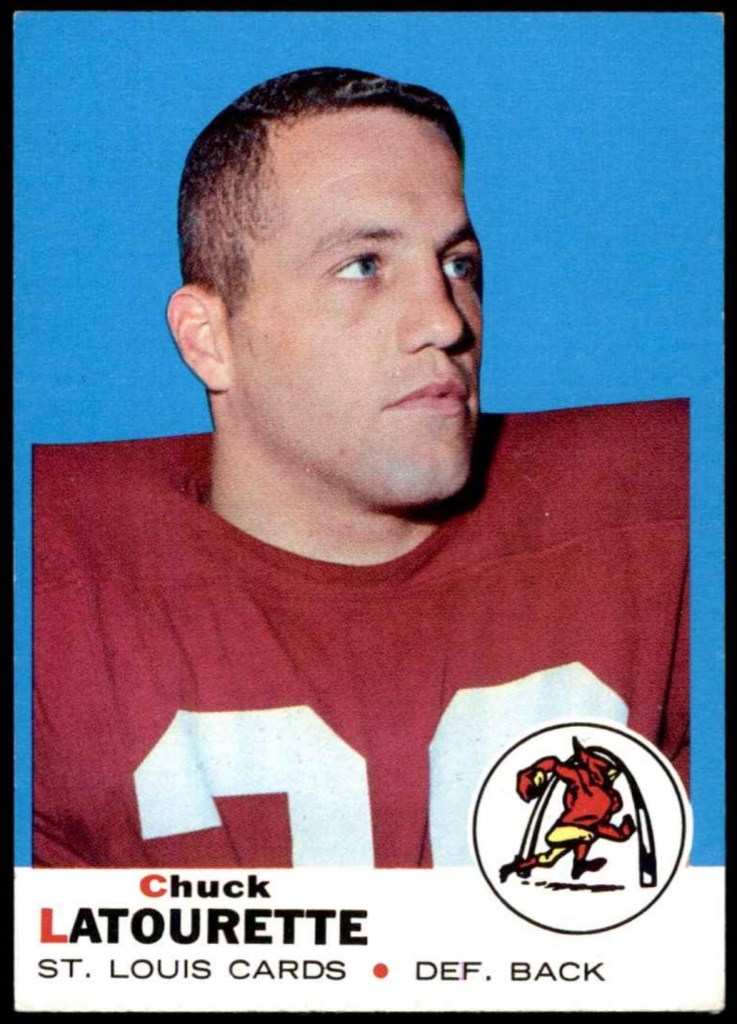
Remembering Big Red Special Teams Star Chuck Latourette

Charles Pierre Latourette’s childhood dream was to someday become a surgeon.

“I’d like to think that some day I can do just in part for other people what Dr. (Fred) Reynolds (The Cardinals team physician) did for me,” Latourette told the St. Louis Post Dispatch in 1970.

Latourette was a football star at Jonesboro (AR) High School and played college ball at Rice University where he was an All-Southwest Conference safety. In 1965, Latourette returned a kick that helped the Owls, who were four touchdown underdogs, upset Texas 20-17.

Latourette made it clear to pro football scouts that he planned to study medicine after graduation. “Forget me in the draft,” he warned. As a result, he was not selected by a professional team in the 1967 NFL Draft. But that didn’t mean he wasn’t wanted.

The Denver Broncos and Cardinals both offered him rookie contracts in 1967, so he thought it over and decided to give pro ball a try before entering med school. He chose to play for the Cardinals.

“Even though Denver offered more outright, I figured I might as well go all out and try to play with the best,” the 6-foot, 190-pounder told the St. Louis Post Dispatch in 1967.

Continue reading

Forgotten Big Red Stars: Jimmy Hill

While Cardinals safety Larry Wilson rightfully became a national darling, many believed Jimmy Hill was the best cornerback in the NFL in the early 1960s.

The Dallas, TX native was a star offensive end at Booker T. Washington High School where he was named to the all-Texas team in 1945 and 1946. He caught 134 passes and scored 16 touchdowns or the Bulldogs and also set a high school record in track and field in the low hurdles.

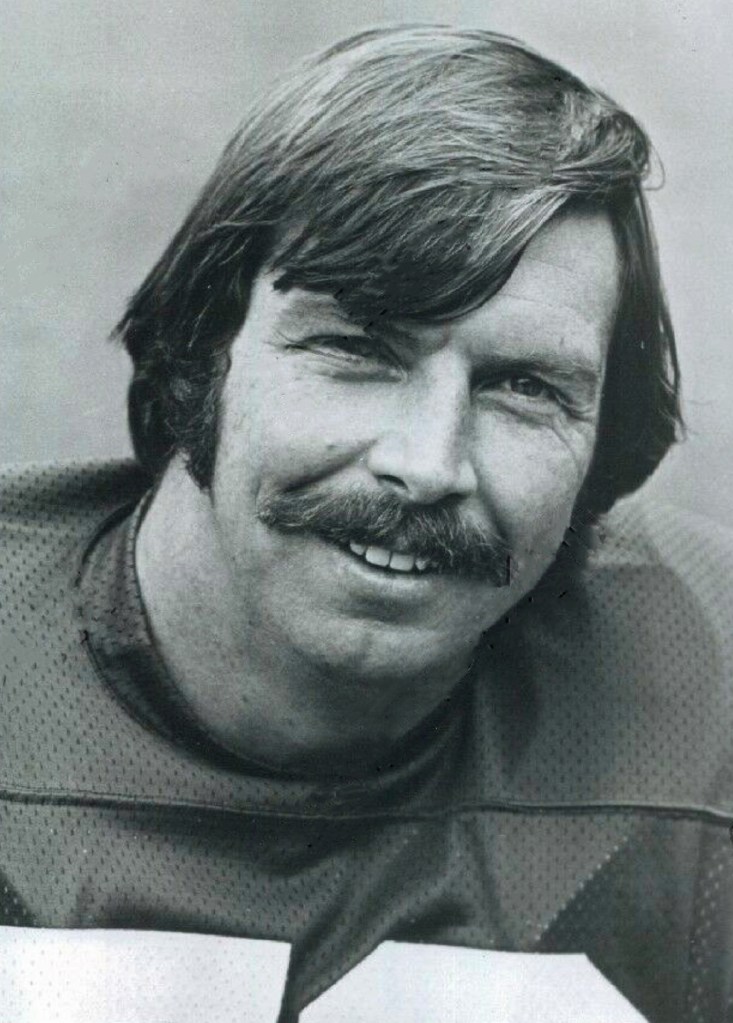
Hill attended Sam Houston State College in Austin, TX where he starred in four sports. He was named All-American honorable mention in 1948 and 1949 as a running back and once ran for 5 touchdowns in a game. In addition to football, Hill was a sprint champion in track racking up a 9.5 mark in the 100 yard dash and also starred on the baseball and basketball teams. He was named the school’s best all-around athlete his last three years in college.

Jimmy Hill played 12 seasons in the NFL

Hill was good enough in baseball as a pitcher to garner interest from the Washington Senators and Cleveland Indians. In 1950, he was offered a contract by the Montreal Alouettes to play football in the Canadian Football League and the San Francisco 49ers of the National Football League, but he decided to teach and coach football after college.

Continue reading

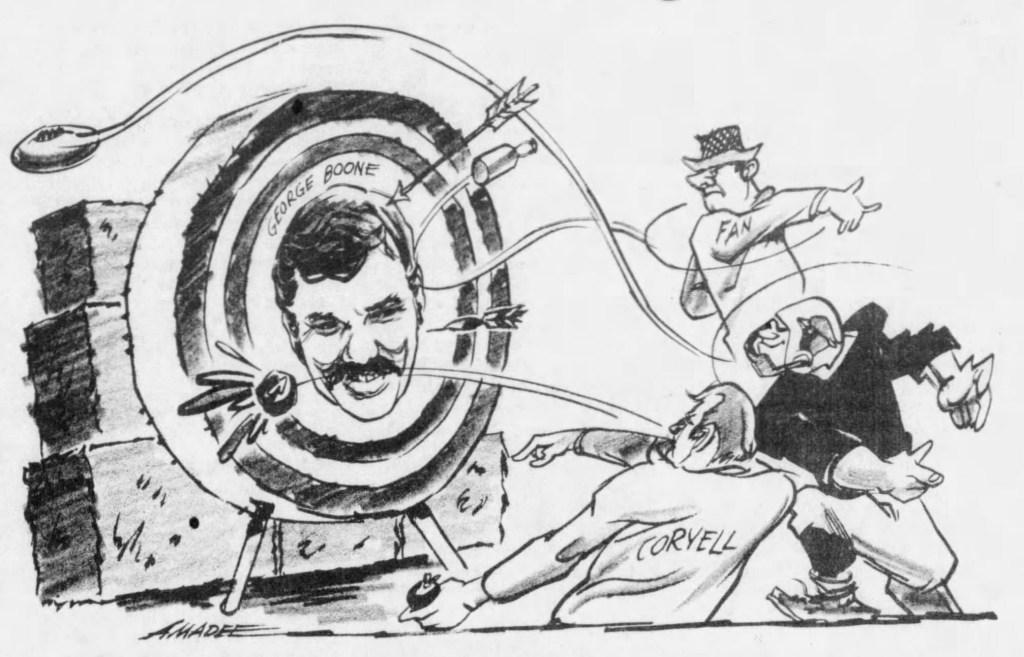
Big Red Draft Guru: George Boone Had No Regrets

“If you are a coach, you coach; if you are a scout, you scout,” Cardinals owner Bill Bidwill once said. “We believe in a policy of separation.”

More times than not, that policy did not work for the St. Louis Football Cardinals.

After the 1973 NFL draft, the Cards promoted Kentucky native George Boone to the position of director of player personnel. From 1974 to 1987 only the Green Bay Packers had fewer collective Pro Bowl appearances among their draft picks.

George Boone was the Cardinals controversial personnel director from 1973-1991.

And only three teams saw a higher percentage of their number one draft choices fail to develop into quality players.

Continue reading
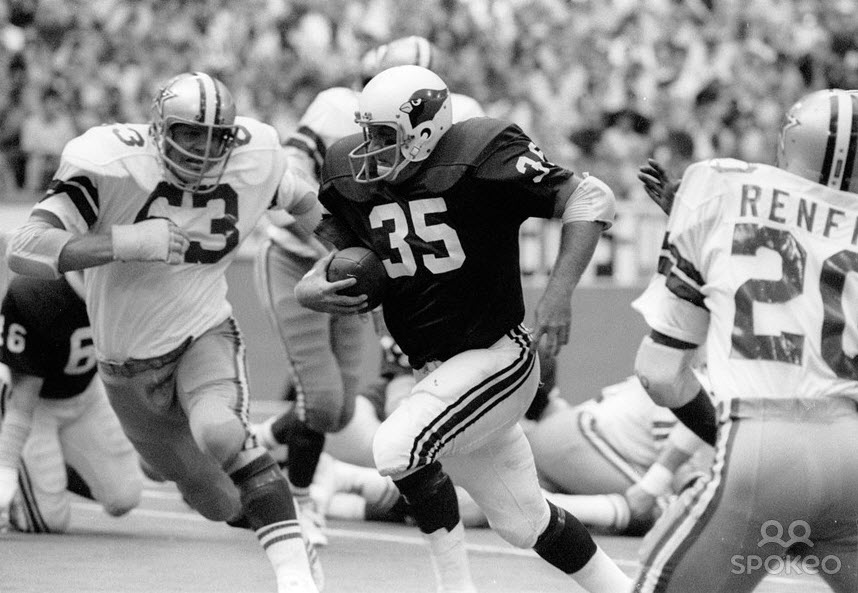
Big Red Legends: Jim Otis

(Editor’s Note: This story was written by Kay Burnett and originally published in a 1978 Edition of Pro! Magazine.)

It’s three-fourths of the way through the 1978 season—time to check on yourself just to make sure you haven’t blown all your tubes watching 11 successive Sundays of Cardinal and NFL football.

Like all good psychological tests, this one begins with a variation of the word association challenge. If you’re a Cardinal fan, your tester says “Big” and you say “Red.” He says “long bomb,” you say “Hart to Gray.”

He tosses out the time-worn football phrase, “three yards and a cloud of dust,” and your immediate response is the name of just one standout Cardinal running back.

If you miss this one, you will be declared legally a victim of amnesia for the past six years, the time 6-foot, 225-pound Jim Otis has played for the St. Louis.

Jim Otis is third on the Cardinals all-time rushing list.
Continue reading

Big Red In Memoriam

Dedicated to the former, players, executives, and broadcasters who were part of the St. Louis Football Cardinals family.

Continue reading

Rigby resident raising money to honor Larry Wilson

Larry Wilson was a humble man, from humble beginnings who never forgot where he came from. Wilson was born and raised in the small town of Rigby, Idaho and would later become the greatest athlete in Rigby High School history, earning 16 Letters in football, baseball, basketball and track. Larry went on to star at the University of Utah and then with the St. Louis Cardinals of the National Football League.

On July 7, 1967, the town honored Larry Wilson by retiring his high school number 7 and naming their football field “Larry Wilson Field.” Over 300 friends and acquaintances of Larry descended on Rigby to help honor “Willy.” Even Cardinals vice president Bill Bidwill flew in unexpectedly to participate in the celebration.

Larry Wilson is carried off the field by teammates after his last NFL game in 1972.

According to Wilson family friend, Michelle Barber, the name Larry Wilson Field was supposed to remain in perpetuity. However, when the new high school was built in the early 1990s, Larry’s name was removed and replaced with the name of a local doctor who never played ball in Rigby.

Michelle grew up watching Larry play football and said she and her late father, Dean Allgood, would watch the Cardinals whenever they were on television. Dean was a good friend of Whitey Wilson (Larry’s father) and the family felt terrible when Larry’s name was removed from the field.

Continue reading

Big Red Characters: “Dr. Doom” John Barefield

Posted by Bob Underwood

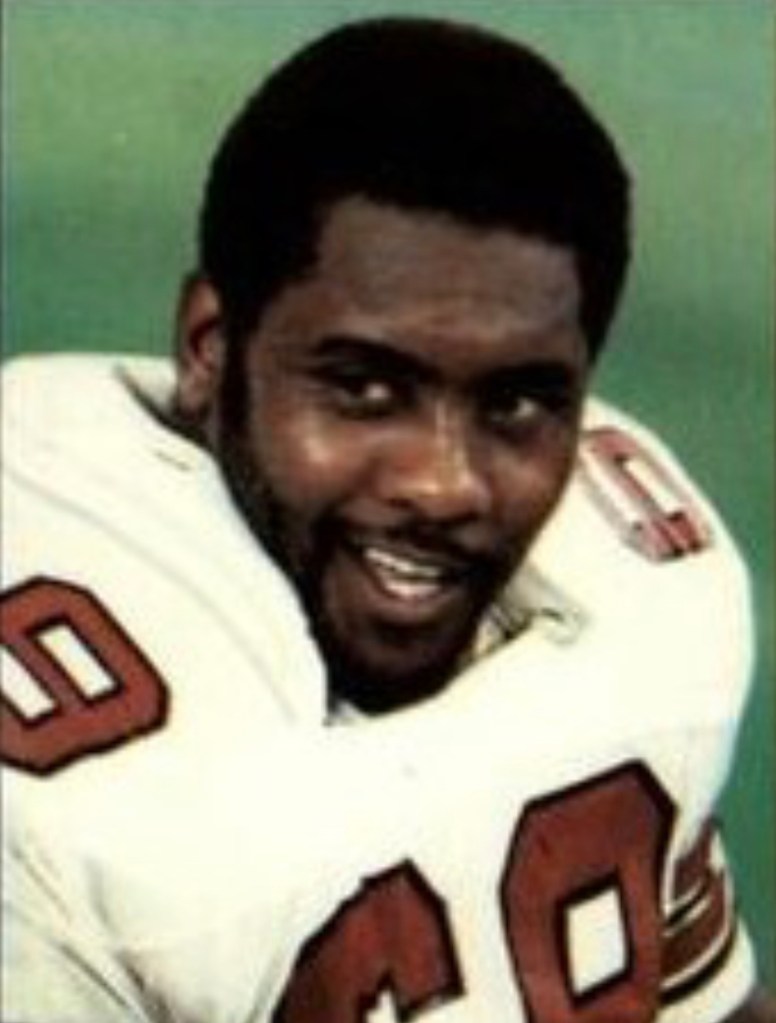
John Barefield spent only three seasons with the St. Louis Cardinals, but with all due respect to Conrad Dobler, there may not have been a larger character. The 6-foot-2, 230-pound linebacker was the Cards second-round draft pick in 1978 out of Texas A&I University where he was known for wearing quarters in his ears, stalking cemeteries at night, writing poetry about his tackles, and going by the name of Doctor Doom.

John “Dr. Doom” Barefield played with the Cardinals from 1978-1980 (Photo courtesy of Paul Turner)

“I know I’m strange. I’ve got a strange mind,” the flamboyant linebacker said at a rookie workout at Busch Stadium in 1978. “I see visions, vibes and things. I was going to leave my Dr. Doom cap back at college, but I found myself putting it back on.”

Continue reading

Big Red Flashback 1982: Stump’s Big Day in Philly

Posted by Bob Underwood

Stump Mitchell rushed for 1,647 yards his senior season at The Citadel, second in the nation to South Carolina’s George Rogers who was rewarded with the Heisman Trophy and selected as the first overall pick in the 1981 NFL draft.

Meanwhile, Stump waited patiently for the telephone to ring while running backs were coming off the board left and right.

“I was waiting and praying,” the 5-foot-8 190 pound Georgia native told the St. Louis Post Dispatch in a 1981 interview..

Lyvonia Albert Mitchell

Late in the second day of the draft, Stump picked up the ringing phone and heard St. Louis director of pro personnel Larry Wilson telling him, “Congratulations, you’ve been selected by the St. Louis Cardinals.” In response, Stump couldn’t contain his mood.

“He was mad,’ Wilson remembered. “He told Jim Hanifan (then Cardinals head coach) and me, both of us, that he was going to make our ball club, that he was better than a ninth-round choice, that he was going to make us forget about Ottis Anderson.”

Continue reading

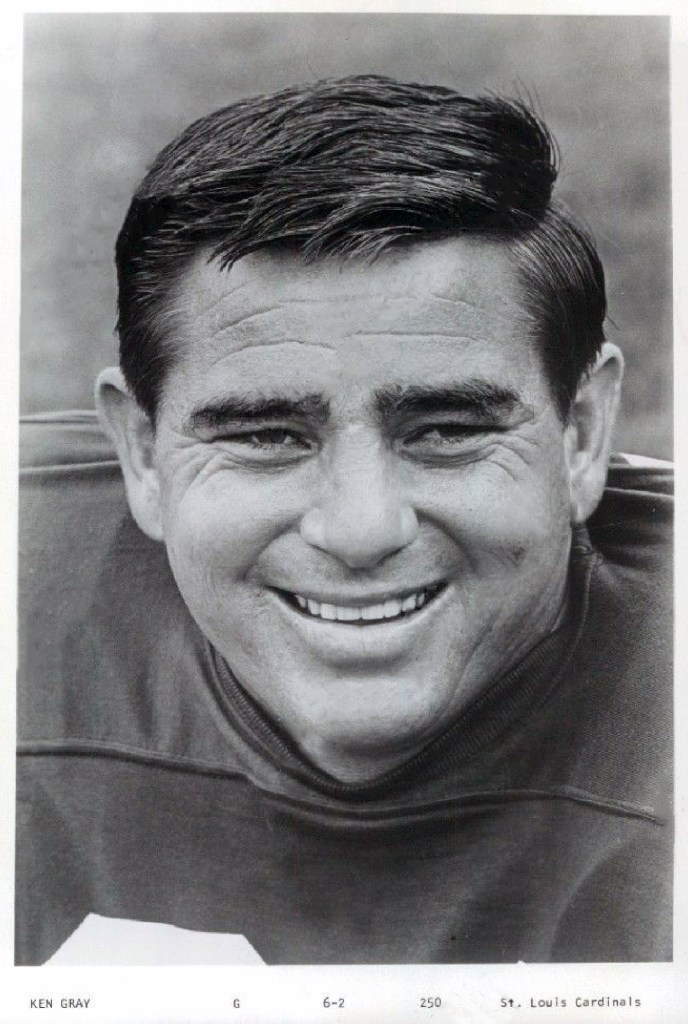
Forgotten Big Red Stars: Ken Gray

Posted by Bob Underwood

Ken Gray was part of the greatest draft class in Green Bay Packers history. The Texas native was taken in the 6th round of the 1958 draft along with future Hall of Famers Jim Taylor, Ray Nitschke, and Jerry Kramer. The Packers also nabbed future All-Pro linebacker Dan Currie.

Ken Gray was a 6x Pro Bowl guard with the Cardinals from 1958-1969.

Gray and Kramer battled for a roster spot throughout training camp. A coach actually told Kramer that he would probably be traded because they had too many guards. But it ended up being Gray who was among the last cuts just before the start of the season. After his release, Packer head coach Ray “Scooter” McLean told Gray that he “would play somewhere in this league.”

“My heart went to my feet,” Gray said in a 2015 story in the Picayune, but what could I say? Those experiences make you a better person and better player.”

Based on the talent of both Kramer and Gray, the Packers should have kept both players as they would have made quite a tandem at guard over the next several years. The Packers went 1-10-1 in 1958 and McLean was fired and replaced with Vince Lombardi.

Meanwhile, Gray signed with the Chicago Cardinals and played defense his rookie season. He was moved back to guard in 1959, gained 30 pounds and was named to his first Pro Bowl two years later.

Continue reading