Unknown's avatar

About Dennis Dillon

Dennis covered the St. Louis Football Cardinals at the St. Louis Globe Democrat and was a longtime staff writer at The Sporting News.

Big Red Draft History: 1979 NFL Draft

With the NFL kicking off its three-day 2023 Draft, the Big Red Zone continues its series looking back on each of the 28 St. Louis Cardinals drafts (1960-87). This installment focuses on the 1979 Draft, which was held May 3-4 in New York.

The Cardinals struck gold—twice—in the 1979 Draft when they selected running back Ottis Anderson of Miami (Fla.) and defensive back Roy Green of Henderson State, who would become two of the most prodigiously productive offensive players in team history.

The team’s top priority was a running back who had the speed and skills to run outside. In 1978, their top three backs were Jim Otis, Wayne Morris and Steve Jones—all inside power runners who accounted for 1,687 of the team’s 1,954 rushing yards (86 percent). Coach Bud Wilkinson wanted someone with breakaway speed.  
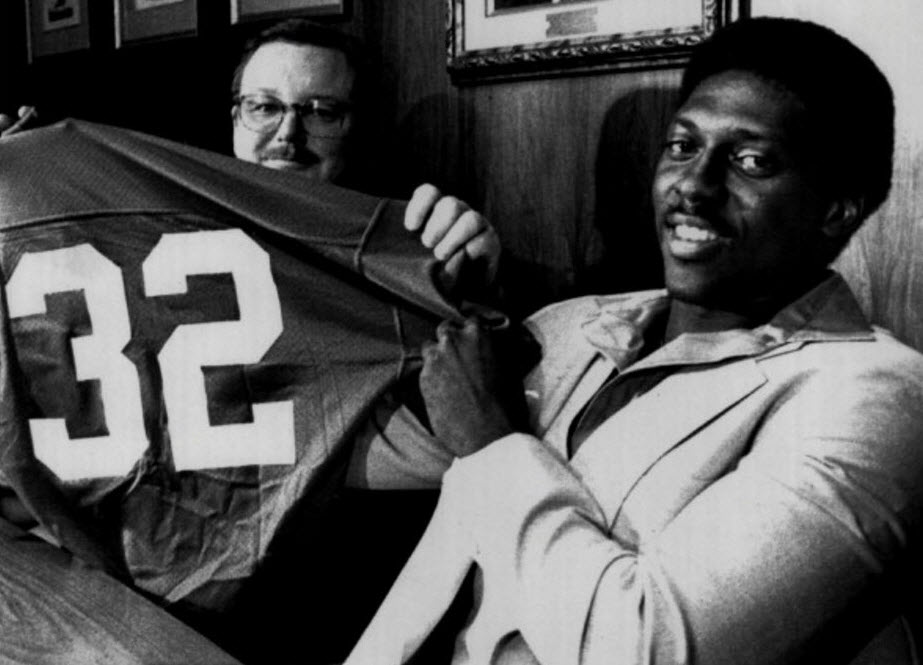
Bill Bidwill welcomes Cards top draft pick O.J. Anderson in 1979.

In the weeks leading up to the Draft, the Big Red brass debated who to target with the team’s first-round pick (eighth overall): Anderson, who rushed for 3,333 yards at Miami, or Charles Alexander, who ran for 4,035 yards at LSU. Their choice of Anderson proved to be the right one.

“We feel that he has the great moves that we’ve been hunting for,” Cardinals personnel director George Boone said. “We haven’t had those in quite a while.” At least since 1977, Terry Metcalf’s last season as a Cardinal.

Continue reading
Big Red Draft History: 1978 NFL Draft

As we move closer to the 2023 NFL Draft (Thursday-Saturday), The Big Red Zone is looking back on each of the 28 St. Louis Cardinals drafts (1960-87). This installment focuses on the 1978 Draft, which was held May 2-3 in New York.

Of the 139 kicking specialists drafted in the NFL before 1978, only two—placekicker Charlie Gogolak (1966) and punter Ray Guy (1973)—were selected in the first round. On May 2, 1978, the Cardinals increased that number to three when they took Arkansas dual kicker Steve Little with the 15th overall choice.

Before you go saying, Just another dumb move by George Boone, consider that all of the Cardinals’ hierarchy was on board with the pick. 

“It was a unanimous decision,” first-year head coach Bud Wilkinson told reporters, using an analytical explanation for defending the pick. 

Wilkinson pointed out that in 1977, the Big Red’s average field position for an offensive position was their 32-yard line, and that they netted only a little more than 31 yards in net punting. (Actually, the Cardinals’ net punting average had been 32.8 yards—10th best in the NFL and slightly better than the league’s 31.8 average—but let’s not quibble).

“That’s a loss in field position that’s difficult to make up. And those are figures that can be improved,” Wilkinson said, tossing out phrases such as position football and cumulative yardage.

Continue reading

Big Red Draft History: 1977 NFL Draft

Do As we move closer to the 2023 NFL Draft (April 27-29), The Big Red Zone is looking back on each of the 28 St. Louis Cardinals drafts (1960-87). This installment focuses on the 1977 Draft, which was held May 3-4 in New York.

In March 1977, the Cardinals brought in Steve Pisarkiewicz for a pre-draft visit at Busch Stadium. The former University of Missouri quarterback spent the day being quizzed about defensive coverages, getting a physical evaluation, and throwing passes on the field. The visit wrapped up with a dinner at the stadium club, where Cardinals Director of Operations Joe Sullivan and head coach Don Coryell dined with Zark, his mom, and his McCluer High football coach. 

“It was a great day, actually,” Zark recalls in an April 2023 interview with the Big Red Zone. At least until the end.

During dinner, Pisarkiewicz recalls, “Coryell leaned over to me—I’ll never forget—and said, ‘Hey, Steve, I want to thank you for coming in and spending the day with us. I know being from St. Louis you’re probably a longtime Cardinals fan. I just want to wish you luck in your career. We’re not going to go after a quarterback this year, but we wanted to get some information on you and we’re glad you came in. All the best to you.’” 

Continue reading

Big Red Draft History: 1976 NFL Draft

As we move closer to the 2023 NFL Draft (April 27-29), The Big Red Zone is looking back on each of the 28 St. Louis Cardinals drafts (1960-87). This installment focuses on the 1976 Draft, which was held April 8-9 in New York.

If we’re going to lob tomatoes at George Boone for his failed drafts, we need to acknowledge—with golf applause, at least—his successful ones.

And by most measures, the Big Red’s 1976 draft was a hit—even though the Cardinals had picks in only 13 of the 17 rounds.

With three of their first four picks, the Big Red selected a rock-solid defensive lineman (Mike Dawson), a highly productive wide receiver (Pat Tilley) and a first-class running back (Wayne Morris)—all of whom would become starters and major contributors.

Much later in the draft, the Big Red chose a defensive back (Lee Nelson) who would help them for 10 seasons.  

Continue reading

Big Red Draft History: 1975 NFL Draft

As we move closer to the 2023 NFL Draft (April 27-29), The Big Red Zone is looking back on each of the 28 St. Louis Cardinals drafts (1960-87). This installment focuses on the 1975 Draft, which was held January 29-30 in New York.

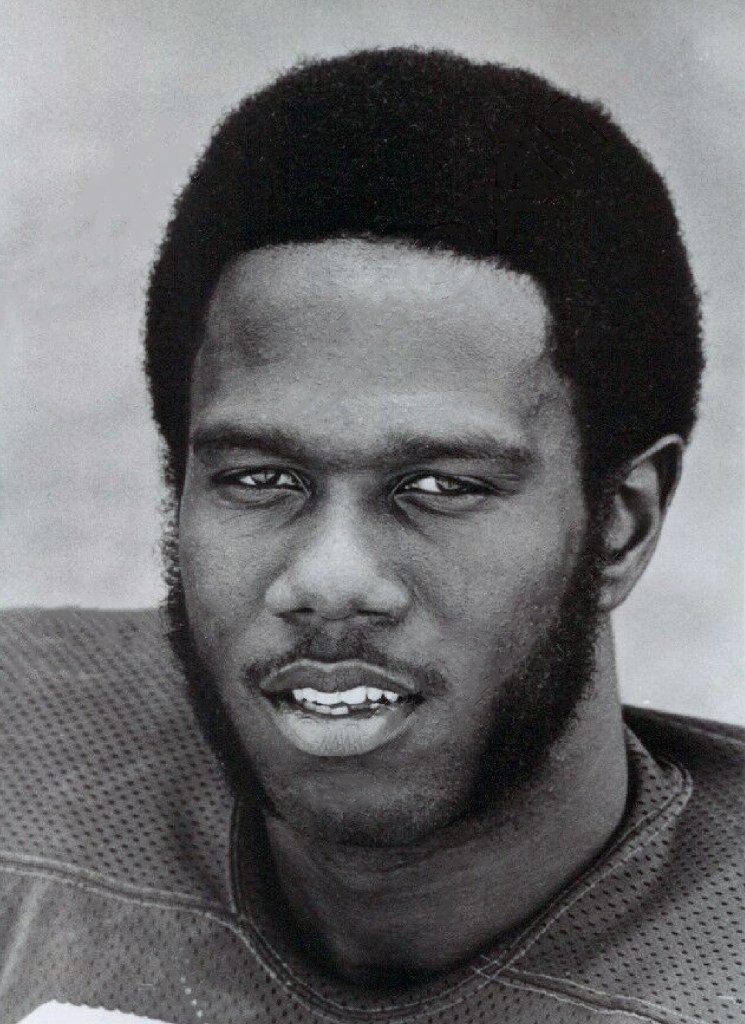
First Round Pick Tim Gray

Looking at the list of players the Cardinals selected in the 1975 NFL draft, coach Don Coryell sounded pleased.

“I don’t think we’ve picked a guy who doesn’t have a chance to make our club,” Coryell told the Post-Dispatch. Then, winking, he said, “And some of them have an excellent chance.”

That was in late January, shortly after the draft. Six months later, when training camp started, Coryell more likely was rolling his eyes, not winking them.

Of the 15 players the Big Red drafted, 10—67 percent—never played in the NFL. Of the remaining five, two started their NFL careers with other teams. That left first-round pick Tim Gray, 10th-round pick Mike McGraw, and 11th-round pick Jerry Latin as the only players who made the 1975 roster—and only Latin, a running back from Northern Illinois who Coryell said could be “the sleeper of the draft” lasted more than one year in St. Louis.

Continue reading

Big Red Draft History: 1974 NFL Draft

As we move closer to the 2023 NFL Draft (April 27-29), The Big Red Zone is looking back on each of the 28 St. Louis Cardinals drafts (1960-87). This installment focuses on the 1974 Draft, which was held January 29-30 in New York.

With the exception of first-round pick J.V. Cain and fourth-round choice Ike Harris, the Cardinals didn’t get much help from this draft. And both of those players had short careers in St. Louis.

A tight end from Colorado, Cain was a backup in his first two seasons in St. Louis. He became a full-time starter in 1976, and caught a combined 51 passes for 728 yards and nine touchdowns in ’76 and ’77. He suffered a torn Achilles tendon in training camp in 1978 and missed that entire season.

A year later, on July 22—his 28th birthday—tragedy struck. Cain collapsed on the field at Lindenwood College while running a pass pattern during a non-contact training camp practice. While coaches and teammates watched in shock, medical personnel gave Cain CPR. He was transported to St. Joseph’s Hospital and died shortly thereafter. An autopsy showed that his death was due to a rare congenital heart problem.

The Cardinals retired his number (88). 

Continue reading

Big Red Draft History: 1973 NFL Draft

As we move closer to the 2023 NFL Draft (April 27-29), The Big Red Zone is looking back on each of the 28 St. Louis Cardinals drafts (1960-87). This installment focuses on the 1973 Draft, which was held January 30-31 in New York.

After his first draft as head coach of the Cardinals, Don Coryell gave his stamp of approval to the team’s first four picks: Purdue defensive tackle Dave Butz, Texas-El Paso quarterback-punter Gary Keithley, Bowling Green guard Fred Sturt, and Long Beach State running back Terry Metcalf.

“We drafted the great defensive lineman, the young quarterback with super potential, the fine offensive lineman, and the darting-type runner,” Coryell told the St. Louis Post-Dispatch.

Only one of those four players worked out.

Butz played in only 13 games before departing St. Louis over a money issue. Keithley stuck around for just one season. And Sturt never played for the Cardinals.

Metcalf was the exception. An exciting multipurpose player who played five seasons for the Big Red, Metcalf became one of the linchpins of the Cardiac Cards with his ability to run, catch and return kicks.

Continue reading

Big Red Draft History: 1972 NFL Draft

As we move closer to the 2023 NFL Draft (April 27-29), The Big Red Zone is looking back on each of the 28 St. Louis Cardinals drafts (1960-87). This installment focuses on the 1972 Draft, which was held February 1-2, 1972 in New York.

After the 1972 NFL Draft, his first and only draft as the head coach of the Cardinals, Bob Hollway gave his definition of what constituted a good draft.

“You should get two starters out of the draft each year and five players from that draft should make your team,” Hollway, who wasn’t hired by the Cardinals until two weeks after the previous year’s draft, told the St. Louis Post-Dispatch.

By Hollway’s standard, the Big Red had a good draft in 1972. Four of the players they selected started as rookies: wide receiver Ahmad Rashad (13 games), linebacker Mark Arneson (10), guard Conrad Dobler (nine), and defensive end Martin Imhof (eight). Five others made the ’72 roster, but they didn’t stick around long.

Continue reading

Big Red Draft History: 1971 NFL Draft

As we move closer to the 2023 NFL Draft (April 27-29), The Big Red Zone is looking back on each of the 28 St. Louis Cardinals drafts (1960-87). This installment focuses on the 1971 Draft, which was held January 28-29, 1971 in New York.

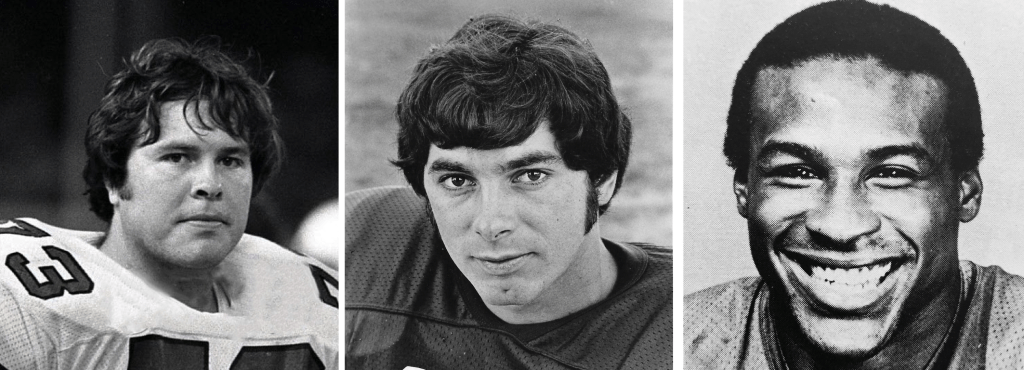
This was a bountiful draft for the Cardinals even though 10 of the 17 players they selected never played in the NFL. Cornerback Norm Thompson (1st round), offensive tackle Dan Dierdorf (2nd), wide receiver Mel Gray (6th) and defensive end Ron Yankowski (8th) all had long, productive careers for St. Louis.

Consider their combined numbers: 42 seasons, 509 games, 10 Pro Bowls, four All-Pro teams, and one Hall of Fame enshrinement.

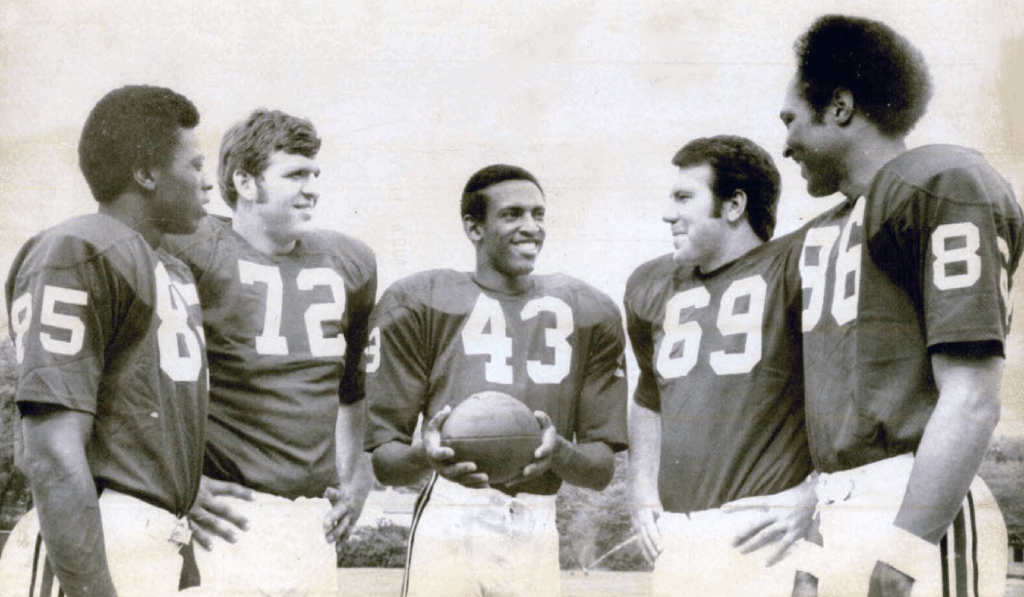
1971 Big Red Draftees (L-R): Mel Gray, Dan Dierdorf, Norm Thompson, Rocky Wallace, Mike Savoy

Thompson set a major college record in 1969 with 259 interception returns on five picks for Utah. He added seven more interceptions for 73 yards in 1970. Still, he figured he would be a second- or third-round pick. Imagine his surprise when the Cardinals took him 17th overall.

“He walked around the house scratching his head … he couldn’t believe it,” Thompson’s wife, Gwen, told the St. Louis Post-Dispatch.

Continue reading

Big Red Draft History: 1970 NFL Draft

As we move closer to the 2023 NFL Draft (April 27-29), The Big Red Zone is looking back on each of the 28 St. Louis Cardinals drafts (1960-87). This installment focuses on the 1970 Draft, which was held January 27-28, 1969 in New York.

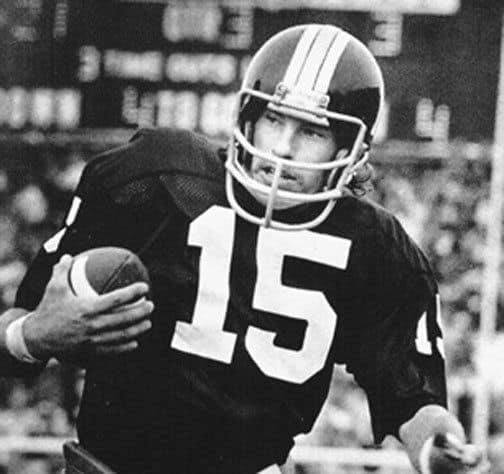
This will forever be known as the Larry Stegent draft.

Big Red Top Pick Larry Stegent

With the eighth overall pick, the Cardinals could have taken Heisman Trophy winner Steve Owens, Norm Bulaich, Bobby Anderson or Duane Thomas—all running backs who would have productive NFL careers. Instead, they selected Stegent, a running back from Texas A&M, whose career would be derailed by injuries.

“It’s unbelievable—I’m overwhelmed,” Stegent told Jeff Meyers of the St. Louis Post Dispatch after the draft. “I didn’t feel I’d be picked until much later. I didn’t really think anyone wanted me that much.”

In July 1970, while practicing for the College All-Star Game, Stegent suffered a partial ligament tear in his right knee that forced him to miss most of his rookie training camp and the first two preseason games. He played in the third preseason game, against the Bears, but tore ligaments in his left knee while trying to tackle a Bears defender who had intercepted a pass. He missed all of the 1970 season.

In 1971, Stegent spent time on the Big Red’s taxi squad and saw spot duty on special teams. He didn’t make his first start until a December 12 game against the Eagles. While taking a swing pass from quarterback Jim Hart, Stegent planted his foot attempting to cut back and ripped ligaments in his right knee.

End of season. End of career.

Continue reading