
It didn’t take long for James Elbert “Tootie” Robbins to impress Jim Hanifan and the rest of the Big Red coaching staff during his first training camp in 1982.
The Cardinals selected the Windsor, North Carolina native in the fourth round of the NFL draft and had hoped he could provide depth on an aging offensive line. Robbins had other ideas.
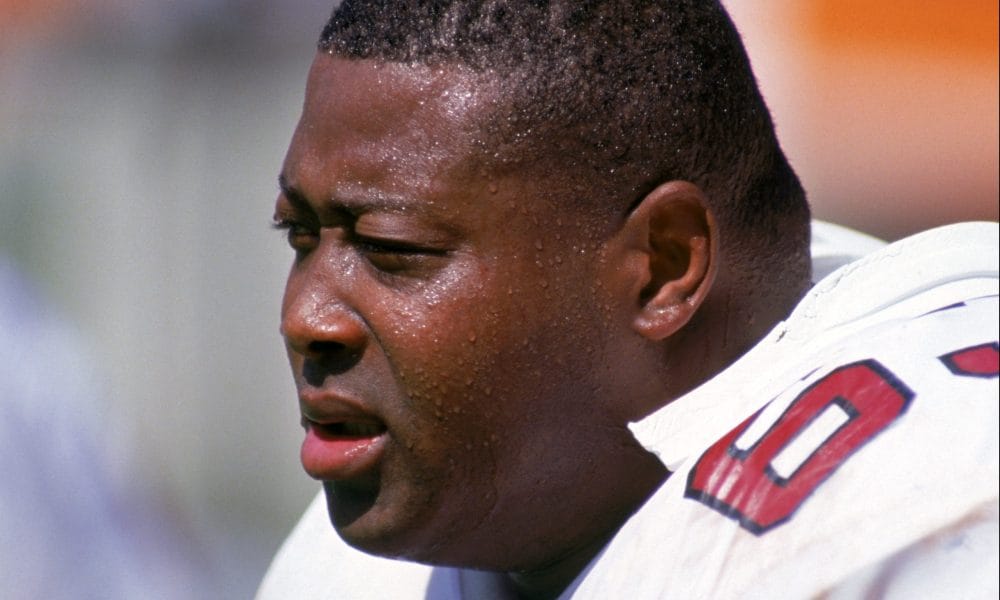
“He has played like a first-rounder from Day 1,” Hanifan told the St. Louis Post Dispatch.
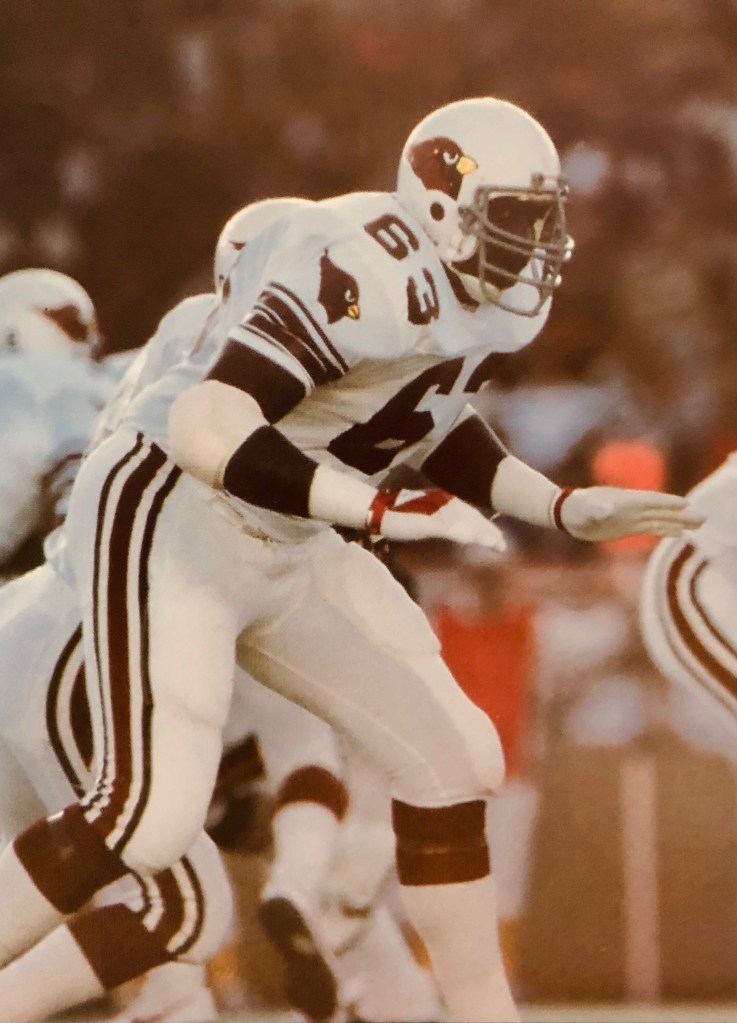
The 6-foot-5, 270-pound rookie impressed so much in training camp that the Cardinals shifted future Hall of Famer Dan Dierdorf to center, clearing the way for Robbins to step in as the starting right tackle.
“I knew I could play,” Robbins said. “I just never knew I could become a starter as a rookie.”
“Playing professional football is a dream come true for me. When I got drafted, I told my mom, ‘My dream is coming true.’
The Cardinals started the season with a pair of rookie offensive tackles. First-round pick Luis Sharpe was the other one.
“The coaching staff thinks the world of both of them,” Hanifan said. “They are fine, young players. Each has size and quickness, and they are sharp, dedicated guys. They want to be football players.”
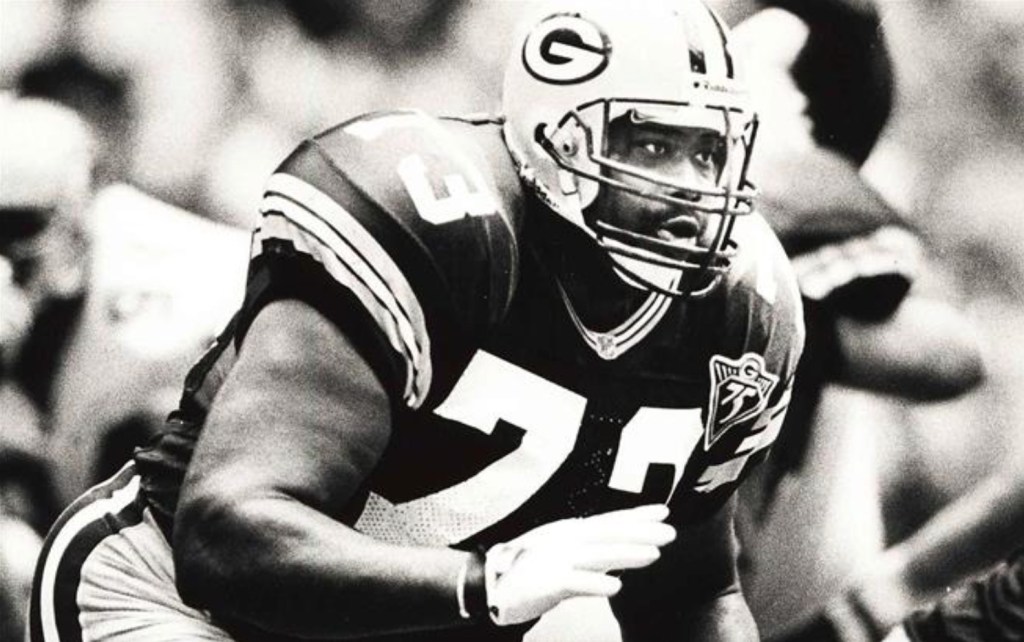
Robbins played twelve seasons in the NFL, ten with the Cardinals and two with the Green Bay Packers. He was a powerful run blocker, paving the way for the likes of O.J. Anderson, Stump Mitchell, Earl Ferrell, and Johnny Johnson.
He earned the nickname “Big Smooth,” and his quiet approach and work ethic were instilled in him by his parents while growing up in rural North Carolina.
“We worked as sharecroppers (tobacco, cotton, and peanuts) and I learned at a young age how to work hard and then see the results of that work,” he said in a 2015 interview with the Milwaukee Journal Sentinel. “My dad and I worked in the fields together. We fished together. We hunted together. When my parents passed, I lost my two best friends.”
Robbins attended Bertie High School in Windsor, North Carolina, before earning 2nd team All-American honors at East Carolina University in 1981. “I was the first in my family to attend college.”
Robbins had a solid rookie campaign in 1982 as the Cardinals made their first postseason appearance in seven years. Perhaps the greatest testimony to the progress of the two rookie tackles was the effectiveness of the running game.
In a November victory at Atlanta, the line paved the way for Ottis Anderson and company to gain 203 yards on the ground. The following week in Philadelphia, the Big Red racked up 231 rushing yards in Stump Mitchell’s first NFL start.
“I’ve said it before, and I’ll say it again. They are the two best young offensive tackles I’ve ever been around,” Hanifan proclaimed after the Cardinals’ win over the Eagles.
Robbins dealt with some injuries in 1985 and 1986 under head coach Gene Stallings and moved with the team to Arizona in 1988 where he played another four seasons.
In 1992, the Cardinals traded Big Smooth to the Green Bay Packers for a sixth-round draft choice, where he was reunited with former Big Red offensive line coach Tom Lovat.
Robbins brought experience, enthusiasm and a positive attitude to the Packers. His best game came when he held future Hall of Famer Reggie White to only two unassisted tackles and no sacks in an upset victory over the Philadelphia Eagles in 1992.
“That’s one of the reasons why we did what we did to get him,” Packers general manager Ron Wolf said. “He’s proven that he’s more than worth what we paid for him.”
He was also fortunate to play with future Hall of Famer quarterback Brett Favre.
“It was an honor to block for Brett — he made the game fun. With Brett, you knew what kind of effort you’d get from him every Sunday. So you had to man up and do your job and protect him.”
Robbins had another solid season in 1993, but tore his triceps muscle late in the season and missed two playoff games. The 36-year-old would retire shortly after.
“Injuries take their toll, but I was fortunate to play 12 seasons in the NFL, a lot of guys would take that,” Robbins said. “I loved the game and didn’t play it for the money. But the reality is that it’s a young man’s game and someone is always going to take your job.”
After his playing career, Robbins retired to Chandler, Arizona where he lived with his wife Shaneeta and son Barrett.
“I know it may sound strange, but I don’t miss the crowds and all that,” Robbins told the Milwaukee Journal Sentinel in 2015. “I haven’t stepped in a mall since I left Green Bay. I don’t need much. I’m a pretty simple guy, a homebody. I’m happiest when I’m at home with my family.”
Robbins passed away in October 2020 at the young age of 62.

 THE BIG RED ZONE
Tootsie Robbins was one of many Big Red players who even though they for the most part played on mediocre teams did their job week after week. That was a very unique offense line in 1982. Two rookie tackles and a veteran Dan Dierdorf who made a “smooth” transition to center. From what I’ve read, during his senior year at East Carolina Tootsie Robbins was actually named the teams offensive mvp.
LikeLiked by 1 person
Big Smooth! One of the all-time best nicknames for a St. Louis Cardinals player.
LikeLiked by 1 person