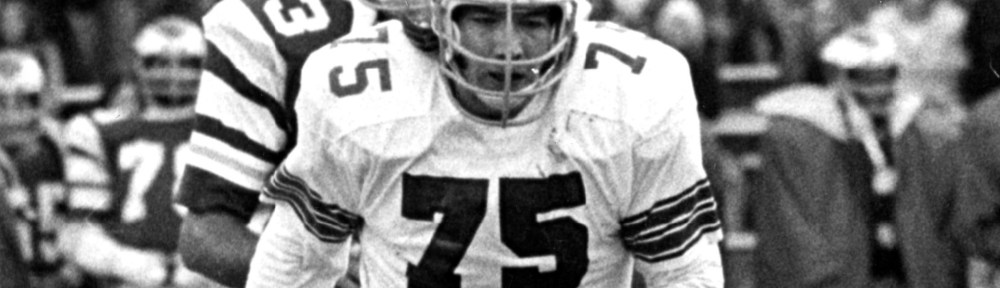
Bob Rowe had dreamed of being a professional football player ever since he was a kid.
“Most kids forget ambitions of being a pro football player about the time they suffer their first split lip,” Rowe said in a 1970 story in the St. Louis Post-Dispatch. “Seeing blood may give them ideas of being a doctor.”
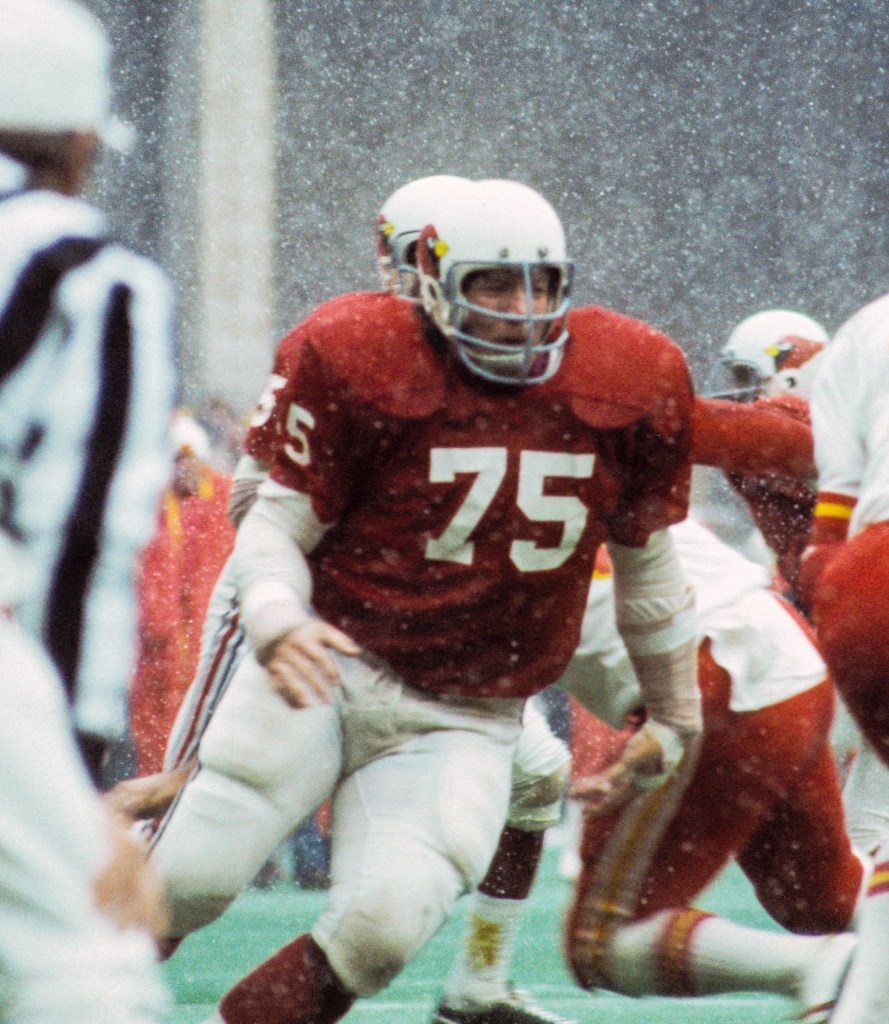
But not Rowe.
“I always had my sights on playing pro ball.”
His dream came true when the St. Louis Cardinals selected the 245-pound defensive tackle in the 2nd round of the 1967 NFL Draft.
“I was sort of surprised going that high,” the modest Rowe said in a 1970 interview in the The Flint Journal. “There were a lot of good linemen available, like Bubba Smith, and I just hoped to be drafted.
“I’ve always been a Lions fan ever since I was a kid,” the Michigan native said. “I sort of hoped they would draft me.”
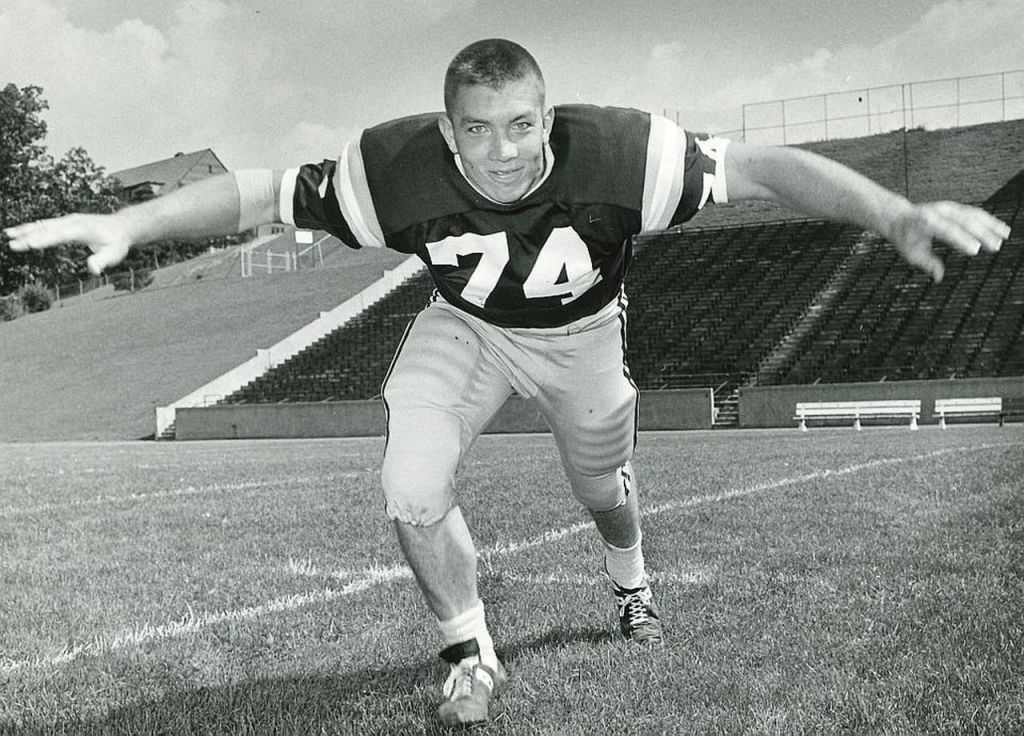
Rowe was a standout in both football and basketball at Flushing (MI) High School, but no scholarship offers came his way. Determined to keep playing, he enrolled at Western Michigan University in Kalamazoo to pursue his college football dream.
“I was a walk-on,” he said.
Rowe earned a scholarship after his freshman year and went on to lead the Broncos in tackles for the next three seasons. He was named the Mid-American Conference Lineman of the Year in both 1965 and 1966 and earned invitations to several postseason All-Star games. Western Michigan head coach Bill Doolittle praised him as “the greatest player we’ve had here in a long time.”
Bucket Head
Rowe’s rookie season with the Cardinals was limited by a broken bone in his hand suffered during the College All-Star game. He saw most of his action in a reserve role on the defensive line and on special teams. Rowe made one start before missing the final three games after being called to active military duty.
Rowe, nicknamed “bucket head” by his teammates for his size-8 helmet, broke into the starting lineup in the fourth week of the 1968 season against the Dallas Cowboys.
“Boy, was I scared and didn’t have a good game against Dallas,” Rowe said in a story published in the Flint Journal. “It’s sort of the same feeling that you get before that first varsity high school game.”
Rowe rebounded the next week. He helped the Big Red defense hold the Cleveland Browns to just 22 yards rushing in a 27-21 victory.
“It was a great thrill to be playing and just the idea of shutting out Leroy Kelly (Cleveland running back) was great for the whole defensive line,” Rowe said in a story in the St. Louis Post-Dispatch.
The young defensive tackle’s play impressed fellow lineman Chuck Walker.
“Bob has very good strength, maintains good position and leverage, and most important of all, he has the hustle and desire.”
“He never quits and he never gives up. It’s impressive that he has come up so quickly, as young as he is, but not so surprising with the talent he has.”
“I feel like a lot I’ve learned has come from Chuck,” said Rowe, who shares an apartment with Walker and attends Army reserve duty with him on Mondays.
One of the highlights of Bob’s career came in 1969 when he scored a touchdown after intercepting a pass thrown by Minnesota Vikings quarterback Joe Kapp.
“I had a suspicion they would throw the screen,” Rowe said, “so I went out to the side. As soon as I caught the ball, I knew I had to move out of there, or they’d knock the tar out of me.”
“I didn’t know how long I had to run, but I sure know I was tired.”
Kick Blocker
Rowe had a Pro-Bowl type season in 1970 when he led the defense with 7 sacks and recovered three fumbles.
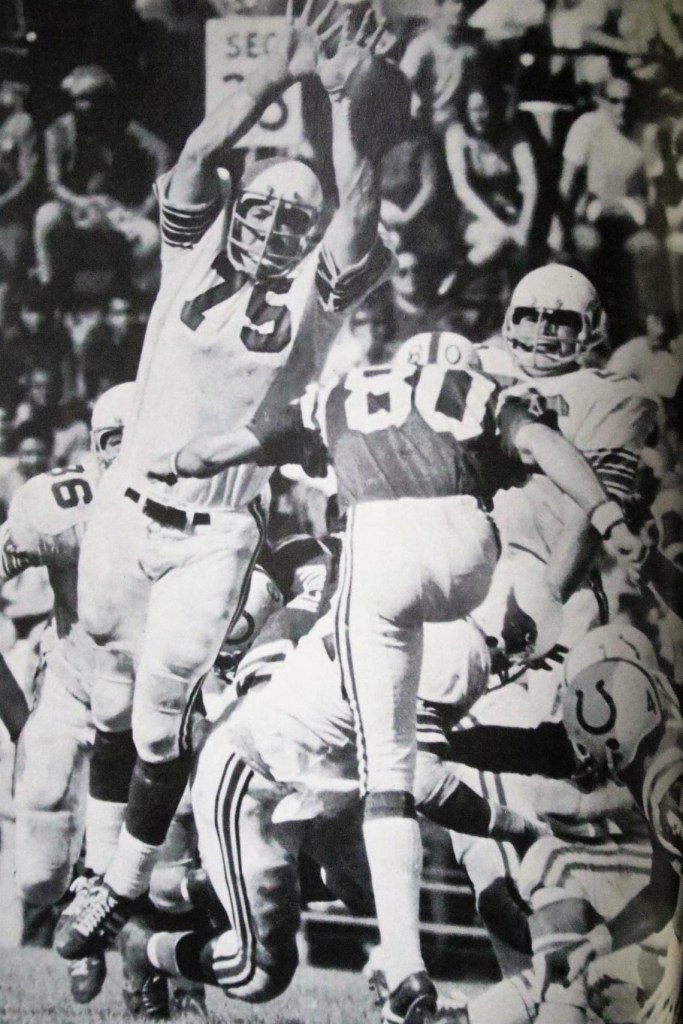
In 1972, Rowe was named NFL defensive player of the week after he blocked three Jim O’Brien field goal attempts in the Cardinals’ 10-3 win over the Baltimore Colts. He also contributed four unassisted tackles and sacked Colts quarterback Johnny Unitas on the 30-yard line with less than two minutes left in the game.
“I know this sounds funny, but I have a knack for being in the right place,” he said.
“I just decided this is my year,” he told the Associated Press. “This is my sixth year, and obviously, I’m capable of playing in the league. Now it’s time to play football.”
Bob blocked 9.5 kicks during his career, and in 2019, he was voted the 23rd-greatest kick blocker in NFL history by Pro Football Journal.
“I was always extremely quick off the ball,” Bob told Howard Balzer in a 2019 interview, explaining his ability to penetrate for blocked kicks and sacks. “I could get to the guard and be off the ball as fast as any lineman in the NFL.”
Rowe led the Big Red defense in sacks from 1971 to 1975 and had a career high in 1973 with 9.5. His 53.5 sacks still rank fifth on the Cardinals’ all-time list.
Back Injury
Rowe netted eight sacks in 1975 despite playing the second half of the season with back spasms. He lost 20 pounds in the offseason and said that he was looking forward to the best season of his career.
But early in training camp, his back began hurting. He later had surgery, which forced him to retire.
“For nine years, I’ve played with the Cardinals,” he told attendees at a Quarterback Club meeting that December. “It’s been my privilege to play with the Terry Metcalfs and Roger Wehrlis and Jim Harts. So it’s with great sadness that I announce my retirement from the football Cardinals.”
“It was a hard decision,” he said, “but you know, ten years is a long time. I’ve got a couple of small children to think about. I want to be with them, watching them grow up without having to worry about whether I’ll ever walk again.”
Rowe only missed four games during his career. His regret was not playing in a Pro Bowl or a Super Bowl. But there were also happy recollections.
“The things I’ll remember most,” he said, “are the 38-0 shutout at Dallas (in 1970), getting into the playoffs, and Coryell’s arrival here.”
Did Rowe ever contemplate coming out of retirement?
“You always have a dream that maybe three tackles will get hurt and they’ll give you a call—but you have to be realistic,” he said in a 1977 interview with the St. Louis Post-Dispatch. “But I went to the track the other day to do some running, and my 4-year-old daughter ran three laps, and I ran two. When your 4-year-old can run further than you can, you’ve got to be realistic.”
In the end, Bob Rowe’s story came full circle—not with another sack or blocked kick, but with the quiet satisfaction of a dream fulfilled. The former college walk-on from Michigan carved out a nine-year NFL career built on toughness, consistency and heart, leaving his mark as one of the Cardinals’ most dependable defensive linemen.
He may never have worn a Pro Bowl jersey, but Rowe lived his childhood dream, and he walked away with something far more enduring: respect from his teammates, pride in his accomplishments, and the chance to be present for the life he built beyond the game.

 THE BIG RED ZONE
The Big
LikeLike
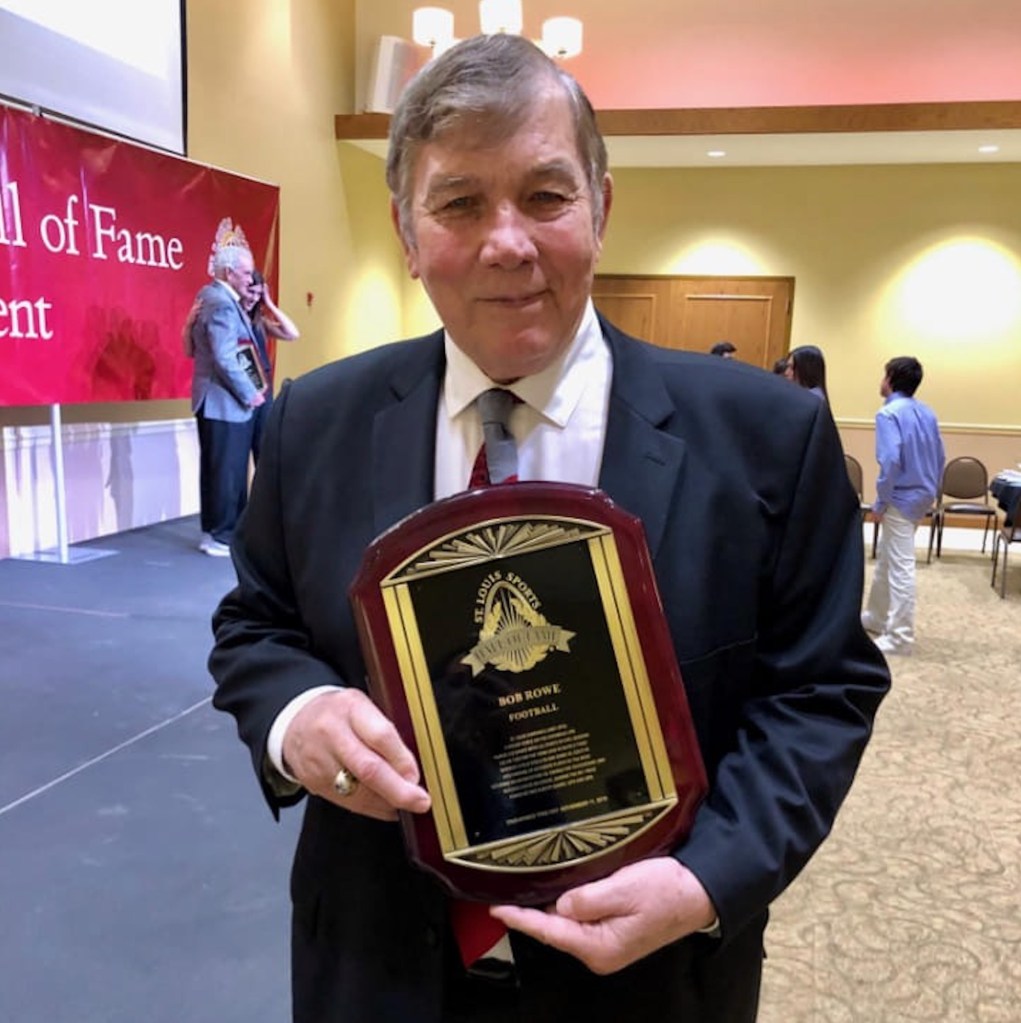
I took some time to listen to the interview he gave when he was inducted into the St.Louis Sports Hall of Fame. Besides being one of the best to ever play for the football Cardinals also an amazing humble person. I got to thinking that the Big Red actually had quite a few players like Bob Rowe. Players who through good times and mostly bad times suited up game after game and did their jobs without getting the recognition that they deserved.
LikeLike
Good observation, Phil. You’re right, most of the guys from that era are exactly like you described. They still enjoy getting together as often as possible and they recently met for their annual Christmas Party. Unfortunately, we’ve lost a few of them over the last 3 or 4 years. ☹️
LikeLike
I enjoyed this story and I’m glad Bob Rowe’s feats are so well-covered here. That performance versus Baltimore in 1972 _ wow! Blocking those kicks. Terrorizing Johnny Unitas. After that game, Colts middle linebacker Mike Curtis said to the Baltimore Evening Sun, “Gee, St. Louis is supposed to be a bad team, and I believe that. They really are a bad team. But, if they’re bad, what does that make us?”
LikeLike
Thanks for sharing that story, Mark. That’s a great quote by Mike Curtis and he wasn’t wrong. The Big Red were bad in 1972 and the Colts weren’t much better. In fact, they fired their head coach about halfway through the season. And of course, Bob Hollway lost his job at the end of the season.
Happy holidays to you and yours!
LikeLiked by 1 person