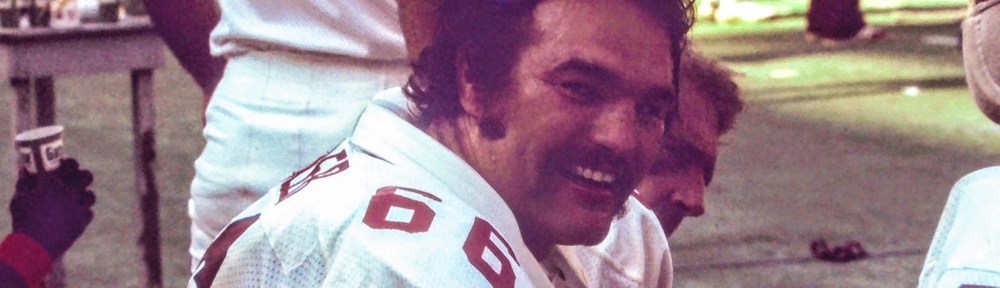
On January 30, 1978, the St. Louis Cardinals traded Pro Bowl guard Conrad Dobler and wide receiver Ike Harris to the New Orleans Saints for guard Terry Stieve and defensive end Bob Pollard.
According to the January 31 edition of the St. Louis Post-Dispatch, Dobler’s teammates and Big Red coaches were in shock when they learned of the news.
“You’re kidding,” offensive line coach Jim Hanifan said after learning of the trade. “Well I’ll be a son-of-a-gun. All I can say is that’s show business. Conrad, well, Conrad is special to me. Conrad and I go into a deep personal thing—it breaks my heart.”
“My gut feeling is that I don’t understand,” quarterback Jim Hart said. “It doesn’t make sense.”
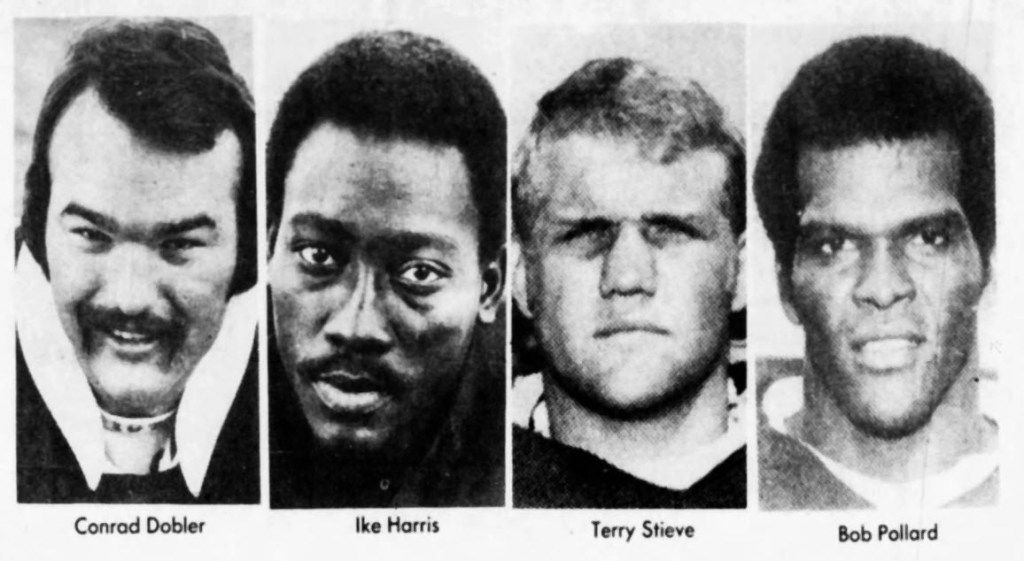
“They’re two of our finest players,” fullback Jim Otis said, “and you hate to see them go. I’m not too familiar with those people we’re getting, so it’s difficult for me to comment. Let’s put it this way: there are 11 people on the offense and that offense has been described as the best in football. Now, two of those people are gone and maybe there will be more.”
Bob Young was astounded when he heard the news.
“That’s a shocker—but I guess I shouldn’t have any reason to be surprised,” the Big Red left guard said. “I really shouldn’t be surprised at anything any more. Not when thing about Coach (Coryell) and all. It wouldn’t surprise me if they trade the whole damn team.”
Even the fans were upset.
Richard Stephens, of St. Louis, was one of dozens of fans who wrote letters to the St. Louis Post Dispatch after the trade.
“We did it again,” he wrote. “Gilliam for who? Ahmad Rashad for who? Bidwill would trade a horse for a jackass.”
Cardinals owner Bill Bidwill didn’t trade the whole team, as Bob Young mentioned, but over the next few weeks, head coach Don Coryell was fired, and All-Pro running back Terry Metcalf left for the Canadian Football League.
DIRTY DOBLER
Dobler was the Cardinals’ fifth-round draft choice in 1972 out of the University of Wyoming. He was cut just before the season opener of his rookie season but returned a couple of weeks later after a rash of injuries on the offensive line.
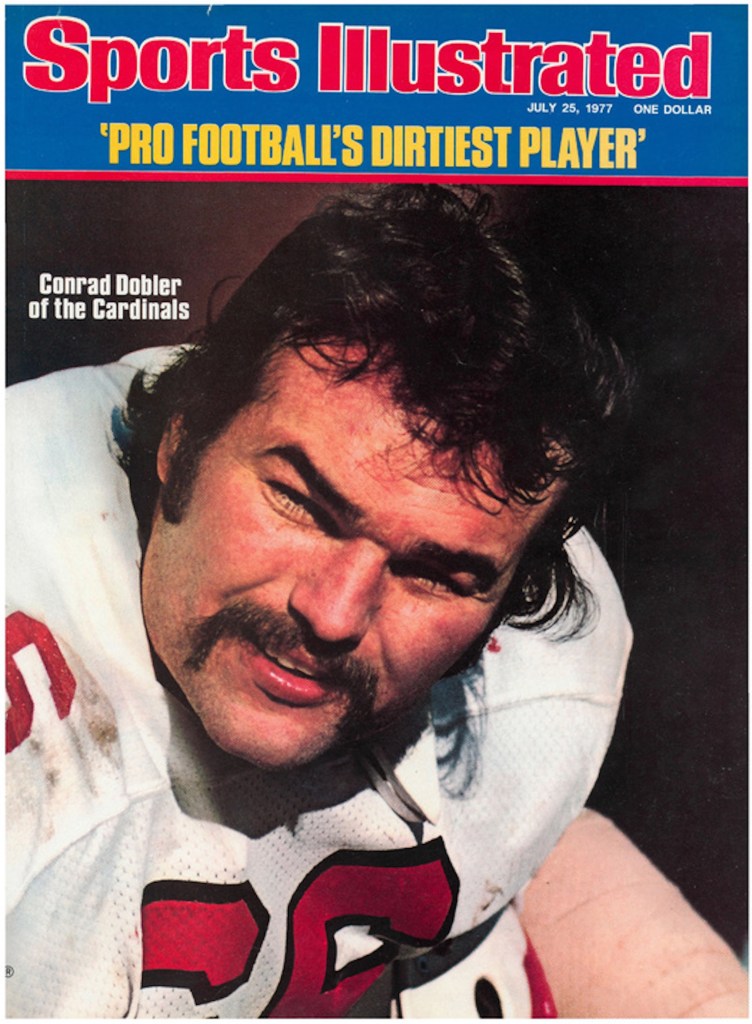
The California native became a three-time Pro Bowl guard and was known as one of the NFL’s meanest players. Sports Illustrated once called him “Pro Football’s Dirtiest Player.”
“What you need for Dobler,” said one of his opponents after claiming to be bitten by #66 in 1974, “is a string of garlic buds around your neck and an iron stake. If they played every game under a full moon, Dobler would make all-pro. He must be the only guy in the league who sleeps in a casket.”
Dobler relished his dirty reputation.
“I can say with a clear conscience that I have never knowingly bit another football player,” he said. “People who say I do are slandering me. For one thing, I believe in good hygiene.”
“All those stories about the way I play football,” he told the Minneapolis Star in 1975, “have been inspired by defensive tackles with a vivid sense of imagination.”
“I could leg whip, chop block or punch them in the solar plexus,” Dobler later said in his book Pride and Perseverance. “I might come at a guy with a hard forearm to the chin or to his esophagus to soften him up. I never started out to injure anyone, but if a guy tried to hurt me, then I was going to try to hurt him.”
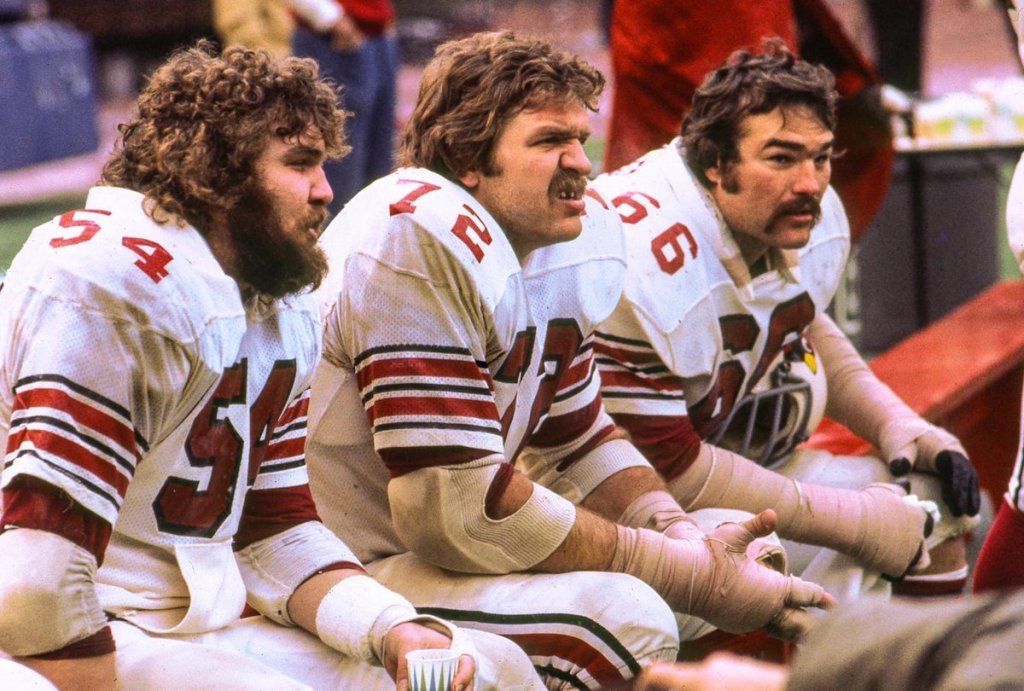
Dobler was part of the historic Cardinals offensive line that allowed only eight quarterback sacks in 1975. Perhaps more remarkable was that Otis led the NFC in rushing, running behind Dan Dierdorf, Dobler, Tom Banks, Young, and Roger Finnie.
END OF AN ERA
Both Harris and Dobler were instrumental in the rise of the Cardinals under Coryell in the mid-70s.
But after collapsing at the end of the 1977 season, management appeared intent on dismantling the Cardiac Cards.
Dobler had written a letter during the season expressing his desire to extend his contract. In January, after not getting a response, Dobler exploded.
“I sent the Cardinals a letter in October to have my contract extended,” he told the Post Dispatch a week before being traded, “and they haven’t had the common courtesy to even acknowledge it. I’m done with them. I’m through with that organization. The hell with them. I’ve busted my butt for six years for them and they don’t have the common courtesy to acknowledge I’m alive. I’d go for a trade, anything to get me out of St. Louis.”
Cardinals Director of Operations Joe Sullivan told the Post Dispatch that he was surprised by Dobler’s outburst.
“We picked up his option, that’s one acknowledgment,” Sullivan said. “It seems to me the football season just ended. There really hasn’t been a whole lot of time to negotiate contracts.”
After the trade, Sullivan blamed Dobler for no longer being a Cardinal.
“Conrad said he was not happy,” said Sullivan. “He said he didn’t want to come back, that he wouldn’t come back. That was one of the reasons for making the deal.”
“I wish I would have bet everyone who told me they’d never trade me,” Dobler told Doug Grow of the Post Dispatch after the trade. “I guess a lot of people are going to be awfully surprised.”
Dobler said he would miss his time in St. Louis.
“I love all of the people of St. Louis,” he told Grow. “I’ve seen a lot of things. I’ve done a lot of things, I’ve accomplished a lot of things. I guess I have to look at this as another challenge.”
As for Harris, he had caught 107 passes in three seasons with the Cardinals and was to become a free agent the day after the trade. His free agent status was the reason the Cardinals made the trade so quickly.
“I was a little surprised but I’m overjoyed by the trade,” Harris told Grow. “I’m glad to see that somebody recognized that I could help them.”
“My regret is leaving the head man,” said Harris. “Don Coryell is a helluva guy. I hope there’s someone his equal where I’m going. Coryell is a special sort of coach.”
Sullivan told the Post Dispatch that the Cardinals would not have made the trade if they had not had Pat Tilley ready to step into Harris’s position.
Indeed, Tilley stepped up and led the team in receiving in 1978. But Sullivan didn’t adequately replace Tilley as the third wide receiver and the Big Red offense suffered because of it.
Sullivan also said they were excited to add Pollard, known as “Captain Crunch,” a pass-rushing defensive end who was better than anyone they could have gotten in the NFL draft.
“We now have the pass rusher we didn’t think we’d get in the draft,” Sullivan said. “If we were going to come up with a pass rusher, we realized that we had to trade for an established player. Pollard is a class guy. He gives us what everyone knows is our prime need, a pass rusher.”
As controversial as the trade was at the time, it worked out pretty well for the Cardinals.
Pollard missed only two games in his four seasons in St. Louis. He recorded six sacks in 1978 and led the team with nine in 1979.
Stieve played seven seasons for the Cardinals and assumed a leadership role on the offensive line, mentoring young players such as Luis Sharpe, Joe Bostic, Randy Clark, Tootie Robbins, and others.
Harris had three solid seasons with the Saints before an injury ended his career in 1981.
Meanwhile, Dobler played two seasons in New Orleans and two in Buffalo before retiring. It’s no coincidence that the records of both teams improved markedly after his arrival.

“I’m a Conrad Dobler fan. I’ll admit it,” Saints quarterback Archie Manning said of his new teammate. “There’s something special about that guy. He’s the only man I ever met who wears his game face 365 days a year.”
Bills teammate Reggie McKenzie was also an admirer of Dobler during his time in Buffalo.
“You should see what he goes through on game day (to get his gimpy knees ready for battle). He’s an inspiration to all of us.”
Years after the trade, Dobler still talked fondly of his time in St. Louis, mentioning his colleagues on the offensive line—Finnie, Young, Banks, and Dierdorf—and one coach in particular.
“Jim Hanifan,” he told Tom Barnidge of the Post Dispatch, “taught me how to play this game.”
“Give my regards to all the guys back in St. Louis,” he told Barnidge at the end of the 1981 interview. “My years there were a special time in my life.”
And they were a special time in the lives of Big Red fans as well.


 THE BIG RED ZONE
That was a sad and difficult time for the Big Red faithful. It seemed like everyday there was nothing but bad news.
LikeLike
Yep. And it continued into training camp when J.V. Cain blew out his Achilles heel.
LikeLike
Holy smokes! Both Conrad Dobler and Ike Harris for Terry Stieve! I didn’t remember it being two-for-one. Ike Harris was a quality wide receiver and I enjoyed his play with the Cardinals.
LikeLiked by 1 person
It was actually 2 for 2 as Bob Pollard came from New Orleans as well.
As much as everyone was outraged at the time, the trade worked out pretty well for the Cardinals long-term, as Stieve played at a high level through 1984 and Pollard provided a pretty good pass rush for a few years which the Cardinals lacked.
LikeLike
Thanks, Bob. Can’t explain how I overlooked the Bob Pollard part. You spelled it out clearly in the post. Guess I’m still too worked up about trading Ike Harris. 🙂
LikeLiked by 1 person