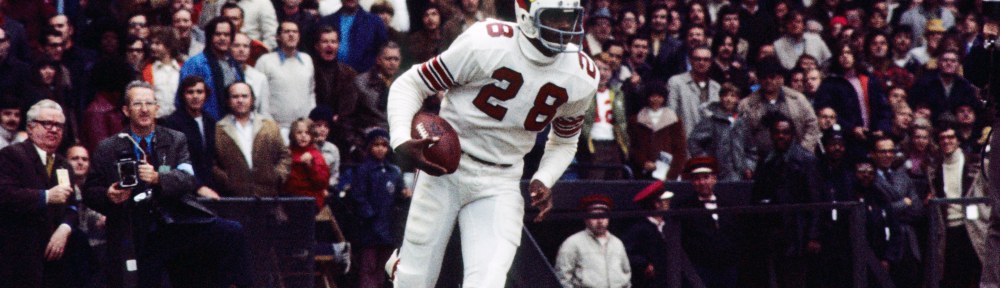
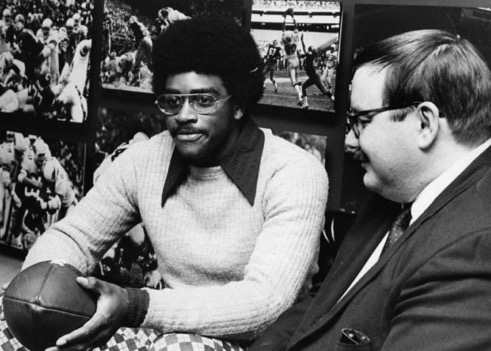
On January 26, 1974, the St. Louis Football Cardinals traded second-year wide receiver Ahmad Rashad to the Buffalo Bills for quarterback Dennis Shaw.
The trade raised more than a few eyebrows around the league.

Rashad was a number one draft pick just two years prior and was named to the NFL All-Rookie team after hauling in 29 passes for 500 yards and three touchdowns.
But the Tacoma, WA native fell out of favor with coaches and management in 1973 and Rashad didn’t think it had anything to do with his play on the field.
The summer before training camp, Rashad changed his name to conform to his new Islamic faith and the former Oregon Duck All-American felt that people suddenly regarded him differently.
“I don’t know what to think,” Rashad said in an Associated Press interview in October 1973, “but I went from a starter one day to the bench the next and the whole thing coincided with my name change. The people in St. Louis booed me when I was introduced as Ahmad Rashad.”
“Without my religion I’d be really down now.”
Rashad started 10 games in 1973 under new head coach Don Coryell, but found himself being alternated with journeyman receiver Walker Gillette. According to a story by Jeff Meyers in the St. Louis Post Dispatch in September of 1974, Rashad was “hurt and insulted.” His reaction was to “withdraw into himself.”
“Last year (1973), I thought I had the best training camp since I started playing football,” Rashad told Meyers. “Then I opened the season on the bench. That just blew my mind. When I did get to play, I felt they weren’t utilizing me. They had me alternating with a guy they cut (two weeks ago). I just knew I should have been playing full-time and I just couldn’t concentrate on football.”
As Meyers wrote, “In a league notorious for being suspicious of anything resembling change, Rashad was looked upon as a militant, which he definitely was not.” The Cardinals deemed him as uncoachable.
“I had one bad exhibition game, in Chicago, but that shouldn’t have been enough for me to forfeit my starting job,” he told Meyers. “But something else happened to put me on the bench. It had to be the name change—nothing else I did was major. It just seemed that they were trying to make a point at my expense, that they were to show me that you just don’t do this kind of thing in the NFL.”
After arriving in Buffalo, Rashad told Meyers that Bills’ doctors told him that “the Cardinals were telling everyone that I had mental problems” and that’s why he “couldn’t get along with people.”
“Lou Saban (Buffalo head coach) seems to appreciate my talent,” Rashad said, “and that makes me want to work harder to gain his respect. Last year (in St. Louis), I’d do something I thought was fantastic and the coaches would say, ‘Uh-uh, don’t do that,’ and the next thing you’d know, I wouldn’t be playing.”
“I’m really happy to be out of St. Louis,” he said.
In Need of a QB
The Cardinals were in desperate need of a backup quarterback because of an injury that starter Jim Hart suffered late in the 1973 season.
The seven-year veteran injured his throwing elbow against the Detroit Lions. “My arm felt like a rag doll’s,” Hart said in the post-game interview.
He missed the last two games of the season and his condition did not improve over the next couple of months.
“It was a very serious injury,” Coryell told Tom Barnidge in a 1979 St. Louis Post Dispatch story. “For many months, we didn’t know if Jim was going to be able to play again. I was told that if he had to have it operated on, his chances of ever playing again were very slight.”
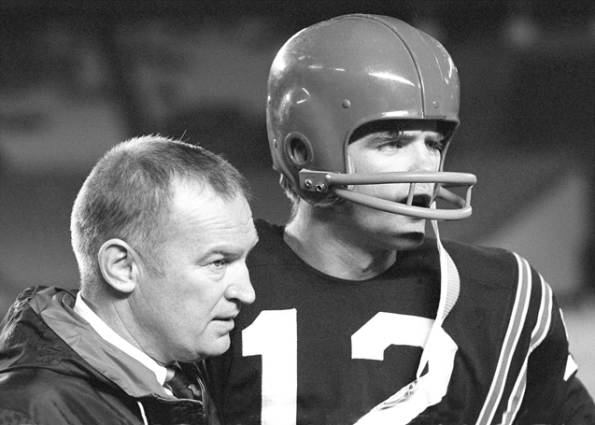
Said Hart, “I knew doctors were talking about surgery. And I knew that I didn’t want to have it. If I did, it was all over.”
With Hart’s future hanging in limbo, Coryell became concerned about the quarterback situation and felt he needed a veteran backup for insurance. The other quarterback on the roster was Gary Keithley, who struggled to move the offense after Hart’s injury in 1973.
“At the time, we had no choice (to trade Rashad),” Coryell told Barnidge. “We had to have a backup quarterback, someone with experience… just in case. We were very, very concerned that maybe Jimmy wouldn’t ever play again.”
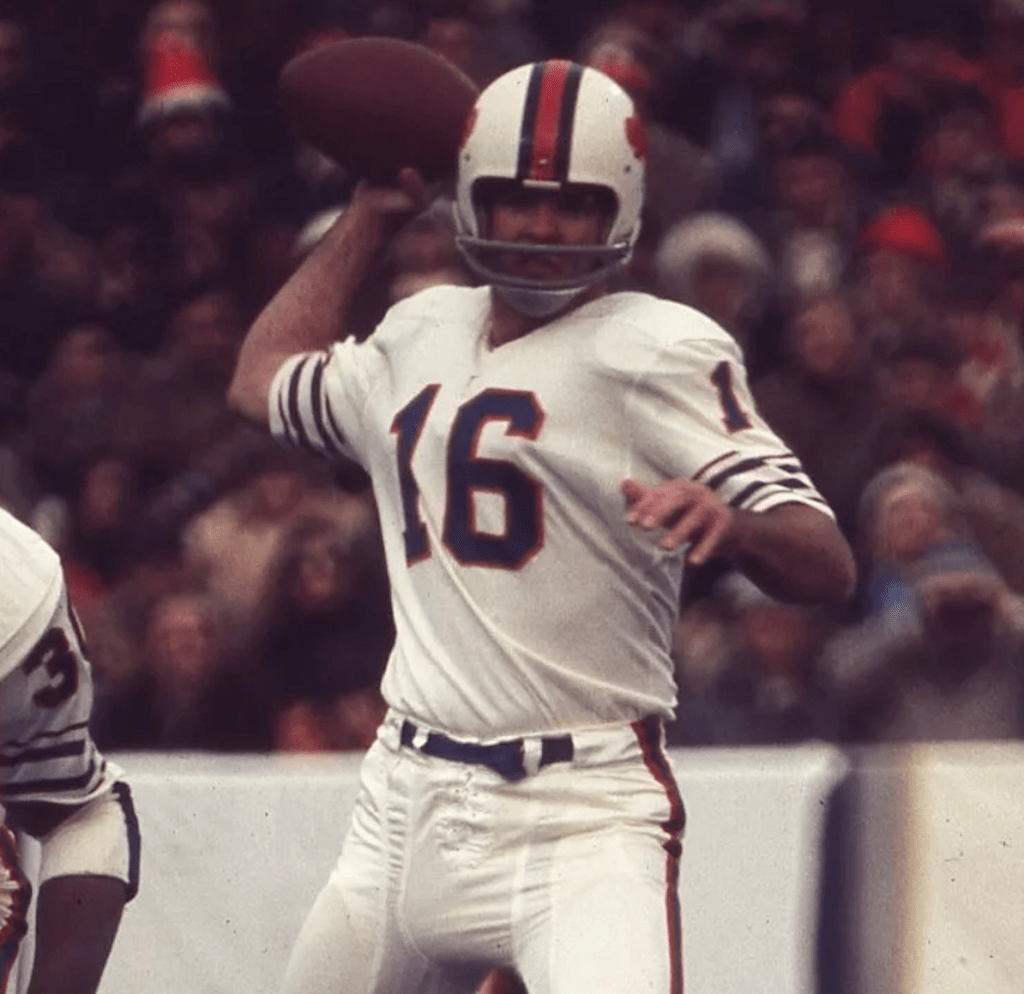
The Cardinals turned to Shaw, who had been a collegiate star for Coryell at San Diego State. In two seasons, Shaw led the Aztecs to a 20-0-1 record, and in 1969, he set NCAA records with 39 touchdown passes, including nine in one game.
He was the Bills second-round pick in 1970 and was named NFL rookie of the year that season. But Shaw lost his starting job in 1973 to Joe Ferguson. After the trade, the St. Louis Post Dispatch reported that a source in Buffalo claimed the former Bills QB “threw a ‘soft’ ball, could not read zone defenses, seldom threw to his tight end, telegraphed his passes and called poor plays.”
But Coryell seemed sold on him.
“I am very happy to be reunited with Dennis,” Coryell said. “He gives us depth at quarterback that we have been looking for. He’s a winning type player, one who is durable and mentally tough.”
“We’re a throwing club,” explained Director of Operations Joe Sullivan, “and one of the spots we had to have help was at backup quarterback. This now allows us to bring Keithley along at a much more natural pace, rather than just throwing him into games.”
“He (Rashad) has the potential to be a great player,” Sullivan said, “but we also feel the same way about Shaw.”
Fortunately for Hart and the Cardinals, his ailing elbow healed without surgery, and Shaw became a little-noticed backup, as the Big Red won back-to-back division titles in 1974 and 1975.
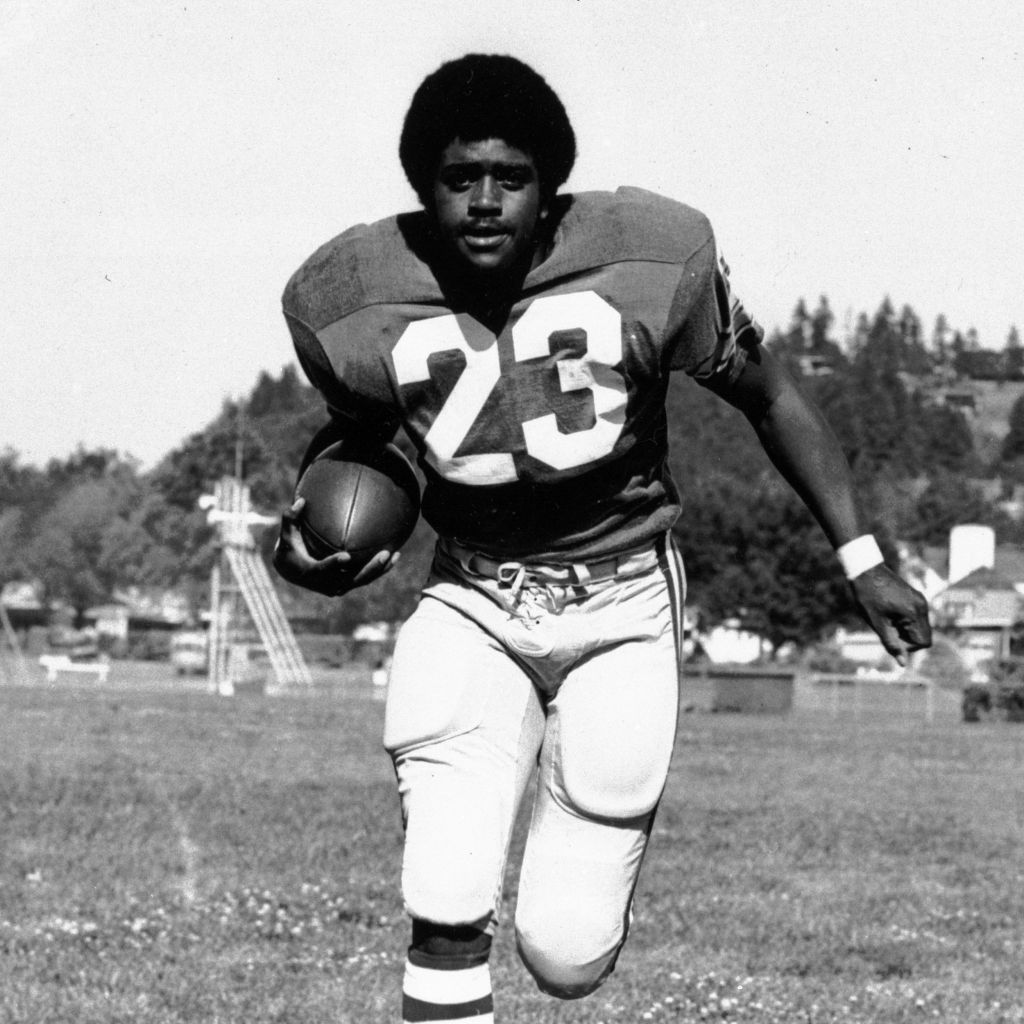
Meanwhile, Rashad was the Bills top receiver in 1974 with 36 receptions for 433 yards and four touchdowns. ABC-TV’s Howard Cosell called Buffalo’s trade for Rashad the “Steal of the Century after the newcomer scored twice to lead the Bills to a season-opening 21-20 Monday night win over the Oakland Raiders.
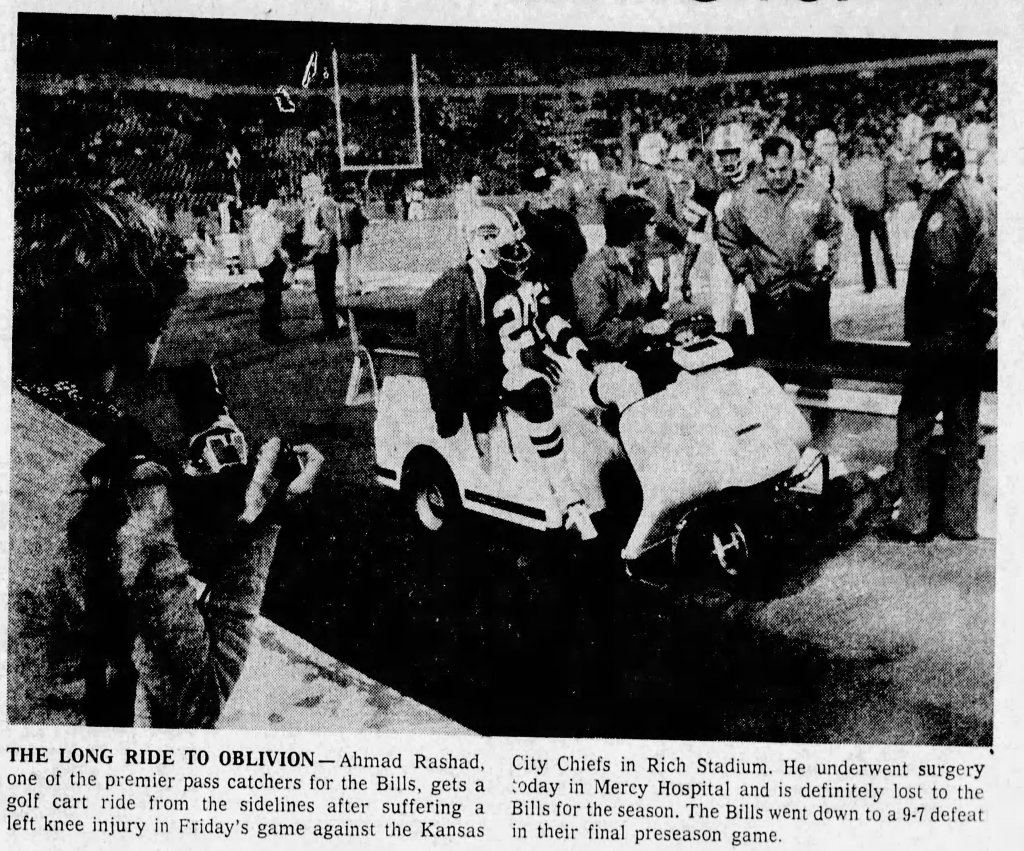
Unfortunately for Rashad, his stay in Buffalo was short. In a 1975 exhibition game, he suffered a season-ending knee injury and would miss the entire season. In 1976, he became a free agent and signed with the expansion Seattle Seahawks. Leery of Rashad’s recovery from knee surgery, the Seahawks traded him to Minnesota, where he failed a physical.
“After a practice session with the Vikings,” recalled Rashad in a 1981 interview with Murray Olderman, “I was in the training room. Fran Tarkenton came in and asked what I was doing there. I told him the Vikings said I hadn’t passed my physical and they were sending me back to Seattle. He stormed out of the room and got Bud Grant. They had this big meeting. So they made a conditional deal that if I played a certain amount of games the Vikings would be responsible for my contract. That was the turning point in my career.”
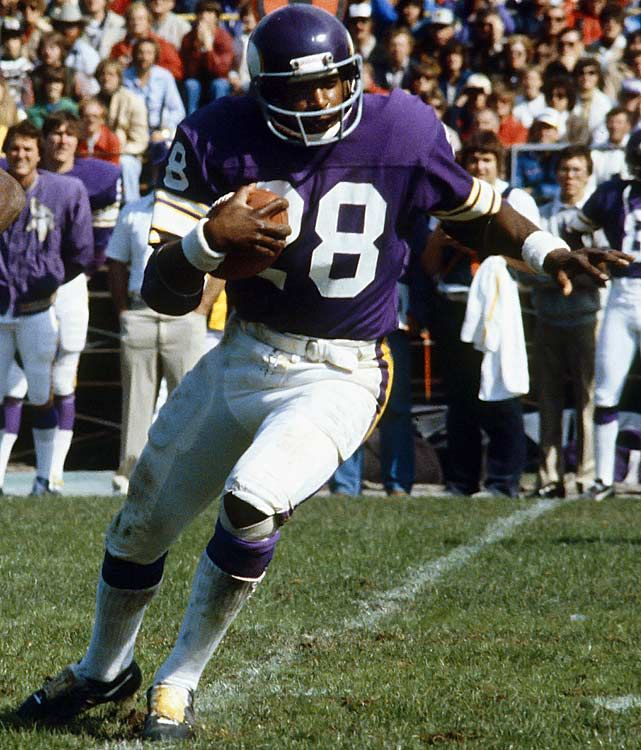
Rashad played seven seasons with the Vikings and was named to the Pro Bowl four consecutive years from 1978-1981. He retired after the 1982 season as the Vikings’ all-time leading receiver and tied for 12th all-time in NFL history.
Sure, the Cardinals needed a backup quarterback in 1974. But did they have to trade a young talent like Ahmad Rashad to get one?

 THE BIG RED ZONE
Thanks for an informative and well-researched post, Bob. I didn’t realize the important role that Fran Tarkenton had in helping Ahmad Rashad’s career. Too bad for the Cardinals there wasn’t an advocate like Tarkenton for Rashad in St. Louis.
LikeLiked by 1 person
Another bad front office move by the Big Red. If given the chance, Ahmad Rashad would have thrived with the Cardiac Cardinals offense. Truth is back then, the NFL frowned on any player who didn’t fall in line with the system. Today its the complete opposite. I didn’t know about the good word that Fran Tarkenton put in. Both he and coach Bud Grant made the right decision.
LikeLike